The Patina Bench

Leather Conditioner vs Mink Oil vs Saddle Soap

Three products used interchangeably on bags, doing three different jobs. Only one of them belongs on most handbags — here is which, and what to buy for each.

By Stephen V.Last updated How we pick

Walk into any discussion of leather care and you will find these three names used as if they were alternatives. They are not. A conditioner replaces the oils that keep leather flexible. Saddle soap is a cleaner that strips oils as it works. Mink oil is a heavy dressing built to waterproof rugged, unfinished leather. Using the wrong one is the most common way people damage a bag while trying to look after it.

The short answer for most people reading this: a leather bag wants a conditioner, occasionally a mild cleaner before it, and almost never mink oil. If you also own work boots or a saddle, the other two have a place — just not on your handbag.

Below are the picks for each job, with a live price on every one, and an honest account of what each does to the color and the surface of your leather. We have not run laboratory tests on these products; what follows is a straight read of what each is formulated to do, matched to what a bag actually needs.

How this is funded:we earn a commission if you buy through our links, at no extra cost to you. It never changes which product we recommend, and we’ll tell you when we’d skip one. Full disclosure.

Quick picks

Ranked on leather grade, construction, capacity and value. Select a row to jump to the full write-up. We have not wear-tested these bags — here is exactly what we do instead.

#ProductBest forPrice
1
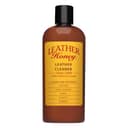
Leather Honey Leather Conditioner

Leather Honey Leather Conditioner

The default conditioner we'd hand almost anyone: a long-running, non-toxic formula that a little of goes a long way with. It softens and protects most finished leathers and it's the safe first bottle for a new bag owner.

Best for most bags
$16.99 · View on Amazon

$27.9939% off

Price as of September 5, 2026. #ad How we’re funded

2
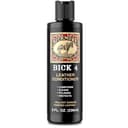
Bick 4 Leather Conditioner & Cleaner

Bick 4 Leather Conditioner & Cleaner

The pick when you're worried about darkening. Bick 4 is specifically formulated not to darken leather, which makes it the safer choice for light-colored and finished bags where a heavier conditioner would change the color.

Best that won't darken
$9.97 · View on Amazon

$14.9933% off

Price as of September 5, 2026. #ad How we’re funded

3
Leather Honey Leather Cleaner

Leather Honey Leather Cleaner

The cleaner half of the routine, from the same maker as our top conditioner. A concentrate you dilute, so one bottle cleans a lot of leather — use it before conditioning to lift dirt the conditioner would otherwise seal in.

Best cleaner for bags
$16.99 · View on Amazon

$24.9932% off

Price as of September 5, 2026. #ad How we’re funded

4
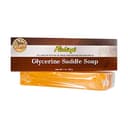
Fiebing's Glycerine Saddle Soap Bar (7 oz)

Fiebing's Glycerine Saddle Soap Bar (7 oz)

The traditional leather cleaner, and a genuinely good one on sturdy, unfinished leather. It is a cleaner, not a conditioner, and it is more aggressive than a modern bag cleaner — which makes it useful in a narrow set of jobs and risky outside them.

Best traditional cleaner
$9.99 · View on Amazon

$10.495% off

Price as of September 5, 2026. #ad How we’re funded

5
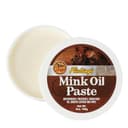
Fiebing's Mink Oil Paste (6 oz)

Fiebing's Mink Oil Paste (6 oz)

A heavy, water-repelling paste built for work boots and tack — and precisely the wrong product for most handbags. We list it so you can recognize it, buy it for the job it is actually good at, and keep it away from a bag you care about.

Best for boots, not bags
$6.99 · View on Amazon

$8.2515% off

Price as of September 5, 2026. #ad How we’re funded

The picks in full

#1Best for most bags

Leather Honey Leather Conditioner

The default conditioner we'd hand almost anyone: a long-running, non-toxic formula that a little of goes a long way with. It softens and protects most finished leathers and it's the safe first bottle for a new bag owner.

Strengths

  • Non-toxic formula that's been sold since 1968
  • A few drops cover a whole bag — one bottle lasts years
  • Works across bags, boots, furniture and auto leather

Trade-offs

  • Can slightly darken some untreated or light leathers — spot-test first
  • Not a cleaner — pair it with a leather cleaner for grime
TypeLeather conditioner
FormLiquid conditioner
Size8 oz
Best forConditioning finished leather, Reviving dry bags, Routine care

Specs read from the product listing, on July 21, 2026. “Not published” means the brand does not state that figure.

#2Best that won't darken

Bick 4 Leather Conditioner & Cleaner

The pick when you're worried about darkening. Bick 4 is specifically formulated not to darken leather, which makes it the safer choice for light-colored and finished bags where a heavier conditioner would change the color.

Strengths

  • Formulated specifically not to darken leather
  • Cleans and conditions in one step
  • Trusted by the boot and shoe-care crowd

Trade-offs

  • Lighter conditioning than a heavy oil-based product
  • Still spot-test — every hide reacts a little differently
TypeConditioner & cleaner
FormLiquid conditioner/cleaner
Size8 oz
Best forLight-colored leather, Finished bags, Regular upkeep

Specs read from the product listing, on July 21, 2026. “Not published” means the brand does not state that figure.

#3Best cleaner for bags

Leather Honey Leather Cleaner

The cleaner half of the routine, from the same maker as our top conditioner. A concentrate you dilute, so one bottle cleans a lot of leather — use it before conditioning to lift dirt the conditioner would otherwise seal in.

Strengths

  • Concentrated — dilutes to clean many bags per bottle
  • Non-toxic and safe on most finished leathers
  • Pairs cleanly with the Leather Honey conditioner

Trade-offs

  • It's a cleaner only — you still need a conditioner after
  • Always spot-test on delicate or unfinished leather
TypeLeather cleaner
FormLiquid cleaner (concentrate)
Size8 oz
Best forCleaning before conditioning, Routine care, Removing surface grime

Specs read from the product listing, on July 21, 2026. “Not published” means the brand does not state that figure.

#4Best traditional cleaner

Fiebing's Glycerine Saddle Soap Bar (7 oz)

The traditional leather cleaner, and a genuinely good one on sturdy, unfinished leather. It is a cleaner, not a conditioner, and it is more aggressive than a modern bag cleaner — which makes it useful in a narrow set of jobs and risky outside them.

Strengths

  • Glycerine formula is gentler than a yellow saddle soap
  • Shifts ground-in grime that a damp cloth will not
  • A single bar lasts years

Trade-offs

  • Strips oils as it cleans — you must condition afterwards, without exception
  • Can dull or lighten a finished, dyed handbag leather
  • Bar form is fiddlier than a pump cleaner for a small bag
TypeNot published
FormBar soap
Size7 oz
Best forDeep-cleaning rugged leather, Saddlery and tack, Pre-conditioning prep

Construction note. Saddle soap is a cleaner. Conservation guidance is consistent that cleaning removes oils, so a conditioning step afterwards is not optional.

Specs read from the product listing, on August 11, 2026. “Not published” means the brand does not state that figure.

#5Best for boots, not bags

Fiebing's Mink Oil Paste (6 oz)

A heavy, water-repelling paste built for work boots and tack — and precisely the wrong product for most handbags. We list it so you can recognize it, buy it for the job it is actually good at, and keep it away from a bag you care about.

Strengths

  • Genuinely effective at repelling water on heavy, unfinished leather
  • Softens stiff work leather faster than a light conditioner will
  • Costs very little for a large tin

Trade-offs

  • Darkens leather, often permanently — a real risk on a light-colored bag
  • Too heavy for finished bag leather; it can leave a greasy surface that attracts dirt
  • Not what you want on suede, nubuck or a delicate designer finish
TypeNot published
FormPaste
Size6 oz
Best forWork boots, Saddlery and tack, Rugged unfinished leather

Construction note. The listing itself positions this as boot and leathercraft care. Museum conservation guidance warns against over-oiling leather, which is the main reason we keep this off finished handbags.

Specs read from the product listing, on August 11, 2026. “Not published” means the brand does not state that figure.

What each product is actually for

Leather conditioner

A conditioner replenishes the oils and fats that leave leather over time through handling, heat and simple age. Those oils are what let the fibers slide past each other; without them leather stiffens and eventually cracks. Conditioners are formulated to be absorbed rather than to sit on the surface, and good ones are relatively light.

This is the product a leather bag needs, once or twice a year for most people. Our conditioning guide covers the routine and, more importantly, how little to use.

Mink oil

Mink oil is a heavy paste designed for boots, tack and other rugged unfinished leather that lives outdoors. It softens stiff work leather and makes it substantially more water-repellent, and it is genuinely excellent at that job.

On a finished handbag it is the wrong tool. It darkens leather strongly and often permanently — a real risk on anything tan, cream or light brown — and because it is heavy, the excess sits on the surface where it attracts grit and can leave a greasy sheen. Conservation guidance on leather objects consistently warns against over-oiling, and mink oil is the easiest way to do it.

Saddle soap

Saddle soap is a cleaner. It is good at shifting ground-in grime that a damp cloth will not touch, which is why it survives in stables and workshops. It is also more aggressive than modern bag cleaners, and it removes oils along with the dirt.

That means two things. You must condition afterwards, without exception. And on a dyed, finished handbag it can dull or lighten the surface, which is why we would reach for a dedicated leather cleaner on a bag and keep the saddle soap for boots and belts.

Will it darken my leather?

This is the question that decides most purchases, so here it is plainly.

Mink oil: yes, significantly, often permanently. Assume any light leather will end up a shade or two deeper.

Heavier conditioners: yes, moderately. Leather Honey and similar oil-rich conditioners darken most hides somewhat. On a mid or dark brown bag that reads as richness. On cream or pale tan it is a change you may not want.

Lighter cream conditioners: usually very little. Bick 4 is the pick specifically because it is formulated not to darken, which makes it the safe choice for light-colored and delicate finishes.

Saddle soap: it can lighten or dull. Different direction, same warning.

In every case the answer is the same discipline: spot-test on the base or an inside corner, wait, look properly. Every product on this page can change the color of some hide somewhere.

The routine that actually works

Clean first, condition second, and leave a gap. Cleaning removes oils; if you condition a dirty bag you drive the dirt in. If you clean and then skip the conditioning, you have left the leather drier than you found it.

For a bag in normal use, that means: wipe dust off as you notice it, do a proper clean once or twice a year with a mild leather cleaner, let it dry fully, then condition with a light coat and let it absorb overnight. That is the entire program. The most common mistake is not neglect but enthusiasm — over-conditioning leaves a tacky surface that collects grime, which our troubleshooting guide covers.

What about suede and coated leather?

None of these three products belongs on suede or nubuck. Oils and creams flat the nap permanently. Suede wants a brush, a suede eraser and a dedicated protector spray, and nothing else.

Coated, patent and heavily finished leathers cannot absorb conditioner — the finish is in the way — so conditioning them achieves very little beyond a temporary shine. Wipe them with a damp cloth and leave it there. If you are not sure which you have, the leather types guide explains how to tell.
Frequently asked questions

Can I use mink oil on a leather handbag?

We would not. Mink oil is formulated for rugged, unfinished leather like work boots and tack. On a finished handbag it darkens the leather strongly and often permanently, and the excess sits on the surface where it attracts dirt. A dedicated leather conditioner does the job a bag actually needs without those side effects.

Is saddle soap the same as leather conditioner?

No — they do opposite things. Saddle soap is a cleaner that removes oils along with dirt; a conditioner replaces oils. If you use saddle soap you must condition afterwards, or you will have left the leather drier than it started.

Which conditioner will not darken my leather?

A lighter cream conditioner like Bick 4 is formulated specifically not to darken, which makes it the safer choice on cream, tan and other pale leathers. Oil-rich conditioners such as Leather Honey generally darken most hides somewhat. Spot-test on a hidden area regardless — hides vary more than product claims do.

How often should I condition a leather bag?

Once or twice a year for a bag in normal use, more often in a dry climate or if the bag lives outdoors. Over-conditioning is more common than under-conditioning and causes its own problems: a tacky surface that holds dirt, and a bag that never fully absorbs what you keep applying.

Do I need a separate cleaner and conditioner?

For most people, yes, though a combined cleaner-conditioner kit is a reasonable middle ground for a bag in light use. The reason to separate them is control: you rarely need to clean and condition at the same frequency, and a proper clean should dry fully before any conditioner goes on.

Can any of these waterproof a leather bag?

Mink oil substantially increases water repellency, which is exactly why it exists — but at the cost of darkening and a heavier surface. For a bag, a dedicated leather protector spray is the more sensible route, and no treatment makes leather genuinely waterproof. Keeping it out of sustained rain remains the real answer.

Sources

Keep reading