The Patina Bench

What Is Oil-Tanned Leather?

The name describes a finishing step, not a tannage. Get that one fact straight and every care question about it answers itself.

By Stephen V.Last updated How we pick

The right conditioner for an oil-stuffed hide

Bick 4 Leather Conditioner & Cleaner

Bick 4 Leather Conditioner & Cleaner

$12.99 · View on Amazon

$14.9913% off

Price as of October 19, 2026. #ad How we’re funded

Oil-tanned and pull-up leathers already contain a lot of fat and wax, so the risk when you condition one is not dryness — it is adding more wax on top of a surface that has plenty, dulling the pull-up effect and darkening the hide unevenly. Bick 4 is our pick here for two reasons that come from Bickmore’s own product page rather than from us: it publishes a non-darkening claim, and it states that it is completely wax-free so the leather pores will not seal up. On a hide whose whole character is oil moving inside the fibre, a light wax-free conditioner is the one that will not fight the material. Apply sparingly, one thin pass, and let the leather tell you whether it wanted a second.

Read the full write-up

Here is the fact that makes sense of everything else: oil-tanned leather is not tanned with oil. Tanning is the chemical step that turns a raw hide into a stable material, and it is done with chromium salts or with vegetable tannins — our tannage guide covers both. “Oil-tanned” describes what happens after that: the tanned hide is loaded with oils, fats and waxes, so the finished leather carries a far higher fat content than a normally finished hide.

That one difference produces the whole personality of the material. It is soft and pliable from the day you get it, with no real break-in period. It is heavier than an equivalent hide, because fat has weight. It repels water better than untreated leather, because the fat occupies space water would otherwise enter. It is matte rather than glossy. And it does the thing people most associate with it: when you bend or scuff the surface, the oils move away from the stress point and the leather lightens there, then darkens back as the oils redistribute. That is the pull-up effect, and it is the same mechanism behind the crazy-horse and heavily distressed finishes described in our distressed leather guide.

The verdict.Oil-tanned leather is an excellent choice for a bag you intend to use hard and do not want to baby — it hides damage better than any uncoated finish, it shrugs off weather, and small scuffs can often be rubbed out with a thumb. It is a poor choice if you want a crisp, formal, evenly coloured bag, because the pull-up effect means it will never look uniform again after a month of use. The picks below are the three conditioners that matter for it, in the order we would reach for them, with live prices.

How this is funded:we earn a commission if you buy through our links, at no extra cost to you. It never changes which product we recommend, and we’ll tell you when we’d skip one. Full disclosure.

Quick picks

Ranked on leather grade, construction, capacity and value. Select a row to jump to the full write-up. We have not wear-tested these bags — here is exactly what we do instead.

Specs are what each listing itself publishes, read on July 21, 2026 – August 11, 2026; anything a listing does not state reads “Not published” rather than a guess. Prices are live as of October 19, 2026.

#ProductWhat it isBest forPrice
1
Bick 4 Leather Conditioner & Cleaner

Bick 4 Leather Conditioner & Cleaner

The pick when you're worried about darkening. Bick 4 is specifically formulated not to darken leather, which makes it the safer choice for light-colored and finished bags where a heavier conditioner would change the color.

Conditioner & cleanerBest routine conditioner
$12.99 · View on Amazon

$14.9913% off

Price as of October 19, 2026. #ad How we’re funded

2
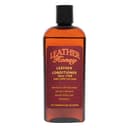
Leather Honey Leather Conditioner

Leather Honey Leather Conditioner

The default conditioner we'd hand almost anyone: a long-running, non-toxic formula that a little of goes a long way with. It softens and protects most finished leathers and it's the safe first bottle for a new bag owner.

Leather conditionerBest for a genuinely dry hide
$19.99 · View on Amazon

$27.9929% off

Price as of October 19, 2026. #ad How we’re funded

3
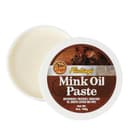
Fiebing's Mink Oil Paste (6 oz)

Fiebing's Mink Oil Paste (6 oz)

A heavy, water-repelling paste built for work boots and tack — and precisely the wrong product for most handbags. We list it so you can recognize it, buy it for the job it is actually good at, and keep it away from a bag you care about.

Not publishedBest for work leather only
$8.36 · View on Amazon

Price as of October 19, 2026. #ad How we’re funded

The picks in full

#1Best routine conditioner

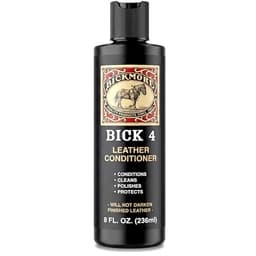
Bick 4 Leather Conditioner & Cleaner

The pick when you're worried about darkening. Bick 4 is specifically formulated not to darken leather, which makes it the safer choice for light-colored and finished bags where a heavier conditioner would change the color.

Strengths

  • Formulated specifically not to darken leather
  • Cleans and conditions in one step
  • Trusted by the boot and shoe-care crowd

Trade-offs

  • Lighter conditioning than a heavy oil-based product
  • Still spot-test — every hide reacts a little differently
TypeConditioner & cleaner
FormLiquid conditioner/cleaner
Size8 oz
Best forLight-colored leather, Finished bags, Regular upkeep

Specs read from the product listing, on July 21, 2026. “Not published” means the brand does not state that figure.

#2Best for a genuinely dry hide

Leather Honey Leather Conditioner

The default conditioner we'd hand almost anyone: a long-running, non-toxic formula that a little of goes a long way with. It softens and protects most finished leathers and it's the safe first bottle for a new bag owner.

Strengths

  • Non-toxic formula that's been sold since 1968
  • A few drops cover a whole bag — one bottle lasts years
  • Works across bags, boots, furniture and auto leather

Trade-offs

  • Can slightly darken some untreated or light leathers — spot-test first
  • Not a cleaner — pair it with a leather cleaner for grime
TypeLeather conditioner
FormLiquid conditioner
Size8 oz
Best forConditioning finished leather, Reviving dry bags, Routine care

Specs read from the product listing, on July 21, 2026. “Not published” means the brand does not state that figure.

#3Best for work leather only

Fiebing's Mink Oil Paste (6 oz)

A heavy, water-repelling paste built for work boots and tack — and precisely the wrong product for most handbags. We list it so you can recognize it, buy it for the job it is actually good at, and keep it away from a bag you care about.

Strengths

  • Genuinely effective at repelling water on heavy, unfinished leather
  • Softens stiff work leather faster than a light conditioner will
  • Costs very little for a large tin

Trade-offs

  • Darkens leather, often permanently — a real risk on a light-colored bag
  • Too heavy for finished bag leather; it can leave a greasy surface that attracts dirt
  • Not what you want on suede, nubuck or a delicate designer finish
TypeNot published
FormPaste
Size6 oz
Best forWork boots, Saddlery and tack, Rugged unfinished leather

Construction note. The listing itself positions this as boot and leathercraft care. Museum conservation guidance warns against over-oiling leather, which is the main reason we keep this off finished handbags.

Specs read from the product listing, on August 11, 2026. “Not published” means the brand does not state that figure.

How to recognise it in a listing

Sellers use several words for the same family of leather, and they are worth knowing because the care advice is identical for all of them: oil-tanned, oil-pulled, pull-up, waxy, crazy horse, and sometimes hot-stuffed. If a listing says any of those, or if the photos show a bag that is noticeably lighter along the fold lines and at the corners, you are looking at an oil-stuffed hide.

A quick in-hand test: press a thumbnail gently into a flat area and drag it an inch. On oil-tanned leather a pale line appears and then fades over a few seconds, and rubbing the spot with a warm finger removes it almost completely. On a coated or pigmented leather nothing happens at all, and on an unfinished veg-tan the mark stays. That is also the fastest way to tell an oil-tanned bag from the sealed finishes we describe in our saffiano guide.

The care advice that is half wrong

The line you will read everywhere is “never condition oil-tanned leather, it is already oiled”. That is a reasonable instinct taken too far. The accurate version has three parts:

  • It needs far less conditioning than normal leather, far less often. A hide stuffed with fat does not need feeding on a schedule. Condition when the leather looks and feels dry — matte in a lifeless way rather than a rich way, stiffer at the folds, pale at the wear points and staying pale.
  • But it does eventually need it. Oils migrate within the fibre and are slowly lost to heat, handling and cleaning, which means an oil-tanned bag at year eight is genuinely drier than it was at year one. Refusing to condition it then is how a pull-up hide ends up cracking at a fold.
  • What you use matters more than on other leather. Heavy waxes and greases sit on a surface that already has enough of both, flattening the pull-up effect you paid for and attracting dirt. A light, wax-free conditioner is the right call; a heavy mink-oil paste is the right product for boots and tack and the wrong one for a bag, which our conditioner versus mink oil comparison sets out in detail.

And one rule specific to this material: keep it out of heat. Fat and wax move when they warm up, so an oil-tanned bag left in a hot car or against a radiator can end up with blotchy dark patches where the oils have pooled. It is not the same damage as a dried-out hide and it does not always even out again. Our sun and heat page covers the mechanism, and our storage guide covers where to keep it.

Cleaning it without ruining the look

Use less water and less product than you would on a normal finished bag. A damp cloth takes surface dust off; a gentle leather cleaner handles real grime, worked in small sections. Two specific warnings. First, saddle soap and strong cleaners strip fats, which on this material means stripping the thing that defines it — our cleaner roundup has the gentler options. Second, cleaning an oil-tanned bag often lightens it temporarily, because you have moved oils around as well as dirt; give it a day before deciding it needs conditioning.

Water marks behave differently here too. Because the surface repels, drops tend to sit and then dry without a tide line, which is the opposite of what happens on an unfinished veg-tan — see our page on a bag that got wet for the version of this that does leave a ring.

Oil-tanned vs vegetable-tanned: not the same question

People compare these two as if they were alternatives, but they describe different stages. The tannage is chrome or vegetable; the oil stuffing is a finishing step that can be applied to either. In practice a great deal of what is sold as “oil-tanned” is chrome-tanned hide that has been heavily stuffed, and a great deal of what is sold as crazy horse is a veg-tanned hide treated the same way. So the honest comparison is:

  • Oil-stuffed, whatever the tannage— soft immediately, water-resistant, hides scuffs, pulls up light at the folds, never looks even.
  • Veg-tanned and lightly finished— firmer, breaks in over months, marks easily, darkens into a deep patina, looks even for longer. This is the leather our patina guide is really about.

Both are real leather and both are good buys; they suit different temperaments. If you want to see the oil-stuffed family in actual bags, the crazy-horse finishes in our vintage crossbody roundup and vintage tote roundup are the easiest examples to study, and our leather types overview places the whole family in context.
Frequently asked questions

What is oil-tanned leather?

Leather that has been tanned conventionally — with chromium salts or vegetable tannins — and then loaded with oils, fats and waxes as a finishing step. The name is misleading: no tanning is done with oil. The high fat content is what makes it soft, heavy, water-resistant and prone to the pull-up effect where it lightens at folds and scuffs.

Does oil-tanned leather need conditioning?

Much less often than normal leather, but not never. Condition it when it genuinely looks and feels dry — stiff at the folds, lifelessly matte, staying pale at the wear points. Use a light, wax-free conditioner rather than a heavy wax or grease, which flattens the pull-up effect and attracts dirt.

Is oil-tanned leather waterproof?

No, but it is genuinely water-resistant, because the fats occupy the space water would otherwise enter. Drops often sit on the surface and dry without leaving a tide line, which is the opposite of what happens on unfinished vegetable-tanned leather. Stitching and cut edges are unprotected either way.

Why does my oil-tanned bag go light where it bends?

That is the pull-up effect, and it is the material working as designed. Bending or scuffing moves the oils away from the stress point, so the leather lightens there and then darkens again as the oils redistribute. Rubbing the spot with a warm finger usually brings most of the colour straight back.

Is crazy horse leather the same as oil-tanned?

Effectively yes — crazy horse is a hide finished with oils and waxes so that it lightens where it is bent and scuffed, which is the same mechanism. The care advice is identical: light conditioning, gentle cleaning, and keep it out of heat.

What should I not use on oil-tanned leather?

Heavy mink-oil pastes and greases on a bag (they are made for boots and tack), saddle soap and strong cleaners that strip fats, and heat of any kind. A hot car can leave blotchy dark patches where the oils have pooled, and that does not always even out again.

Sources

  • U.S. National Park Service — Curatorial Care of Objects Made From Leather and Skin Products — NPS museum-handbook guidance on cleaning, handling, humidity and the risks of over-treating leather (accessed July 21, 2026)
  • Conservation and restoration of leather objects (Wikipedia) — Overview of leather deterioration, relative-humidity control and conservation practice (accessed July 21, 2026)
  • Bickmore — Bick 4 Leather Conditioner (8 oz) — The maker's own product page: "Unlike most leather conditioners, Bick 4 Leather Conditioner will NOT darken your leather"; "Unlike other brands, Bick 4 is a completely wax-free product" so "the leather pores will not seal up"; it is "essential for maintaining all types of smooth finished leather" including handbags; "Do not use on suede, rough-out, distressed or napped leathers"; directions are "Apply liberally with a clean cloth. Let dry and buff. Repeat as necessary", with "If item is very dirty, clean with Bickmore Saddle Soap or Bick 1" and "For extra protection and waterproofing apply Gard-More after conditioning" (accessed October 3, 2026)
  • Lexol (Manna Pro) — Lexol® Leather Neatsfoot Conditioner — The maker's page for the SEPARATE neatsfoot-oil conditioner, cited only to show where Lexol does make a color claim: this product is described as "Non-darkening for light leather" and as extending leather lifespan, softening and preventing cracking, "Best used with Lexol Cleaner", with the same instruction to "Always test Lexol® Neatsfoot Leather Conditioner on a small, hidden area before each use". The standard Lexol Leather Conditioner page makes no equivalent non-darkening claim (accessed October 10, 2026)
  • Buffalo Jackson — Full Grain Leather vs. Top Grain Leather — Industry explainer on how full-grain and top-grain leather are made and how they age (accessed July 21, 2026)

Keep reading