The Patina Bench

Your Leather Bag Got Wet: What to Do Now

Water almost never ruins a leather bag. Drying it wrongly does. Here is the order of operations, and the one product you will need at the end of it.

By Stephen V.Last updated How we pick

The bottle you need at step five

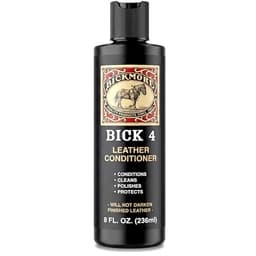
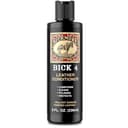
Bick 4 Leather Conditioner & Cleaner

Bick 4 Leather Conditioner & Cleaner

$12.99 · View on Amazon

$14.9913% off

Price as of October 18, 2026. #ad How we’re funded

Water leaves a dried hide short of the oils that kept it supple, so the last step of any rescue is conditioning — and on a bag with a visible water line, the conditioner you choose matters more than usual, because the wrong one deepens the mark instead of blending it. Bick 4 is our pick here for one published reason: Bickmore states that it will not darken leather, and that it is completely wax-free so the pores will not seal up. That is exactly what a bag recovering from a soaking needs — replacement oils without a colour change and without a film over a surface that still has moisture working its way out. Do the whole panel, not the mark.

Read the full write-up

Start here, because the first hour is most of the outcome. If your bag has just been rained on or soaked, do these five things in this order:

  1. Empty it completely and open everything. Every pocket, every zip. Water trapped against a lining is what turns a wet bag into a mouldy bag, and that takes days rather than hours.
  2. Blot, never rub. Press a dry towel against the leather and lift. Rubbing a saturated surface moves the dye around and can lift the finish while it is soft.
  3. Stuff it loosely with paper and let it hold its own shape. Plain paper or a towel, changed when it goes damp. A wet bag dries into whatever shape it is in, so this is the step that decides whether it still looks like your bag.
  4. Dry it slowly, at room temperature, away from everything warm. No hairdryer, no radiator, no sun, no airing cupboard, no car dashboard. This is the step people get wrong and it is the only one that causes permanent damage.
  5. Condition it once it is completely dry, across the whole panel.Not the wet patch — the whole side, edge to edge, or you will swap a water mark for a conditioner mark.

That is the answer. The rest of this page is why each step is what it is, what to do about a water line that is still there afterwards, and the two or three cases where the bag genuinely will not come back. If you want to stop this happening again, our waterproofing guide is the preventive half and the better page to read on a dry day.

How this is funded:we earn a commission if you buy through our links, at no extra cost to you. It never changes which product we recommend, and we’ll tell you when we’d skip one. Full disclosure.

Quick picks

Ranked on leather grade, construction, capacity and value. Select a row to jump to the full write-up. We have not wear-tested these bags — here is exactly what we do instead.

Specs are what each listing itself publishes, read on July 21, 2026 – August 12, 2026; anything a listing does not state reads “Not published” rather than a guess. Prices are live as of October 18, 2026.

#ProductWhat it isBest forPrice
1
Bick 4 Leather Conditioner & Cleaner

Bick 4 Leather Conditioner & Cleaner

The pick when you're worried about darkening. Bick 4 is specifically formulated not to darken leather, which makes it the safer choice for light-colored and finished bags where a heavier conditioner would change the color.

Conditioner & cleanerBest for the conditioning step
$12.99 · View on Amazon

$14.9913% off

Price as of October 18, 2026. #ad How we’re funded

2
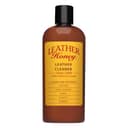
Leather Honey Leather Cleaner

Leather Honey Leather Cleaner

The cleaner half of the routine, from the same maker as our top conditioner. A concentrate you dilute, so one bottle cleans a lot of leather — use it before conditioning to lift dirt the conditioner would otherwise seal in.

Leather cleanerBest for evening out a water line
$16.99 · View on Amazon

$24.9932% off

Price as of October 18, 2026. #ad How we’re funded

3
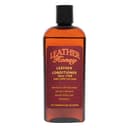
Leather Honey Leather Conditioner

Leather Honey Leather Conditioner

The default conditioner we'd hand almost anyone: a long-running, non-toxic formula that a little of goes a long way with. It softens and protects most finished leathers and it's the safe first bottle for a new bag owner.

Leather conditionerBest for a badly dried-out bag
$19.99 · View on Amazon

$27.9929% off

Price as of October 18, 2026. #ad How we’re funded

4
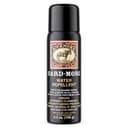
Gard-More Water & Stain Repellent (Leather & Suede)

Gard-More Water & Stain Repellent (Leather & Suede)

One of the few repellents that names both smooth leather and suede rather than being a sneaker product with 'leather' added to the label. That breadth is the reason to own it: one bottle covers a mixed collection instead of two.

Not publishedBest for stopping the next one
$16.99 · View on Amazon

Price as of October 18, 2026. #ad How we’re funded

The picks in full

#1Best for the conditioning step

Bick 4 Leather Conditioner & Cleaner

The pick when you're worried about darkening. Bick 4 is specifically formulated not to darken leather, which makes it the safer choice for light-colored and finished bags where a heavier conditioner would change the color.

Strengths

  • Formulated specifically not to darken leather
  • Cleans and conditions in one step
  • Trusted by the boot and shoe-care crowd

Trade-offs

  • Lighter conditioning than a heavy oil-based product
  • Still spot-test — every hide reacts a little differently
TypeConditioner & cleaner
FormLiquid conditioner/cleaner
Size8 oz
Best forLight-colored leather, Finished bags, Regular upkeep

Specs read from the product listing, on July 21, 2026. “Not published” means the brand does not state that figure.

#2Best for evening out a water line

Leather Honey Leather Cleaner

The cleaner half of the routine, from the same maker as our top conditioner. A concentrate you dilute, so one bottle cleans a lot of leather — use it before conditioning to lift dirt the conditioner would otherwise seal in.

Strengths

  • Concentrated — dilutes to clean many bags per bottle
  • Non-toxic and safe on most finished leathers
  • Pairs cleanly with the Leather Honey conditioner

Trade-offs

  • It's a cleaner only — you still need a conditioner after
  • Always spot-test on delicate or unfinished leather
TypeLeather cleaner
FormLiquid cleaner (concentrate)
Size8 oz
Best forCleaning before conditioning, Routine care, Removing surface grime

Specs read from the product listing, on July 21, 2026. “Not published” means the brand does not state that figure.

#3Best for a badly dried-out bag

Leather Honey Leather Conditioner

The default conditioner we'd hand almost anyone: a long-running, non-toxic formula that a little of goes a long way with. It softens and protects most finished leathers and it's the safe first bottle for a new bag owner.

Strengths

  • Non-toxic formula that's been sold since 1968
  • A few drops cover a whole bag — one bottle lasts years
  • Works across bags, boots, furniture and auto leather

Trade-offs

  • Can slightly darken some untreated or light leathers — spot-test first
  • Not a cleaner — pair it with a leather cleaner for grime
TypeLeather conditioner
FormLiquid conditioner
Size8 oz
Best forConditioning finished leather, Reviving dry bags, Routine care

Specs read from the product listing, on July 21, 2026. “Not published” means the brand does not state that figure.

#4Best for stopping the next one

Gard-More Water & Stain Repellent (Leather & Suede)

One of the few repellents that names both smooth leather and suede rather than being a sneaker product with 'leather' added to the label. That breadth is the reason to own it: one bottle covers a mixed collection instead of two.

Strengths

  • Covers smooth leather and suede, so one bottle handles a mixed set of bags
  • Long-established formula rather than a recent sneaker-care spin-off
  • Light application, so it does not build up a visible film

Trade-offs

  • Repellent, not waterproofing — sustained rain will still get through
  • Can slightly darken untreated full-grain; spot-test on the base first
TypeNot published
FormSpray
SizeNot published
Best forSmooth leather bags, Suede bags, Pre-winter protection

Construction note. No treatment makes leather waterproof. A repellent buys you time to get out of the rain; it does not change what the material is.

Specs read from the product listing, on August 12, 2026. “Not published” means the brand does not state that figure.

Why heat is the only thing that does permanent damage

Tanned hide is a structure of collagen fibres held apart by oils and a controlled amount of moisture. Water does two things to that: it displaces the oils, and it temporarily relaxes the fibre structure. Neither is a disaster. What is a disaster is driving the water out fast with heat, because the fibres then shrink and set against each other with nothing between them. That is what produces a bag that is stiff, board-like and cracked at the fold points — and it is not reversible by conditioning afterwards. You can feed a dry hide. You cannot un-shrink a cooked one.

This is why museum conservation guidance for leather objects is so insistent about slow drying and stable conditions, and why it treats heat and rapid moisture change as the primary agents of leather deterioration rather than water itself. A bag drying for two days on a shelf is fine. The same bag on a radiator for three hours may be finished.

The practical version, in order of how much damage they do: a hairdryer and direct sun are the worst, a radiator or heated rail is nearly as bad, a warm car is worse than people think, and a tumble dryer is the end of the bag. Our sun and heat page covers the slower version of the same damage, which is what a bag left in a car all summer gets.

The water line, and why it is a whole-panel problem

Here is the thing nobody warns you about. The mark left after a bag dries is usually not a stain — it is a tide line. As the water spreads through the leather it carries dissolved tanning compounds, salts and loose dye with it, and when it evaporates it leaves them concentrated in a ring at the furthest point it reached. The leather inside the ring is often slightly lighter, because it has been rinsed; the ring itself is darker, because everything the water moved has been deposited there.

Which tells you what the fix has to be: you cannot treat the ring on its own. Spot-treating a tide line gives you a treated patch with a ring around it. The two things that work are both whole-panel jobs.

  • Wet the whole panel evenly and let it dry evenly. Counter- intuitive, and it is the traditional answer: dampen the entire side with a barely-wet cloth, edge to edge and seam to seam, so there is no boundary left for a ring to form at, then dry it slowly as above. This works on unfinished and lightly finished leathers and does nothing for a heavily sealed one.
  • Clean the whole panel with a leather cleaner. The more controllable version, and what we would do on a bag we cared about. A proper cleaner lifts and redistributes what the water deposited rather than adding moisture back into the hide. Work a panel at a time, never a spot.

Then condition, whole panel again. Our cleaning guide has the full routine, and our troubleshooting index is the page for the other marks a bag collects.

Which product for which state

A bag that got caught in rain and dried with a faint mark: Bick 4.One step, cleans and conditions, and the maker publishes a non-darkening claim — which is the property you want when the problem you are solving is a colour difference. Wax-free, so it will not glaze a surface that is still settling.

A bag with a clear tide line: clean the panel first.Leather Honey’s cleaner is our pick for this because it is a dedicated cleaner rather than a combined product, so you can do the lifting step properly before you put any oil back. Condition afterwards without fail — every cleaner lifts oils as well as dirt, so the conditioning step is part of the job rather than an optional extra.

A bag that was genuinely soaked and has dried stiff: Leather Honey.This is the case for the oil-rich option. A hide that has lost its oils needs more than a surface coat, and the maker publishes a six-month interval for it, which tells you how deep an application is meant to go. It will darken the leather — accept that in exchange for suppleness, do the whole bag so the darkening is even, and read our review of it first if the colour matters to you.

A bag you do not want this to happen to again: Gard-More. Bickmore’s own Bick 4 directions name it for exactly this — “for extra protection and waterproofing apply Gard-More after conditioning” — which is a rare case of a maker telling you its conditioner is not a waterproofer. Our protector-spray roundup compares the field, and our Bick 4 versus Lexol comparison goes through what each maker will and will not put in writing.

What not to do, in order of how much it costs you

  • Do not apply heat. Covered above, and it is the only item on this list that is usually unfixable.
  • Do not condition while it is still damp.You will seal moisture into the hide, which is how a wet bag becomes a mouldy bag. Wait until it is dry all the way through, which takes longer than the surface suggests — a day or two, not an afternoon.
  • Do not put it in a plastic bag to “protect” it. A damp bag in plastic is a mould incubator. Our mould removal guide exists mostly because of this mistake, and our storage guide explains why a cotton dust bag is the right cover.
  • Do not rub the wet area with anything. A saturated finish is soft and will lift.
  • Do not stuff it with newspaper that still has ink on it. Wet leather and newsprint transfer ink both ways. Plain paper or a towel.
  • Do not reach for mink oil as a rescue product.It darkens heavily and it is a fundamentally different thing from a conditioner — our comparison explains which jobs each one is for.

When it is not coming back

Three cases, and it is worth knowing them so you do not spend money on a bag that is finished.

A hide that dried under heat and has gone hard.Fibre damage, not oil loss. Conditioning will soften the surface slightly and will not restore the structure. If it has cracked at a fold, that crack is permanent — our repair-kit page covers cosmetic filling and recolouring, which is the most that can be done.

A coated synthetic that has delaminated. PU and bonded materials are a plastic layer over a fabric backing, and water that gets behind that layer lifts it. There is no conditioning a plastic film back down. Our material comparison explains the difference, and it is the single clearest practical argument for real hide.

Suede and nubuck that got soaked.Napped leather mats when it is wet and dried, and it needs brushing back up rather than conditioning — a smooth-leather conditioner will flatten the nap permanently. Our suede guide has the right approach and the right kit.

And the honest reassurance: most bags are fine. A full-grain or top-grain bag that was rained on, emptied, stuffed, dried slowly and then conditioned generally comes out looking like a bag that has been somewhere, which is most of the point of owning leather. Our patina guide is about that process in the deliberate version.
Frequently asked questions

Is a leather bag ruined if it gets wet?

Almost never by the water itself. What ruins a leather bag is drying it with heat — a hairdryer, a radiator, direct sun or a hot car — because that shrinks and sets the fibre structure with the oils gone. Empty it, blot it, stuff it loosely, dry it slowly at room temperature and condition it once it is completely dry, and most bags recover fully.

How do you dry a leather bag that got soaked?

Slowly, at room temperature, with air moving around it and nothing warm nearby. Empty every pocket, open every zip, blot the surface with a dry towel rather than rubbing it, and stuff it loosely with plain paper or a towel so it dries in its own shape. Change the stuffing when it goes damp. Expect a day or two, not an afternoon.

How do you get a water mark off a leather bag?

Treat the whole panel, never the mark. A water line is tanning compounds and dye deposited in a ring at the water's furthest point, so spot-treating it just adds a second ring. Either dampen the whole side evenly with a barely-wet cloth and dry it slowly, or clean the whole panel with a leather cleaner, then condition the whole panel.

Can I use a hairdryer on a wet leather bag?

No, and this is the one instruction on the page we would call absolute. Rapid heat drives moisture out faster than the fibre structure can cope with, and the result is a stiff, board-like hide that cracks at the fold points. Conditioning afterwards does not reverse it. Room temperature and patience are the whole technique.

Should I condition a leather bag straight after it gets wet?

Not while it is damp — you would seal moisture into the hide, which is how a wet bag becomes a mouldy one. Wait until it is dry all the way through, then condition the whole panel rather than the area that got wet. A non-darkening, wax-free conditioner is the safest choice when you are trying to even out a colour difference.

Will rain stain a brown leather bag?

It can leave a visible tide line, and it is more noticeable on lighter and unfinished leathers than on dark or heavily finished ones. It is usually a redistribution of what was already in the leather rather than a stain from outside, which is why cleaning and conditioning the full panel evens it out when spot treatment does not.

What about a leather bag that got wet with a laptop inside?

Deal with the laptop first and the bag second — a leather bag in heavy rain with an unprotected machine in it is the one genuine failure mode of this whole category. For the future, a padded sleeve inside the bag does more for the laptop than any waterproofing spray does, and a protector spray does more for the bag than most people expect.

Sources

Keep reading