Leather Buying Guides
The plain-English education behind a good buy — full-grain versus top-grain, which leather suits a bag, and whether a leather bag is worth it at all.
Almost every bad leather-bag purchase traces back to the same thing: not knowing what the words on the label mean. “Genuine leather” sounds like the best kind and is actually one of the lower grades. “Vegan leather” is plastic. A bag can be truthfully called leather and still be built to fall apart. The gap between what a label says and what you get is exactly where people overpay — and it is what these guides exist to close.
This is the education side of The Patina Bench. No product is being sold to you on this page; the goal is simply to make you a harder person to fool. Read the grade guide first — full-grain versus top-grain is the single most useful distinction in leather goods — then the wider leather-types ranking, then the honest cost case for whether leather is even worth it for how you actually carry a bag. Fifteen minutes here will save you from the most common and most expensive mistakes.
Everything in Guides
Full-Grain vs Top-Grain Leather
The single most useful distinction in leather goods — what each grade is, how they age, and which to buy.
Leather Types: Which Is Best for a Bag?
Full-grain, top-grain, genuine, bonded and PU — the grades and finishes, ranked for how they hold up in a bag.
Are Leather Bags Worth It?
The honest cost-per-year case for and against a leather bag — and when a cheaper material is the smarter buy.
What Is Full-Grain Leather?
A straight definition, how it's made, how to recognize it on a listing, and why it costs what it costs.
Leather vs Vegan Leather
What 'vegan leather' actually is, how long it lasts, and the honest environmental picture on both sides.
How to Spot Fake Leather
The listing red flags and the in-hand checks that separate real hide from a convincing synthetic.
What Is Patina on Leather?
The thing this site is named after — what patina is, which leathers develop it, and how to help it along.
Vegetable-Tanned vs Chrome-Tanned Leather
The tanning method decides how a bag smells, ages and reacts to water — and almost no listing tells you which you are buying.
Why Are Leather Bags So Expensive?
Where the money actually goes — hide selection, square footage, labor and hardware — and which parts of the price are just the label.
How Long Do Leather Bags Last?
Realistic lifespans by grade, what actually fails first, and the two habits that decide whether a bag lasts three years or fifteen.
Leather Bag Hardware: What to Check
Bags almost never fail at the leather. Zips, rivets, D-rings and stitching are what to inspect before you buy.
What Is Genuine Leather?
The most misunderstood phrase on any listing. It is real hide — and it is also the third grade down. Both facts matter.
Pebbled vs Smooth Leather
The finish you can actually see in a listing photo — which one hides scratches, which one ages better, and what pebbling can conceal.
Leather vs Suede vs Nubuck
Same hide, different side, completely different life. Which napped leathers are worth owning and which ones you will regret.
How to Break In a Leather Bag
A stiff new bag is not a defective one. What softens with use, what never will, and the shortcuts that damage leather.
What Color Leather Bag Should You Buy?
Color decides how a bag ages, what it hides and how often you will reach for it — and one shade quietly outperforms the rest.
Buffalo Leather vs Cowhide
Buffalo is thicker and more coarsely grained, cowhide is more consistent and comes in everything — and the grade still matters more than the species.
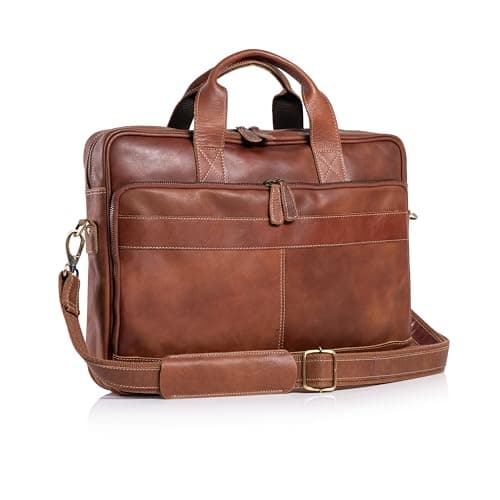
Our top pick
KomalC Buffalo Leather 16" Briefcase
$89.99 · View on AmazonPrice as of October 20, 2026. #ad How we’re funded
Goat Leather vs Cowhide
Why a full-size goat-hide tote can weigh 1.41 lb, what you give up for that, and when cowhide is the only sensible answer.
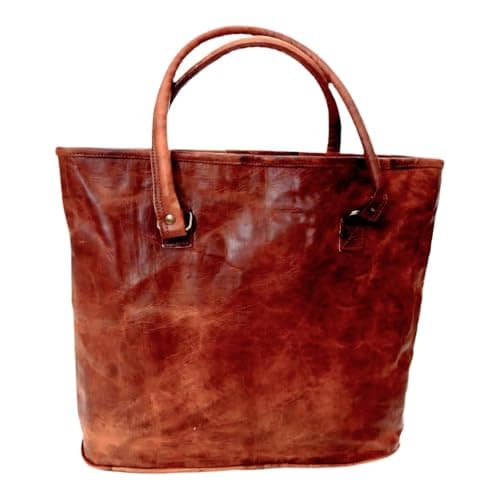
Our top pick
Firu-Handmade Vintage Goat Leather Tote
$47.99 · View on AmazonPrice as of October 20, 2026. #ad How we’re funded
What Is Italian Leather?
An origin claim, not a grade. What the Tuscan vegetable-tanning consortium actually certifies, and how to read the phrase on a bag listing.
Our top pick
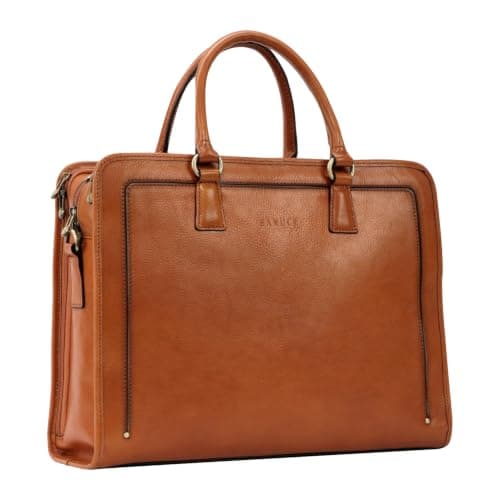
Banuce Italian Full Grain Leather Briefcase for Women (15.6")
$214.99 · View on AmazonPrice as of October 20, 2026. #ad How we’re funded
What Is Distressed Leather?
Three finishes that produce a real distressed look, the sprayed-on effect that imitates it, and the sentence in a listing that tells them apart.
Our top pick
befen Vintage Waxed Leather Structured Tote
$79.99 · View on AmazonPrice as of October 20, 2026. #ad How we’re funded
How Heavy Is a Leather Bag?
Every empty weight published by the bags we track, from 0.91 lb to 3.35 lb — and the three things that explain the whole spread.
Our top pick
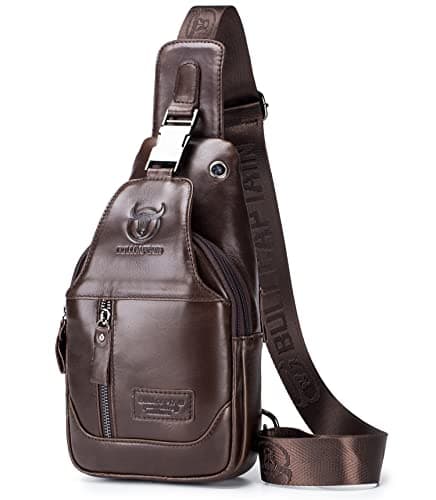
BULLCAPTAIN Genuine Leather Crossbody Sling
$36.98 · View on AmazonPrice as of October 20, 2026. #ad How we’re funded
Leather Bag Sizes: What Actually Fits
A4 paper, three laptop sizes and a water bottle measured against real published dimensions, plus the arithmetic that catches an impossible fit claim.
Our top pick
befen Full-Zip Leather Laptop Tote (15.6")
$56.99 · View on AmazonPrice as of October 20, 2026. #ad How we’re funded
Leather Bag Linings: Canvas, Cotton, Microfiber or None
The spec nobody reads and everybody later regrets. What each lining material tells you about the bag around it, and why an unlined bag sheds.
Our top pick
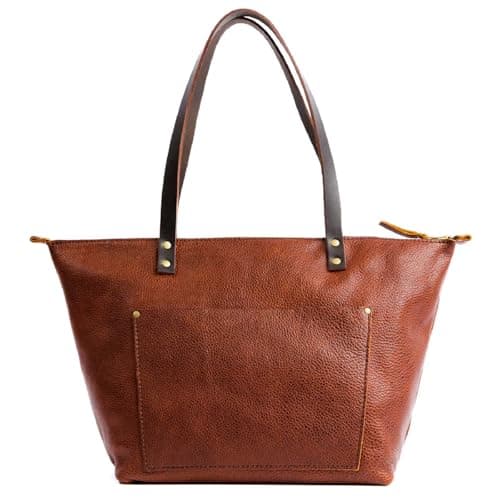
Portland Leather Goods Large Zipper Tote
Leather vs Nylon Bags
Nylon wins on weight, weather and price, and it is not close. The three things leather still wins, argued with the brand that sells you both.
Our top pick
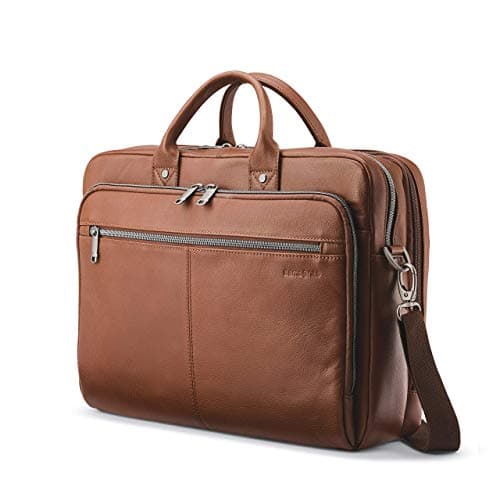
Samsonite Classic Leather Toploader Briefcase
Do Leather Bags Stain Clothes?
Some do, for about a month, and you can tell which before you buy. What crocking is, which bags do it, and the test that takes thirty seconds.
Our top pick
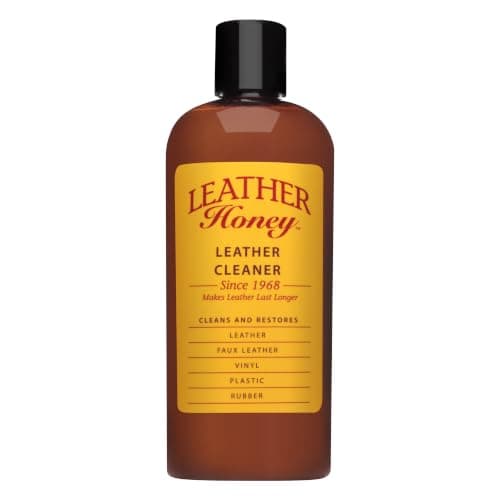
Leather Honey Leather Cleaner
What Is Saffiano Leather?
A cross-hatch pattern pressed into coated calfskin — the most practical leather in the category and the one that will never develop a patina.
Our top pick
Raymaple Top Grain Leather 15.6" Laptop Tote
What Is Oil-Tanned Leather?
Not a tannage at all — a finishing step, which is why the care instructions everyone repeats for it are half wrong.
Our top pick
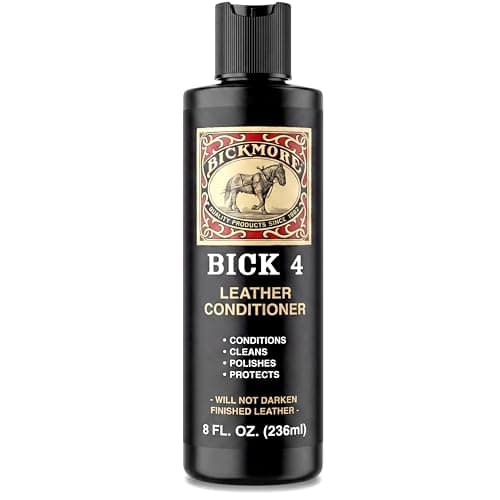
Bick 4 Leather Conditioner & Cleaner
Bag Shoulder Pain: What Actually Helps
Three variables decide whether a bag hurts — total weight, strap width and how long it is on you. Two of them are free to fix.
Our top pick
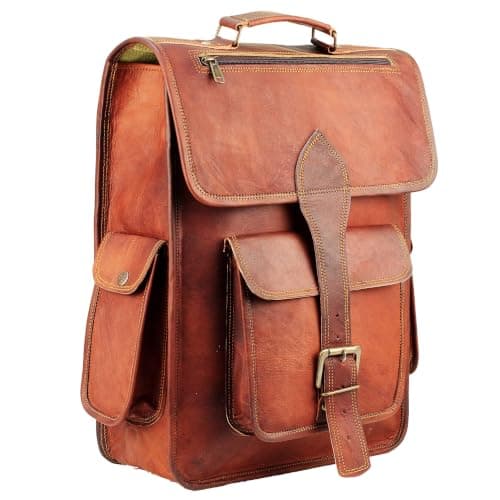
HULSH Handmade Veg-Tan Top Grain Leather Rucksack
$67.99 · View on AmazonPrice as of October 20, 2026. #ad How we’re funded
Leather Bags and Sweat
Sweat is salt water with a low pH, and it is the one thing a bag meets daily that attacks the tannage itself. What it does and how to stay ahead of it.
Our top pick
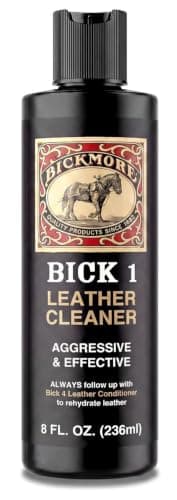
Bickmore Bick 1 Leather Cleaner (8 oz)
Start with the leather grade
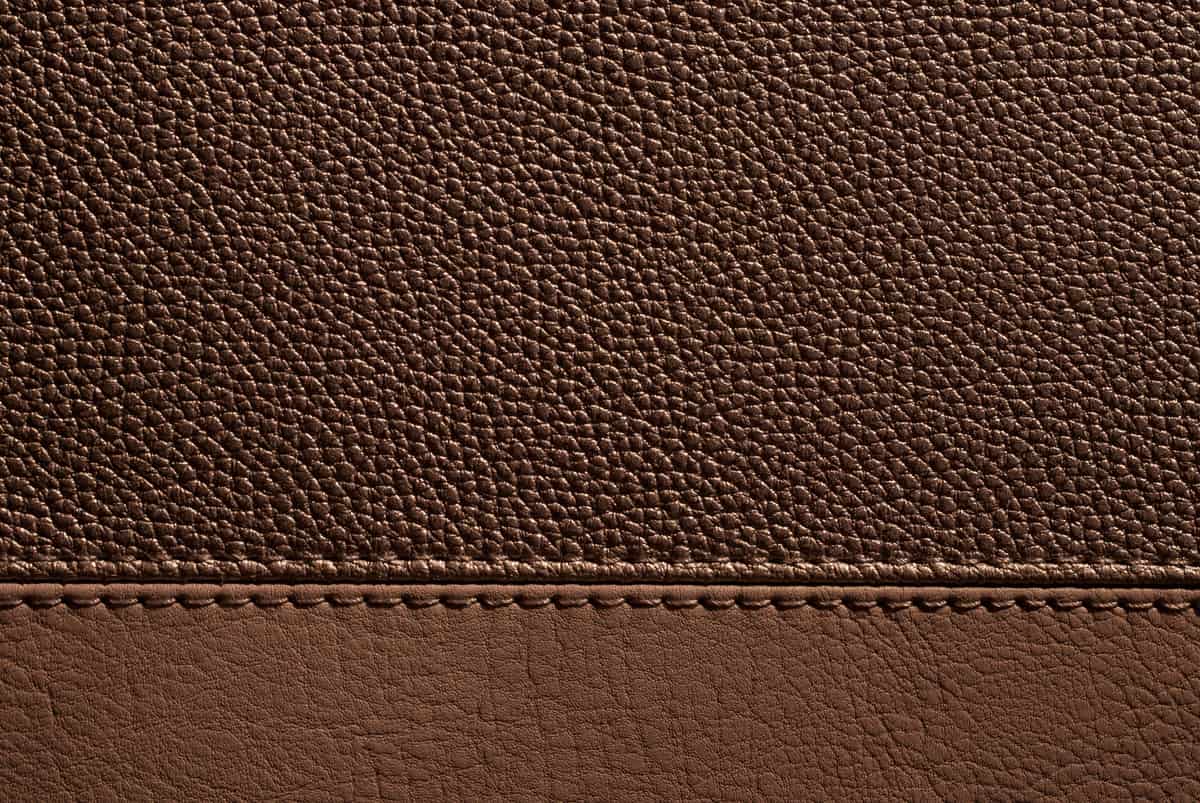
If you learn one thing about buying leather, make it the grade. The grade describes which layer of the hide the leather is cut from and how much of the natural surface survives — and it predicts, better than the brand or the price tag, how the bag will age. Full-grain keeps the entire top surface of the hide intact, including its small marks, which is why it is the strongest and the only grade that develops a real patina over time. Top-grain has that surface sanded and buffed smooth and usually sealed with a finish, giving a more uniform look that trades some durability and character for consistency. Below those sit “genuine leather,” a catch-all for lower layers and lower grades, and bonded leather, which is shredded scraps glued to a backing and the weakest of the lot. The words are not marketing flourishes; they map to how long the bag lasts.
The reason grade matters so much is that the U.S. Federal Trade Commission lets a wide range of products be described as leather, and requires only that material which looks like leather but is not be disclosed as such. “Leather” on a tag is a floor, not a promise of quality. The grade — and whether the seller is willing to state it plainly — is what separates a buy-once bag from one you replace in two years.
Then the construction
Grade tells you about the material; construction tells you whether the bag was built to use it well. The same full-grain hide can become a heirloom bag or a disappointment depending on how it is put together. Look at the stitching — tight, even, and dense holds up; loose or sparse stitching fails first. Check the edges: are they finished and sealed, or raw and fraying? Check the hardware, the zippers, and the lining, which is where cost-cutting hides. A structured bag with a rigid frame carries and protects a laptop differently from a soft, unlined tote, and neither is “better” — they are built for different jobs. When you compare two bags at the same price, construction is usually what actually separates them.
Then the price
Only after grade and construction does price become useful information, because now you can tell what you are paying for. A higher price backed by full-grain leather and tight construction can be genuine value spread over a decade of use; the same price on a genuine-leather bag with glued edges is just markup. Cheap is not automatically wrong, either — for an occasional-use bag, or a fast-changing style, a modest genuine-leather or even a well-made synthetic can be the smarter spend. The point of these guides is to let you read a listing, decode the grade, judge the build, and then decide whether the price is fair for how you will actually use the bag — instead of guessing, or trusting a label that was written to sell.