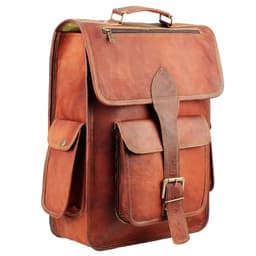
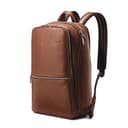
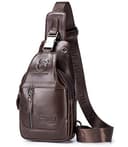
Step 1: take weight out, starting with the bag
Empty the bag onto a table and put back only what you used in the last week. Most people remove a pound or two of accumulated nothing: a second charger, a book that has been in there for a month, an umbrella in July, a cosmetics bag with three items in it, old receipts and a water bottle that could be filled at the other end instead.
Then look at the bag. If an empty tote is 2.4 lb and the bag beside it is 1.4 lb, switching bags saves you a pound every day for free — the same pound you would otherwise be negotiating over with your laptop. Two specific trade-offs are worth knowing:
- A padded laptop compartment adds weight to the bag, and a separate slim sleeve inside a lighter bag often weighs less in total while protecting the machine just as well.
- Size drives weight more than anything else. A 16- or 18-inch tote in thick hide is a heavy object before it holds anything, which is why our large tote page exists as a deliberate choice rather than a default one. If your load does not need the volume, our small totes are the better buy for your shoulder.
Step 2: get more strap against your body
Three cheap moves, in rough order of effect.
Add a strap pad, or swap to a wider strap. If the bag has D-rings or clasps, a wider aftermarket strap is a genuine upgrade and costs a fraction of a new bag; our page on crossbody-strap totes explains how to match a strap to the hardware and what length to buy. A thin rolled leather strap is the worst case for a heavy load and a flat wide one is the best.
Use a longer drop. A bag that sits at your hip on a long strap hangs from your skeleton; a bag on a short handle drop has to be held on by your shoulder. Roughly 11 to 13 inches of drop is shoulder carry and 20 to 25 inches is crossbody. The longer one is less work, which is most of the reason a crossbody feels lighter than a tote of the same weight.
Alternate sides, deliberately.Carrying on the same shoulder every day for years is the pattern people describe when they say one shoulder is worse than the other. Alternating is free and most people have simply never tried it — it feels wrong for a week and then stops feeling like anything.
Step 3: change the shape, if the load justifies it
Each shape loads you differently, and the differences are not subtle:
- Backpack— two straps, load close to your back, weight shared. The best answer for a heavy daily laptop carry, and our work backpack roundup is the shortlist. The cost is formality and the faff of taking it off to get at anything.
- Crossbody or sling— one strap, but long, and the load transfers diagonally to the opposite hip. Excellent for a light load carried for hours; limited by what fits, as our crossbody versus tote comparison sets out.
- Messenger— a crossbody that takes a laptop, which is a real middle ground; see our messenger picks. It puts a flat weight across your back, which many people find easier than a tote and harder than a backpack.
- Tote or shoulder bag— the hardest on one joint, and the easiest to live with at a desk. Fine for a short carry, punishing for a long standing commute.
- Hand carry— a briefcase or a tote carried by the handles takes the load off your shoulder entirely and puts it through your arm and grip. It is the forgotten option and it is genuinely useful in short bursts; our briefcase versus backpack page weighs it up.
The honest summary: for a heavy load over distance, a backpack wins and nothing else is close. For a light load all day, a long crossbody wins. A tote wins when the carry is short and the access matters, which is most office days — and that is a perfectly good reason to own one, as long as you are not asking it to do a commuting job it is shaped badly for.
What the leather itself contributes
Three material facts, each of which costs or saves you weight. Thicker hide weighs more, so the better grades are heavier for the same bag — our grade comparison covers what you get for it. Structure weighs more than softness, because a bag that holds its shape has stiffeners and backing in it. And leather weighs substantially more than nylon for the same bag, which our leather versus nylon page states plainly: if the only thing that matters to you is weight, leather is the wrong material and we would rather say so.
Where leather helps is at the strap. A wide, well-cut leather strap distributes load better than a thin webbing one and softens to your shoulder over time instead of staying rigid, which our break-in guide describes. A bag you have carried for two years is usually more comfortable than the same bag was new.