The published weights, lightest to heaviest
Every figure below is stated by the seller on its own listing, read on the dates recorded in our product tables. Nothing here is estimated or converted from a guess.
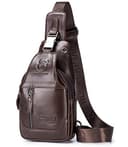
- 0.91 lb— BULLCAPTAIN genuine-leather sling, a small vertical crossbody at 11.8 x 6.2 x 1.9 in
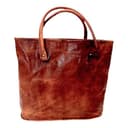
- 1.41 lb— Firu-Handmade goat-leather tote, canvas-lined, 16 x 12 x 4 in
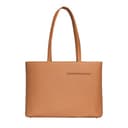
- 1.76 lb— Raymaple top-grain laptop tote, stated to fit a 15.6-inch machine
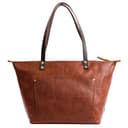
- 1.76 lb— befen vintage waxed tote, 13.78 x 3.94 x 11.22 in
- 1.9 lb— Morriloom vintage work tote with a padded 15.6-inch sleeve (its product-details block says 1.29 lb; we record the heavier figure)
- 2.2 lb— befen full-zip leather laptop tote, padded for a 15.6-inch machine
- 2.43 lb— S-ZONE top-zip work tote, foam-padded laptop compartment, 17.72 in across the top
- 2.6 lb— Yevabo genuine-leather 15.6-inch laptop backpack, 16.1 x 11.8 x 5.9 in
- 2.75 lb— HULSH vegetable-tanned top-grain rucksack, 16 x 12 x 4.5 in
- 3.31 lb— CHAYELL hair-on cowhide diaper backpack, 16 x 9 x 13 in
- 3.35 lb— Portland Leather Goods Large Zipper Tote, full-grain, 18 in across the top
Two coated-synthetic bags we track for comparison land right in the middle of that range: a 35-litre faux-leather diaper backpack at 2.6 lb and a 17-pocket faux-leather backpack at 2.78 lb. That is worth knowing, because “leather is heavy” is often used as a reason to buy a synthetic, and at the same size and structure the saving is smaller than people expect. Our leather versus vegan leather comparison covers the trade honestly.
What makes one leather bag heavier than another
Grade and thickness
Full-grain is the heaviest hide per square foot, because it keeps the dense outer surface that top-grain sands away and is generally used thicker. The Portland full-grain tote at 3.35 lb and the Raymaple top-grain tote at 1.76 lb are a near-perfect illustration: similar bag, similar job, roughly double the weight. Our full-grain versus top-grain guide explains the step that produces the difference, and our top-grain tote roundup makes the case for the lighter grade on a shoulder bag.
Species
Thin hides make light bags. The goat tote at 1.41 lb is a full 16-inch bag with a canvas lining and four interior sections, and it still undercuts every cowhide work tote we track. Buffalo runs the other way: thicker than cow, and the reason buffalo appears in briefcases and large totes rather than small bags. Our goat versus cowhide guide and buffalo versus cowhide guide cover both ends.
Structure and features
Everything that makes a bag more useful makes it heavier. A reinforced base, metal feet, a foam laptop compartment, a detachable strap, a luggage pass-through, bronze hardware: the S-ZONE top-zip tote has all of those and is the heaviest tote on this list apart from the full-grain one. A structured briefcase uses several times the hide of a soft tote of the same capacity, which is why structure costs both money and weight.
Size, obviously — but check the depth
Width gets the attention and depth drives the weight, because depth is where the panels multiply. A slim 4-inch-deep daypack and a 7-inch-deep one are very different objects even at the same height.
When a published weight cannot be trusted
Three failure modes turn up often enough to be worth naming, and we record all three rather than quietly picking a number.
Two different weights on one listing.The Morriloom tote says 1.9 lb in its feature bullets and 1.29 lb in its product-details block; the S-ZONE top-zip tote also publishes two. Our rule is to record the heavier figure, because the generous number is the one more likely to be wrong in the seller’s favor.
Weights that are not physically credible.The KomalC buffalo tote’s weight field says 0.65 lb for a bag 18.5 inches across in thick buffalo hide, and the Fossil Jessie’s says 0.13 lb for a 16-inch leather tote. Neither can be true, so our tables record both as not published rather than repeating a number as fact.
No weight at all.The most common case by a wide margin. Where a seller has not measured the bag, we do not estimate on its behalf — the table says “Not published” and the reason is structural: our product data has no field a guess could be typed into.
How much weight is too much?
There is no universal number, and anyone quoting you a percentage of body weight for a handbag is inventing a rule. What is useful is to think about the whole load rather than the bag, and about how it is carried.
Add the empty bag to what goes in it. A 15.6-inch work laptop with its charger is a substantial weight on its own, and a water bottle is more than most people would guess. A 2.4-pound tote plus a laptop, charger, bottle and notebook is a real daily load, and that is before the personal kit. Then consider the carry: on two padded straps, spread across your back, a heavier bag is comfortable for far longer than a lighter one hanging off one shoulder. That is the single most useful trade available to you, and it is why we send long-walk commuters to our work backpack roundup and desk-bound buyers to our shoulder bag roundup.
If weight is your main constraint, three decisions do most of the work: choose top-grain or a thin hide over full-grain, choose a soft bag over a structured case, and buy the smallest size that takes what you actually carry. Our bag size guide works through that last one with the published dimensions, and our minimalist backpack page is the lightest end of the backpack category.