Start with the shape, not the brand
Two questions settle which shape you want, and neither of them is about leather.
What is the heaviest thing you carry every day?
If the answer is a phone and a card holder, you want a crossbody, and you can spend accordingly — a small bag carrying almost nothing barely stresses the hide, so the grade matters far less than the size. If the answer is a laptop, a folder or a water bottle, you want a tote, a backpack or a briefcase, and the grade starts to matter a great deal, because the weight is being carried by seams, handles and strap anchors every single day.
How long is the bag on your body while you are moving?
Under ten minutes, choose on how the bag looks and how easily you can get into it. Over twenty minutes on foot or on transit, choose on how the weight sits: two straps across your back beat one shoulder every time, and leather is heavy before you load it. This is the single most common regret in the category — a beautiful structured bag that turns out to be a genuine burden on a walking commute. Our tote versus backpack comparison is honest about the one-shoulder penalty, and our tote versus shoulder bag piece covers the narrower version of the same choice.
The five shapes, and who each one is for
Crossbody
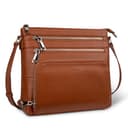
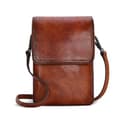
The shape most women end up wearing most often, and the one we recommend first to anyone who does not commute with a laptop. Worn across the body it spreads its weight, leaves both hands free and is much harder to lose track of than a shoulder bag. The category splits cleanly by size: minimalist phone bags at the small end, everyday crossbodies with real organization in the middle, and roomier slings that will take a small tablet or a water bottle. Our women’s crossbody roundup works through all three sizes, and how to wear a crossbody bag covers strap length, which changes how the same bag looks more than the bag itself does.
Tote
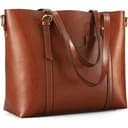
The do-everything shape, and the right answer if your daily load is bulky rather than heavy. A soft leather tote swallows a laptop, a lunch, a book and a pair of shoes without complaint, and it is the least fussy bag to get into — no flap, no clasp, just an open top or a single zip. The trade-off is that everything you put in it hangs from one shoulder, and that an unstructured tote slumps when it is underfilled. Our women’s tote roundup covers the category, and large leather totes is the page to read if capacity is the whole point.
Backpack
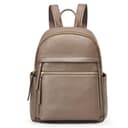
The shape that fixes the shoulder problem, and the one most people underestimate because they picture a school bag. A leather backpack purse is a different object: purse-sized, soft, and cut to look like a bag rather than a daypack. If you walk, cycle or stand on transit, it is the most comfortable way to carry real weight in leather. Be clear-eyed about what it is not — most backpack purses have no padded laptop protection at all. Our women’s backpack roundup and the dedicated leather backpack purse page both filter this category down to the bags that are actually hide, which is a smaller list than the search results suggest.
Briefcase
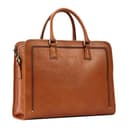
The shape the women’s category is genuinely short of. Most “women’s work bags” are totes with a laptop slot added, which is fine until you need the bag to stand up beside a desk or protect a machine on a train. A structured briefcase is heavier and more expensive because it uses several times the leather and has to hold its shape loaded — that is what you are paying for, and if your work is client-facing it is worth it. Our women’s briefcase roundup lists the alternatives at every price, including the soft work totes that cost a fraction as much.
Satchel
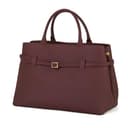
The middle ground between a crossbody and a tote: a structured top-handle bag, usually with a detachable strap, that carries a smaller load than a tote but reads more polished than either. It is the shape that handles a day that starts at a desk and ends at dinner. Because satchels are small, full-grain leather is reachable here at prices that would only buy you genuine leather in a large tote — which is exactly why one is on this list.
Grade: where the money is worth spending
The rule that holds across the whole women’s category is the same one that holds in the men’s: put the grade money into the bag that carries weight daily.
Full-grain keeps the hide’s intact outer surface, the densest and strongest part of the skin, which is why it survives repeated flexing at handles, strap anchors and base corners. That matters enormously in a work bag under a laptop every day and hardly at all in a phone crossbody, where the leather is being worn rather than stressed. So a genuine-leather crossbody at a quarter of the price is a sound purchase, not a compromise — our genuine-leather explainer sets out precisely what that grade is and is not, and full-grain versus top-grain covers the step in between.
The one thing to insist on at every price is a grade stated in writing. “Premium leather,” “real leather” and “luxury leather” are adjectives, not grades, and silence in a listing usually means corrected hide at best.
The coated-synthetic problem
The women’s category has a specific hazard the men’s does not, and it is worth naming plainly: a very large share of bags marketed as leather here are polyurethane. The pattern is consistent — the title says “leather,” the photography is styled to look like hide, and the structured material field further down says PU, vegan leather, or faux leather. The structured field is the one to trust, because it is the one the seller is accountable for.
None of that makes PU bags illegitimate. They are lighter, they wipe clean, and they cost less, which is a reasonable set of reasons to buy one. What is not reasonable is paying leather prices for one by accident. Our leather versus vegan leather guide compares the two honestly, and how to spot fake leather lists the exact listing wordings that mean plastic. Every pick on this page is real hide, and where a grade is unstated we have said so on the card rather than in a footnote.
Weight and size, the trade nobody mentions
Leather is dense, and a bag’s empty weight is the number listings are least likely to publish. Two bags of the same dimensions can differ by a noticeable margin depending on whether the leather is soft and thin or thick and structured, and the heavier one is almost always the better-made one. That is a real trade rather than a flaw: structure protects what is inside and holds its shape for years, softness is comfortable and forgiving and slumps.
The practical version of this is to buy for your actual load rather than your busiest imaginable day. A tote bought for the one week a year you carry a laptop, a folder and gym kit will spend the other fifty-one weeks half-empty and sagging. Buy for the ordinary Tuesday.
Color
Mid-brown or tan for a bag you want to age visibly, black for formal work, and a saturated color only if it is your second or third bag rather than your first. Brown hides marks better than black, reads neutral against most wardrobes and actually develops a patina; black looks much the same in ten years because there is nowhere for it to darken to. Pale leathers — cream, blush, light tan — are beautiful and genuinely higher maintenance, because denim transfers onto them. Our color guide works through the trade-offs, including how to deal with color transfer if you buy pale anyway.
Which one to buy
If you do not carry a laptop and want one bag: the befen crossbody, which is the bag we point most people at and costs less than most people expect real hide to. If you carry less than that — phone, cards, keys — the Iswee is the honest size for that load, and a bigger bag would just be dead weight.
If your carry is bulky rather than heavy: the Kattee tote, which is soft genuine leather in the classic top-handle shape and takes a smaller laptop without a padded sleeve. If you walk or stand on your commute: the Kattee backpack purse, which is real hide in a category dominated by coated synthetics.
If you want an actual briefcase rather than a tote with a laptop slot: the Banuce, which is the priciest bag on this page by a distance and the only one built to stand up loaded beside a desk. And if you want the top grade without the premium price, the DONNAIN satchel is full-grain at a mid-range cost — the trade is simply that it is smaller than a work tote.
Making them last
Women’s bags fail in a predictable order: the handle where it is gripped, the strap anchors, the base corners, then the zip. All four respond to the same two habits — do not set the bag down on wet ground, and do not store it loaded, because a bag stored full stretches into that shape permanently. Add a thin coat of conditioner two or three times a year on the handles, strap and corners rather than the flat panels, and the bag will outlast the trend that sold it to you. Our conditioning guide covers how little to use, and our storage guide covers the humid-closet problem that ruins more bags than wear ever does.