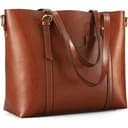
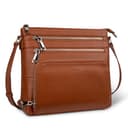
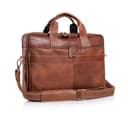
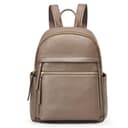
What actually gets cut at this price
Budget bags are not worse versions of expensive bags; they are bags where specific things have been economized. Knowing which things lets you decide whether you care.
The leather grade
Under $100 you are mostly buying genuine leather— real hide, but a mid-tier grade, often a corrected or split layer with a finish on top. It looks and smells like leather and holds up to daily use. What it will not do is develop the deep patina of full-grain. Our leather types guide sets out exactly where each grade sits.
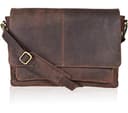
The exception is small bags and value-brand briefcases, where full-grain does appear under three figures — the KomalC buffalo case here is a real example, and our full-grain crossbody picks include several at this level.
The hardware
Plated rather than solid, and lighter gauge. Zips are where budget bags most often fail first, well before the leather does. If you can see the zip brand in the listing photos, that is a good sign; unbranded hardware on a bag you will open ten times a day is the corner most worth worrying about.
The seller relationship
Most bags at this price come from marketplace makers rather than established brands. That is not a quality judgment — several make genuinely good bags — but it does mean that if something goes wrong, your recourse is the marketplace return policy rather than a company with a repair department.
What does not get cut
Fit, capacity and design are frequently just as good as on bags costing three times as much. A well-shaped genuine-leather crossbody carries exactly as usefully as an expensive one; you are trading longevity and finish, not function.
Where the budget reaches, and where it does not
Strong under $100: crossbodies, slings, small shoulder bags, everyday soft totes, messengers, and every leather-care product worth owning. In these categories you can buy real leather without giving up the basics.
Possible but tighter:backpack purses and value briefcases. Real-leather options exist, but the range narrows and you should read the material field carefully — this is where synthetics are most often dressed up as leather. Backpacks get their own shortlist in our under-$100 leather backpack picks, because the shape needs more material and more hardware than anything else at this price.
Not realistic: large structured work totes, full-grain briefcases from name brands, and 17-inch laptop cases. A structured bag needs several times the hide of a soft one, and the material cost alone puts it past the line. If that is what you need, our under-$300 briefcase picks are the realistic next bracket.
How to avoid the traps at this price
The under-$100 bracket is exactly where misleading listings cluster, because it is where a synthetic can plausibly pretend to be hide. Three checks handle almost all of it: read the title for a stated grade rather than the word leather; confirm it in the structured material field further down the page; and sanity-check the price against the size, because a large “leather” bag priced like a nylon one is not leather. Our guide to spotting fake leather covers the rest.
Making a budget bag last
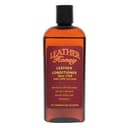
A cheap leather bag that is looked after will outlast an expensive one that is not, and care costs almost nothing. Keep it off wet ground, do not store it loaded or sealed in plastic, and condition it once or twice a year. The conditioner on this list costs less than a lunch and will extend the life of any of the bags above it — our conditioning guide covers the routine, which takes about ten minutes.