What each shortcut actually does
A washing machine. All four problems above at once, plus the mechanical one at its worst. A leather bag that has been through a cycle typically comes out stiff, misshapen, lighter and patchier in colour, with the finish lifted at the fold points. Occasionally a cheap unstructured bag survives it. Do not read that as a method.
A tumble dryer. The single worst thing on this page. Heat plus tumbling on a wet hide is how you get a bag that is hard, shrunken and cracked, and none of that is reversible by conditioning. If a bag has already been through one, skip to the honest-damage section below.
Dish soap or hand soap and warm water. The commonest piece of bad internet advice about leather. It is alkaline, it strips the oils aggressively, and the amount of water involved is usually far too much. It will often look fine for a week and then the leather goes dull and tight.
Holding it under a tap. Saturation without any cleaning benefit. Running water does not lift ground-in dirt from a grain surface; it just redistributes it and leaves a tide line when it dries, which our got-wet page explains how to fix.
Rubbing alcohol or hand sanitiser. It dissolves finishes and dyes. It will take the colour off a finished bag in one pass and leave a pale patch you cannot blend. There are narrow cases where a restorer uses solvents deliberately; a bag at a kitchen table is not one of them.
Baby wipes. Popular, and mostly harmless on a sealed finish for a quick wipe, but they contain surfactants and moisturisers that build up as a film and attract dirt. They are a convenience, not a cleaning method.
A magic-eraser style melamine sponge. It is an abrasive. It works by sanding, which on leather means sanding the finish off. Our scratch guide covers what actually helps a marked surface.
What to do instead, by how dirty it is
Dusty or just tired: dry cloth, then condition. Most bags that people want to wash do not need a cleaner at all. Wipe the surface with a dry microfiber cloth, get the dust out of the seams with a soft brush, empty and wipe the lining, and condition. Our conditioning guide has the routine and the warning about using too much.
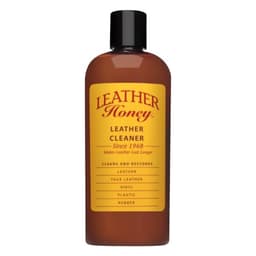
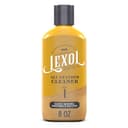
Visibly soiled: a dedicated leather cleaner, panel by panel. Product onto a damp cloth, never onto the bag; one panel at a time, edge to edge, so you do not leave a boundary; then condition the whole bag. Leather Honey’s cleaner is our general pick for this. Lexol’s is the gentler route and the bottle in that line carrying the pH-balanced claim — worked up as a foam on a wet cloth, it puts very little liquid onto the leather, which is exactly the property you want here. Our cleaner roundup compares every cleaner we track.
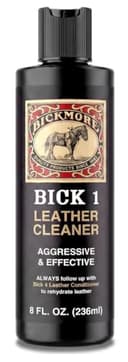
Genuinely grimy, salt-marked or neglected: Bick 1.Its own listing calls it an aggressive cleaner for hardworking leather like tack and boots, and Bickmore’s own directions pair it with Bick 4 afterwards. That is more cleaner than a lightly used handbag needs, which is exactly why it is the right bottle for a bag that has been neglected for years. Keep it off suede and nubuck. Our Bick 4 versus Lexol comparison goes through both brands’ two-step routines and what each maker will put in writing.
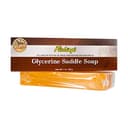
Saddle soap: the traditional answer, and read the caveat.A glycerine saddle soap bar is what generations of people used on tack, and it does clean. The caution for a handbag is that it is a soap — so the alkalinity point above applies — and it leaves a matte, slightly dulled surface that suits a working saddle and does not always suit a finished bag. Use it sparingly, on a damp cloth rather than a wet one, and condition afterwards without fail. It is also the bottle most likely to darken a pale bag.
Suede or nubuck: none of the above. Napped leather is cleaned dry, with a brush and an eraser, and any liquid cleaner will mat the nap. Our suede guide has the right kit.
If it has already been washed
Deal with the shape first, because that window closes as it dries. While the bag is still damp, stuff it loosely with plain paper or a towel so it dries in its own shape, open every pocket and zip, and put it somewhere room-temperature with air moving. No heat of any kind. Expect a day or two.
Once it is dry all the way through, condition it generously and evenly, whole panels at a time, and then do it again a few days later. A washed hide has lost oils rather than structure, and oils can be replaced. If it has gone stiff but not hard, two or three conditioning passes over a fortnight usually bring most of the suppleness back — an oil-rich conditioner is the right choice here rather than a light one, and our conditioner roundup compares the options including which ones darken.
Two things will not come back, and it is better to know now. Fibre damage from heat — a bag that is hard and board-like rather than merely stiff, or has cracked at a fold — is permanent; the most that can be done is cosmetic, and our repair-kit page covers filling and recolouring. And a coated synthetic that has delaminated is finished, because what has lifted is a plastic film rather than a hide — our material comparison explains the difference and it is the clearest practical case for real hide.
The lining is a separate question
Half the time the thing that actually smells or looks dirty is not the leather at all. A lining collects crumbs, pen ink and the residue of a leaking bottle, and you can treat it much more freely than the hide — a damp cloth with a little mild soap on a cotton or canvas lining is fine, as long as you keep the water away from the leather and let it dry fully open. A synthetic suede or microfiber lining wipes clean and should not be soaked. Our lining guide explains what each material can take, and our smell removal guide starts with the lining for exactly this reason.
And if the problem is mould rather than dirt, that is its own procedure — our mould guide has it, and the first instruction there is also not to wash the bag.