Leather Bag Buying Guide
Shape, grade, construction, size, budget — the whole decision in order, from a site that will tell you when to spend less.
Almost every bad leather-bag purchase comes from making the decisions in the wrong order. People start with a budget, then a brand, then a look, and end up with a bag that is the wrong shape for how they travel or the wrong size for what they carry. The material is usually the last thing they check and the first thing they complain about.
The right order is shape, size, grade, budget — and this page walks through all four. If you want a shortcut, the four starting picks below are the bags we would hand someone in each of the main shapes, each with a live price. If you want to make the decision properly, keep reading past them.
How this is funded:we earn a commission if you buy through our links, at no extra cost to you. It never changes which product we recommend, and we’ll tell you when we’d skip one. Full disclosure.
Quick picks
Ranked on leather grade, construction, capacity and value. Select a row to jump to the full write-up. We have not wear-tested these bags — here is exactly what we do instead.
| # | Product | Best for | Price |
|---|---|---|---|
| 1 | 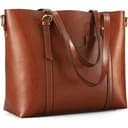 Kattee Genuine Leather Tote The tote we'd steer most people to first: soft genuine leather, a classic top-handle shape, and a price that undercuts the department-store versions of the same look. A do-everything daily and light-work bag. | Start here: everyday tote | $66.00 · View on Amazon Price as of October 19, 2026. #ad How we’re funded |
| 2 | 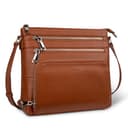 befen Soft Real Leather Crossbody Bag A genuine-leather everyday crossbody at a price most people can say yes to. It nails the two things a daily bag has to get right — a soft, real-leather hand and enough organization to find your phone without digging. | Start here: crossbody | $45.99 · View on Amazon Price as of October 19, 2026. #ad How we’re funded |
| 3 | 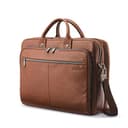 Samsonite Classic Leather Toploader Briefcase The safe, grown-up default. Samsonite's classic leather line is the one to buy if you want a real-brand briefcase with a structured, professional look, a padded laptop section and a warranty behind it — not a marketplace gamble. | Start here: work briefcase | |
| 4 | 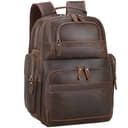 TIDING Full Grain Leather 15.6" Backpack The full-grain pick, and our choice for work. TIDING states full-grain leather, fits a 15.6-inch laptop, and has the multi-pocket layout a work commute actually needs — a bag built to patina rather than peel. | Start here: full-grain backpack | $169.99 · View on Amazon Price as of October 19, 2026. #ad How we’re funded |
Step 1: choose the shape
This is the decision that determines whether you like the bag, and it is decided by how you travel rather than by taste.
Crossbody if your daily carry is a phone, cards, keys and one or two extras and you want your hands free. It is the most comfortable way to carry a light load and the shape most people reach for most often. See the crossbody hub.
Tote if your cargo is bulky, variable or work-shaped and you want to drop things in without unzipping anything. See the tote hub.
Briefcase or messenger if you carry a laptop and need the bag to read as professional. A briefcase protects better; a messenger is faster to use and kinder on a walk. See the briefcase hub and the comparison.
Backpack if you walk any distance with something heavy. Two straps halve the load per shoulder, and past roughly fifteen pounds this is the only sensible answer regardless of dress code. See the backpack hub.
Step 2: size it to your ordinary day
The most expensive common mistake is buying too big. An under-filled bag slumps, looks wrong, weighs more than it needs to, and swallows small items. Size the bag to a normal Tuesday, not to the one day a month you carry everything.
Two practical checks before you buy. Measure the largest thing that must fit — a specific laptop, a water bottle, a folder — and compare it against a published interior dimension, not the exterior. And check the handle or strap drop clears a coat, because that is the quiet disappointment that turns a shoulder bag into a hand-carry bag for five months of the year.
Where a listing publishes nothing, treat it as an unknown. On this site a spec row that says “Not published” means exactly that — we do not fill those gaps with estimates.
Step 3: read the grade
There are only three phrases that tell you something useful, and they run in descending order of quality:
- Full-grain.The hide’s natural surface intact. The strongest grade and the only one that develops a real patina. Buy it for a bag you will carry for years — our full-grain explainer covers what it actually gets you.
- Top-grain. Surface buffed and sealed. Smoother, more uniform, more scratch-resistant, and it stays looking much as it did new. Legitimately the right choice if a changing bag would bother you.
- Genuine leather. Real hide, mid-tier grade, usually corrected and finished. Fine for an occasional or budget bag; it will not patina.
Everything else is a warning or a synthetic. “Vegan leather,” “PU” and “faux” mean plastic. “Premium leather” and “real leather” are adjectives standing where a grade should be. And “bonded leather” is scraps glued to a backing and coated — it peels, and we would not buy it. Our guide to spotting fake leather covers the full vocabulary and the in-hand checks.
Step 4: check the construction
This is the step almost everyone skips, and it matters more than the grade for how long the bag lasts. Bags do not fail at the leather — they fail at zips, strap attachments and seams.
Zoom in on three things in the listing photos: a maker’s name stamped on the zip slider; reinforcement and cross-stitching where the strap meets the body; and finished rather than raw edges. Then read the one- and two-star reviews for the words zip, strap, stitching and peel. Our hardware guide is the full version, and it is the highest-value thirty seconds in the whole process.
Step 5: decide the budget last
Leather is priced by the square foot, so the honest answer depends almost entirely on size. A real-leather crossbody under $50 is a genuinely good buy; a large “leather” tote at the same price is not leather.
Rough guidance: under $50 gets you a real-leather small bag and, occasionally, full-grain. Under $100 covers most totes, messengers and every care product worth owning — our under-$100 picks are one per category. Under $300 is where structured briefcases and laptop-protecting work bags live. Above that you are mostly paying for a brand, which is a legitimate purchase as long as you know that is what it is — our pricing guide breaks the whole thing down.
Before you click buy
Four last checks, each of which takes seconds and each of which prevents a specific common regret.
- Color, honestly. Mid-brown and black go with everything and read as classic. Tan is lovely and much more specific. If this is your only good bag, buy the boring one.
- Weight. Structured leather runs two and a half to four pounds before you load it. If you walk, that matters.
- Returns window. Bags are among the most-returned categories precisely because size and shape are personal. Keep the packaging.
- Budget ten dollars for a conditioner.Ten minutes twice a year is the difference between a bag that lasts three years and one that lasts fifteen — see the conditioner picks.
When not to buy leather at all
We would rather say this than sell you something you regret. If you walk a long way in a genuinely wet climate, waxed canvas is the better material. If weight is a hard constraint, nylon wins outright. If you change bags every year or two because your taste moves, a synthetic is the honest choice and the cheaper one over time.
Leather is worth it when you will keep the bag, carry it often, and would rather it aged than stayed new. Our cost-per-year guide works through the arithmetic, and our lifespan guide gives realistic numbers by grade.
Frequently asked questions
How do I choose a leather bag?
In this order: shape, then size, then grade, then budget. Shape is decided by how you actually travel and what you carry; size by your real daily load rather than your largest day; grade by how long you intend to keep the bag. Budget comes last because the first three narrow the field far more than price does.
What leather grade should I buy?
Full-grain if the bag will be carried most days for years — it keeps the hide's strongest layer and develops a patina. Top-grain if you want an even, low-maintenance finish that stays as it is. Genuine leather is real hide of a mid-tier grade and is perfectly reasonable for an occasional or budget bag. Avoid bonded leather entirely.
How much should I spend on a leather bag?
Less than most people assume. Real-leather crossbodies exist well under $50 and good totes under $100, because leather is priced by the square foot and small bags use little of it. Spend more when you want a better grade, real structure, or a laptop compartment built into the bag rather than added as a slot.
How do I know a bag is really leather?
Read the title for a stated grade rather than the word leather, then confirm it in the structured material field further down the listing. 'Vegan leather', 'PU' and 'faux' all mean plastic. If the title says leather and the material field says polyurethane, believe the material field.
What size leather bag should I get?
Size it to your ordinary day, not your busiest one. The most common regret is buying too large: an under-filled bag slumps, looks wrong and is heavier than it needs to be. If one day a week needs more capacity, a second small bag is a better answer than one oversized one.
Is a more expensive leather bag always better?
Up to a point. Spending more reliably buys a better grade, more careful construction and better hardware until roughly the mid-hundreds. Past that, most of the additional money goes to brand, design and retail markup rather than to anything that makes the bag last longer.
Sources
- U.S. FTC — Leather Guides — The FTC guides on how leather and imitation-leather products must be described (accessed July 21, 2026)
- Buffalo Jackson — Full Grain Leather vs. Top Grain Leather — Industry explainer on how full-grain and top-grain leather are made and how they age (accessed July 21, 2026)
- U.S. National Park Service — Curatorial Care of Objects Made From Leather and Skin Products — NPS museum-handbook guidance on cleaning, handling, humidity and the risks of over-treating leather (accessed July 21, 2026)
Keep reading
Best Everyday Leather Bags
One pick per shape for a bag you will use five days a week.
Two numbers worth settling before you buy
Two specs decide more about whether you will actually carry a bag than almost anything else, and both are usually missing from a listing. Our guide to how heavy leather bags are gives every empty weight the bags we track publish, from 0.91 lb to 3.35 lb, and our leather bag size guide measures A4 paper, three laptop sizes and a water bottle against real published dimensions, including the arithmetic that catches a fit claim a bag cannot keep.
Start hereBest Leather Bags Under $100
One real-leather pick per category under three figures.
Two numbers worth settling before you buy
Two specs decide more about whether you will actually carry a bag than almost anything else, and both are usually missing from a listing. Our guide to how heavy leather bags are gives every empty weight the bags we track publish, from 0.91 lb to 3.35 lb, and our leather bag size guide measures A4 paper, three laptop sizes and a water bottle against real published dimensions, including the arithmetic that catches a fit claim a bag cannot keep.
See the picksBest Leather Work Bags
One pick per shape for the commute, judged on laptop protection and weight.
Two numbers worth settling before you buy
Two specs decide more about whether you will actually carry a bag than almost anything else, and both are usually missing from a listing. Our guide to how heavy leather bags are gives every empty weight the bags we track publish, from 0.91 lb to 3.35 lb, and our leather bag size guide measures A4 paper, three laptop sizes and a water bottle against real published dimensions, including the arithmetic that catches a fit claim a bag cannot keep.
See the work picksLeather Types: Which Is Best for a Bag?
The full ranking — full-grain, top-grain, genuine, bonded and PU.
Two numbers worth settling before you buy
Two specs decide more about whether you will actually carry a bag than almost anything else, and both are usually missing from a listing. Our guide to how heavy leather bags are gives every empty weight the bags we track publish, from 0.91 lb to 3.35 lb, and our leather bag size guide measures A4 paper, three laptop sizes and a water bottle against real published dimensions, including the arithmetic that catches a fit claim a bag cannot keep.
Read the guideBest Leather Bag Brands
Which makers are worth buying, and what each name is actually buying you.
Two numbers worth settling before you buy
Two specs decide more about whether you will actually carry a bag than almost anything else, and both are usually missing from a listing. Our guide to how heavy leather bags are gives every empty weight the bags we track publish, from 0.91 lb to 3.35 lb, and our leather bag size guide measures A4 paper, three laptop sizes and a water bottle against real published dimensions, including the arithmetic that catches a fit claim a bag cannot keep.
See the brands