What suede and nubuck actually are
Both are leather with a lifted fiber surface, and the difference between them matters for care. Suede is made from the inner split of the hide, buffed to bring up a soft, fairly long nap. Nubuckis made from the outer surface — the same layer full-grain comes from — lightly sanded to bring up a much finer, tighter nap.
That makes nubuck the stronger and more expensive of the two, and also the more heartbreaking to mark, because its short nap shows everything. Suede is softer, more forgiving of a brush, and more absorbent. Both are treated the same way in principle; nubuck just wants a gentler hand.
Neither has a protective finish, which is the fact everything else follows from. There is nothing between the fibers and the world, so water, oil and dirt go straight in.
The three things that fix almost everything
An eraser block
A crepe or rubber block, used dry, on a dry bag. Rub it over a scuff or a shiny patch and it lifts the compressed fibers and takes the mark with them. This handles the great majority of suede problems: scuffs, shiny areas where the bag has rubbed, and light dry dirt.
A brush
Used after the eraser, and in one direction rather than back and forth, to stand the nap up and make it lie evenly. This is the step people skip, and it is why their suede looks patchy: cleaning without re-lifting the nap leaves the fibers flattened in whatever direction you rubbed them.
A protector
Applied before the bag is ever carried, and reapplied a few times a year. Untreated suede can be permanently marked by a single rain shower or one drop of coffee, because there is no finish to stop absorption. This is the one step where prevention genuinely is the only cure. Our protector spray roundup covers the broader category.
What will ruin suede
- Leather conditioner. Oils saturate and flatten the nap, and the effect is not reversible. This is the single most common way a good suede bag is destroyed by someone trying to help it.
- Mink oil, saddle soap and waxes. Same problem, more so. Everything in our conditioner comparison is for smooth leather only.
- Water and household cleaners. Suede absorbs instantly, and a wet patch dries as a stiff, discolored patch. Even the foam cleaners here carry a color-change risk and want a spot-test.
- Heat. A hairdryer on damp suede sets the flattening permanently.
- Scrubbing hard. Aggressive brushing tears fibers out. The nap thins and never comes back.
Which kit to buy
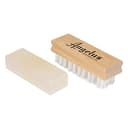
For most people the Angelus kit is the whole answer: an eraser block and a brush, from a maker that has been in leather care for decades, for less than the price of lunch. If you own one suede bag, buy this and stop.
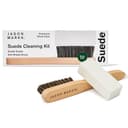
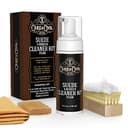
The Jason Markk kit does the same two jobs with a softer brush and a gentler eraser, which is the better choice for fine nubuck or a delicate bag where a stiff nylon brush would mark it. The Care & Cool foam kit is the step up for suede that is genuinely dirty rather than scuffed — a foam cleaner reaches grime an eraser cannot, and the kit includes the brush and cloth to lift the nap afterwards, which is essential and often omitted.
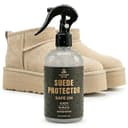
The Leather Hero protector is the one to buy alongside whichever kit you choose, because it is the only product here that prevents rather than repairs. Its non-aerosol bottle gives far more control on a bag than a pressurized can, which matters when you are trying to cover a panel evenly.
The routine, in full
New bag: brush the nap in one direction, apply two thin coats of protector with drying time between them, let it cure overnight before carrying it.
Every few weeks: brush it. Thirty seconds. This is what keeps suede looking new, and it costs nothing.
When you see a scuff: eraser first, dry, then brush. Only escalate to a foam cleaner if that fails, and spot-test on the base first.
Two or three times a year: reapply the protector, and always before a wet season.
Storage: breathable dust bag, never plastic, stuffed lightly to hold shape, away from other bags so the nap does not get crushed flat against them. Our storage guide covers the rest, and it applies to suede with one addition: give it more space than you would give smooth leather.
When to give up and pay someone
Suede has a lower ceiling for home repair than smooth leather does. If the nap is matted flat across a whole panel, if there is an oil stain, if the color has gone patchy after a soaking, or if the bag is expensive or vintage, a professional leather restorer can re-nap and re-dye in ways no consumer product can. Attempting those at home is how a marked bag becomes a ruined one.
Before you buy suede at all
Most of the difficulty on this page comes from what suede is rather than from anything you did. If you are still deciding between a suede bag and a smooth-leather one, our leather versus suede comparison sets out how each wears, what each costs to maintain and which one suits a bag that gets used every day.