The Patina Bench

Bick 4 vs Lexol

Two cheap bottles, two opposite philosophies, and one of them is the only maker here willing to put a colour promise in writing for the product you are actually buying.

By Stephen V.Last updated How we pick

Our pick for a leather bag

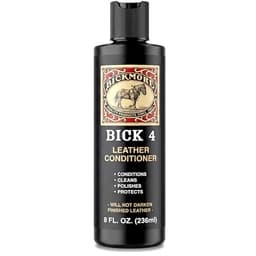
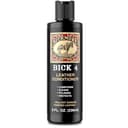
Bick 4 Leather Conditioner & Cleaner

Bick 4 Leather Conditioner & Cleaner

$12.99 · View on Amazon

$14.9913% off

Price as of October 19, 2026. #ad How we’re funded

Buy Bick 4 for a finished leather bag, and buy it for one reason above all the others: Bickmore states on its own product page that Bick 4 will not darken your leather, and it states that the formula is completely wax-free so the pores will not seal up. Lexol publishes neither claim for its standard conditioner, and tells you to spot-test before eachuse. On a bag you paid for and can see, a written colour promise is worth more than a slightly cheaper bottle. Bick 4 is also a one-step clean-and-condition product and its page names handbags explicitly, which Lexol’s does not.

Lexol is the better buy in one specific case, and we say so below: a mid-to-dark bag belonging to someone who would rather do a little conditioning often than a lot occasionally.

Read the full write-up

This is the comparison where one maker answers the questions the other one declines. That is the whole page. Bick 4 and Lexol are both cheap, both decades old, both sold mostly to people who look after saddles, and on a spec sheet they look interchangeable — two 8-ounce bottles of leather conditioner at roughly the same money. They are not interchangeable, and the thing that separates them is not a secret formula. It is what each brand is willing to write down about its own product.

Bickmore publishes four things for Bick 4: it will not darken leather, it is wax-free so it does not seal the pores, it is for smooth finished leather including handbags, and it is not for suede, rough-out, distressed or napped leathers. Lexol publishes a method rather than a promise: one or two sprays onto a cloth, wipe off the excess after a few minutes, and multiple light coats are better than one heavy coat. It also tells you to test on a hidden area before each use, and its page carries no non-darkening claim, no wax or silicone statement, and no pH number.

So the decision is a disclosure decision, and it lands differently depending on your bag. If the leather is pale, cream, tan or a light grey, the brand that will commit to colour in writing is the only sensible choice. If the bag is mid or dark brown and your real problem is that you over-apply conditioner, Lexol’s light-coat instruction is a genuine guardrail and the bottle costs less. Prices below are read live rather than typed in, and every claim on this page is attributed to the maker that published it.

How this is funded:we earn a commission if you buy through our links, at no extra cost to you. It never changes which product we recommend, and we’ll tell you when we’d skip one. Full disclosure.

Quick picks

Ranked on leather grade, construction, capacity and value. Select a row to jump to the full write-up. We have not wear-tested these bags — here is exactly what we do instead.

Specs are what each listing itself publishes, read on July 21, 2026 – October 10, 2026; anything a listing does not state reads “Not published” rather than a guess. Prices are live as of October 19, 2026.

#ProductWhat it isBest forPrice
1
Bick 4 Leather Conditioner & Cleaner

Bick 4 Leather Conditioner & Cleaner

The pick when you're worried about darkening. Bick 4 is specifically formulated not to darken leather, which makes it the safer choice for light-colored and finished bags where a heavier conditioner would change the color.

Conditioner & cleanerBest for a leather bag
$12.99 · View on Amazon

$14.9913% off

Price as of October 19, 2026. #ad How we’re funded

2
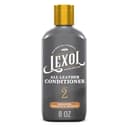
Lexol All Leather Conditioner (8 oz)

Lexol All Leather Conditioner (8 oz)

The light-coat conditioner, and the one to buy if you would rather do a little often than a lot occasionally. Lexol's own directions are the opposite philosophy from an oil-rich soak: one or two sprays onto a cloth, wipe the excess after a few minutes, and "multiple light coats are better than one heavy coat". That makes it forgiving on a finished handbag, where over-application is the usual way people ruin leather. The catch is what the brand does not publish — the conditioner page carries no non-darkening claim and no pH figure, and it tells you to spot-test before each use.

Leather conditioner (spray-applied liquid)Best for frequent light coats
$9.42 · View on Amazon

Price as of October 19, 2026. #ad How we’re funded

3
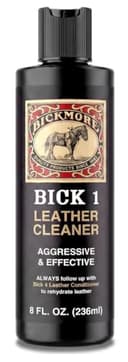
Bickmore Bick 1 Leather Cleaner (8 oz)

Bickmore Bick 1 Leather Cleaner (8 oz)

The cleaning half of the Bickmore two-step, and the honest answer to whether Bick 4 is really a cleaner: Bickmore's own directions say to clean a very dirty item with Bick 1 first. Its listing calls it an aggressive cleaner built for hardworking leather like tack and boots, which makes it the right bottle for a neglected, salt-stained or genuinely grimy piece — and more cleaner than a lightly used handbag needs.

Leather cleanerBest deep clean before conditioning
$12.99 · View on Amazon

$13.997% off

Price as of October 19, 2026. #ad How we’re funded

4
Lexol pH-Balanced Leather Cleaner (8 oz)

Lexol pH-Balanced Leather Cleaner (8 oz)

The cleaning half of the Lexol two-step, and the bottle in the Lexol line that actually carries the pH-balanced claim. It is the gentler of the two cleaners on our head-to-head: a foaming spray worked up on a wet cloth, which suits a handbag you clean a few times a year rather than a salt-stained boot. The brand's own directions for the conditioner tell you to use this first, so the two-bottle cost is the maker's routine rather than an upsell we invented.

Leather cleaner (pH-balanced foaming spray)Best gentle clean before conditioning
$7.59 · View on Amazon

$8.298% off

Price as of October 19, 2026. #ad How we’re funded

The picks in full

#1Best for a leather bag

Bick 4 Leather Conditioner & Cleaner

The pick when you're worried about darkening. Bick 4 is specifically formulated not to darken leather, which makes it the safer choice for light-colored and finished bags where a heavier conditioner would change the color.

Strengths

  • Formulated specifically not to darken leather
  • Cleans and conditions in one step
  • Trusted by the boot and shoe-care crowd

Trade-offs

  • Lighter conditioning than a heavy oil-based product
  • Still spot-test — every hide reacts a little differently
TypeConditioner & cleaner
FormLiquid conditioner/cleaner
Size8 oz
Best forLight-colored leather, Finished bags, Regular upkeep

Specs read from the product listing, on July 21, 2026. “Not published” means the brand does not state that figure.

#2Best for frequent light coats

Lexol All Leather Conditioner (8 oz)

The light-coat conditioner, and the one to buy if you would rather do a little often than a lot occasionally. Lexol's own directions are the opposite philosophy from an oil-rich soak: one or two sprays onto a cloth, wipe the excess after a few minutes, and "multiple light coats are better than one heavy coat". That makes it forgiving on a finished handbag, where over-application is the usual way people ruin leather. The catch is what the brand does not publish — the conditioner page carries no non-darkening claim and no pH figure, and it tells you to spot-test before each use.

Strengths

  • Maker's directions are explicitly light-coat: "a little bit of Lexol goes a long way"
  • Its own listing names bags among the intended items, which most tack-aisle conditioners do not
  • Cheapest of the four bottles on our head-to-head, and an 8 oz bottle lasts a long time at this application rate
  • Brand states it softens leather and helps prevent cracking, and pairs it with a named cleaner for the step before

Trade-offs

  • Lexol's page for THIS conditioner makes no non-darkening claim — only the separate Neatsfoot version does
  • Brand instruction is to spot-test "before each use", which is more cautious than a flat no-darkening guarantee
  • No pH figure published for the conditioner; the pH-balanced claim in the Lexol line belongs to the cleaner
  • No stated interval between applications, so there is no published answer to "how often"
  • Lineup is confusing: several listing names and at least one genuinely different formula sit under "Lexol conditioner"
TypeLeather conditioner (spray-applied liquid)
FormLiquid conditioner (spray bottle)
Size8 oz
Best forRoutine upkeep on a finished bag, Light frequent conditioning, Step two after Lexol Cleaner

Construction note. Brand directions: shake well, clean first with Lexol Leather Cleaner if the leather is dirty, apply one or two sprays to a cloth or sponge over the whole surface, wipe off the excess after a few minutes and buff. Store below 140F. Spot-test on a hidden area before each use.

Specs read from the product listing, on October 10, 2026. “Not published” means the brand does not state that figure.

#3Best deep clean before conditioning

Bickmore Bick 1 Leather Cleaner (8 oz)

The cleaning half of the Bickmore two-step, and the honest answer to whether Bick 4 is really a cleaner: Bickmore's own directions say to clean a very dirty item with Bick 1 first. Its listing calls it an aggressive cleaner built for hardworking leather like tack and boots, which makes it the right bottle for a neglected, salt-stained or genuinely grimy piece — and more cleaner than a lightly used handbag needs.

Strengths

  • Listing names the stains it is actually for: surface dirt, grime, sweat and salt
  • Made for hardworking leather, so it shifts marks a gentle cleaner leaves behind
  • Bickmore's own directions pair it with Bick 4, so the two-step is the maker's routine, not ours
  • Made in the USA by a brand that has sold leather care since 1882, per the listing

Trade-offs

  • Its own listing describes it as an "aggressive" cleaner — more than a lightly soiled handbag needs
  • Listing qualifies it as safe for "properly tanned" smooth finished leathers, which is not a blanket all-leather claim
  • Cleaners strip oils, so conditioning afterwards is not optional
  • Nothing on the listing mentions handbags or purses by name; the examples are shoes, boots and equestrian gear
TypeLeather cleaner
FormLiquid cleaner (bottle)
Size8 oz
Best forDeep-cleaning a neglected bag, Salt and sweat marks, Step one before Bick 4

Construction note. Listing states it is formulated for smooth finished leather and should be followed with Bick 4; keep it off suede and nubuck, which need a napped-leather cleaner instead.

Specs read from the product listing, on October 3, 2026. “Not published” means the brand does not state that figure.

#4Best gentle clean before conditioning

Lexol pH-Balanced Leather Cleaner (8 oz)

The cleaning half of the Lexol two-step, and the bottle in the Lexol line that actually carries the pH-balanced claim. It is the gentler of the two cleaners on our head-to-head: a foaming spray worked up on a wet cloth, which suits a handbag you clean a few times a year rather than a salt-stained boot. The brand's own directions for the conditioner tell you to use this first, so the two-bottle cost is the maker's routine rather than an upsell we invented.

Strengths

  • pH-balanced claim is stated by the brand and carried in the listing title itself
  • Brand states it leaves "no scum or residue left behind", which matters before you condition
  • Foaming, cloth-applied method puts very little liquid onto the leather
  • Cheapest bottle of the four on our Leather Honey versus Lexol comparison

Trade-offs

  • A second purchase: the conditioner's own directions send you here first, so the real entry cost is two bottles
  • Brand publishes no pH number, only that the formula is balanced
  • Not for suede or nubuck — napped leather needs a dedicated napped cleaner
  • Like every cleaner it lifts oils, so conditioning afterwards is part of the job, not optional
TypeLeather cleaner (pH-balanced foaming spray)
FormLiquid cleaner (spray bottle)
Size8 oz
Best forRoutine bag cleaning, Step one before a conditioner, Finished smooth leather

Construction note. Brand directions: test on a hidden area first, apply one or two sprays to a WET cloth, work up a foam to lift the dirt, then wipe with a damp cloth. The brand pairs it with either Lexol Conditioner or Lexol Neatsfoot for the step after.

Specs read from the product listing, on October 10, 2026. “Not published” means the brand does not state that figure.

The four things that actually decide it

Scent, bottle shape, how many surfaces the label lists and how long the brand has existed are all noise. These four change the outcome on a bag, in the order they matter.

  1. Will it change the colour? The only failure you cannot undo.
  2. Can you over-apply it? The commonest way people damage a finished handbag.
  3. Does the maker say the word “handbag”? Both lines were built for tack. Only one page admits a bag exists.
  4. How many bottles does the routine really need? Both makers assume two. Neither price tag says so.

Criterion 1: colour, and who will put it in writing

Bickmore’s Bick 4 page says it plainly: “Unlike most leather conditioners, Bick 4 Leather Conditioner will NOT darken your leather.” That is an unusual sentence for a conditioner maker to publish, because darkening is the single most common complaint about every oil-rich product in the category, and a brand that promises otherwise has given you something to hold it to.

Lexol’s page for the standard All Leather Conditioner makes no equivalent claim. What it does say is “Always test Lexol Leather Conditioner on a small, hidden area before each use” — before each use, not just the first. That is a reasonable instruction and it is also, read honestly, the opposite of a guarantee.

The detail that settles the matter is inside Lexol’s own catalogue. The brand sells a separate Neatsfoot conditioner, and thatproduct is described as “non-darkening for light leather.” So Lexol does make colour claims — just not for this bottle. When a brand publishes the claim for one product in its line and withholds it from another, the silence is information. If your bag is pale, this criterion is not close, and our Leather Honey versus Lexol comparison reached the same conclusion from the other direction.

Criterion 2: “apply liberally” against “multiple light coats”

The two sets of directions are mirror images, and they produce opposite failure modes.

Bick 4:“Apply liberally with a clean cloth. Let dry and buff. Repeat as necessary.” No quantity, no cap, no interval. On a dry, thirsty, unfinished hide that instruction is correct. On a sealed handbag finish it invites you to put on more product than the surface can absorb, and the excess sits there collecting dust and going tacky. What saves Bick 4 here is the second claim on its page: it is “completely wax-free … the leather pores will not seal up.” Over-application of a wax-bearing product is what glazes a bag permanently. Over-application of Bick 4 is mostly a mess you can buff off.

Lexol:one or two sprays onto a cloth or sponge, cover the whole surface, wipe off the excess after a few minutes, buff. “A little bit of Lexol goes a long way. Multiple light coats are better than one heavy coat.” That is a built-in guardrail, and it is the single best thing about the product. If you are the kind of owner who reaches for the bottle every few weeks and ladles it on, Lexol’s method will do less damage than Bick 4’s.

The honest summary: Bick 4 is harder to ruin a bag with because of what is not in it; Lexol is harder to ruin a bag with because of what it tells you to do. Our conditioning guide goes through the application routine either bottle needs, and the darkening risk that applies to every conditioner regardless of the label.

Criterion 3: who is actually talking to a bag owner

Both of these products come from the horse world, and it shows. Lexol’s conditioner page sits in an equine leather-care section, the benefit it leads with is protecting “your tack investment,” and the award it quotes is from The Horse Journal. None of that is a criticism of the formula — tack takes more abuse than any handbag ever will — but it means the maker has never written a word about the thing you own.

Bickmore’s Bick 4 page does. It calls the product “essential for maintaining all types of smooth finished leather,” and handbags are named in that scope. It also draws the boundary for you: do not use it on suede, rough-out, distressed or napped leathers. That exclusion matters more than it sounds, because a large share of the bags on this site are sold as “distressed” or “vintage” finishes — our distressed leather guide explains which of those are a real pull-up or crazy-horse finish and which are antiquing on corrected grain, and only the second kind is a smooth finished surface. Lexol’s page draws no such line, which is not the same as the product being safe everywhere.

Criterion 4: the second bottle neither price tag mentions

Both makers assume a two-step routine, and both say so in their own directions.

  • Bickmoresends you to Bick 1 or its Saddle Soap first: “If item is very dirty, clean with Bickmore Saddle Soap or Bick 1.” Bick 1’s own listing calls it an aggressive cleaner for hardworking leather like tack and boots, which is more cleaner than a lightly used handbag needs — so for most bags Bick 4 genuinely is the one-bottle answer and Bick 1 is the rescue purchase.
  • Lexolis less optional about it: “If leather is dirty, clean it first with Lexol Leather Cleaner,” and “For best results, use with Lexol Cleaner.” The cleaner is the bottle in that line carrying the pH-balanced claim — a point worth correcting, because the pH-balanced line is routinely attributed to the conditioner and it does not belong to it.

So Lexol starts out cheaper per bottle and ends up at a similar place once you follow the instructions. If you want the whole two-step worked out with prices, our starter-kit page builds the cheapest honest routine, and our cleaner roundup compares every cleaner we track including both of the ones on this page.

What neither maker will tell you

How often to do it.Neither page publishes an interval. Bick 4 says “repeat as necessary.” Lexol says light coats are better than heavy ones and leaves the frequency to you. That is a real gap, and it is the one place where a third product beats both: Leather Honey publishes a six-month interval, which is why our Leather Honey versus Bick 4 page could answer the longevity question and this one cannot.

What is in it.Bickmore publishes one ingredient-class fact — no wax — and nothing else. Lexol publishes no wax or silicone statement at all. We will not infer a pore-sealing verdict for Lexol from silence, and we did not on the Lexol comparison either. If a page tells you which of these two seals the surface, ask where it read that.

Whether it waterproofs.Neither one does, and Bickmore is straight about it: its directions say “for extra protection and waterproofing apply Gard-More after conditioning,” which is a separate product. Our protector-spray roundup covers that step, and our waterproofing guide explains what the word can and cannot mean on a hide.

Which one to buy

A pale, cream, tan or light grey bag: Bick 4.It is the only bottle of the two whose maker publishes a non-darkening claim for the product you are buying, and the only one whose page names handbags. Spot-test anyway — every hide is a little different, and a written claim is a reason to trust a product, not a reason to skip a test on an inside seam.

A mid or dark brown bag, conditioned often: Lexol. The light-coat method suits a frequent, low-effort routine, darkening is far less visible on a dark finish, and it is the cheapest bottle here. Buy the cleaner with it, because the directions assume you have.

A genuinely grimy, salt-marked or neglected bag: Bick 1 first, then condition.Bickmore’s own instructions put it in that order, and a cleaner lifts oils, so the conditioning step afterwards is not optional. If the damage has gone past dirt — scuffs, a worn edge, a lifted lining — our repair-kit page matches products to the specific failure.

A suede, nubuck or napped bag: neither.Bickmore excludes those surfaces by name; Lexol’s cleaner page excludes suede and nubuck too. Napped leather needs a dedicated napped cleaner, and our suede care guide covers the right kit.

Still undecided: buy Bick 4. One bottle, cleans and conditions, written colour promise, wax-free, and the maker knows what a handbag is. The case for Lexol is real but narrow, and it depends on you having the habit the method is built around.
Frequently asked questions

Is Bick 4 or Lexol better for a leather handbag?

Bick 4, for most bags. Bickmore publishes a non-darkening claim and a wax-free claim for Bick 4 and names handbags in the product's scope; Lexol publishes neither claim for its standard conditioner and tells you to spot-test before each use. Lexol is the better choice for a mid-to-dark bag you condition often and lightly, because its directions are built for exactly that.

Does Lexol darken leather?

Lexol does not say. Its page for the standard All Leather Conditioner carries no non-darkening claim and instructs you to test on a hidden area before each use. Notably, Lexol's separate Neatsfoot conditioner IS described as non-darkening for light leather, so the brand makes the claim where it can and withholds it here.

Is Bick 4 a cleaner as well as a conditioner?

Partly. It is sold as a conditioner and cleaner in one, and for a lightly used bag it is enough on its own. But Bickmore's own directions say that if the item is very dirty you should clean it first with Bick 1 or its Saddle Soap, so the brand's answer is that Bick 4 is not a deep cleaner.

Which is cheaper, Bick 4 or Lexol?

Lexol's conditioner is usually the cheaper bottle, and the live prices in the table above are read on the date shown. The comparison changes once you follow the directions: Lexol's conditioner page sends you to buy Lexol Cleaner for best results, while Bick 4 cleans and conditions in one step for ordinary upkeep.

Is Lexol pH balanced?

The Lexol cleaner is — the claim is in that product's title. The conditioner publishes no pH figure at all. This is one of the most commonly mixed-up facts about the line, and it matters because people buy the conditioner expecting a property that belongs to the other bottle.

How often should I use either one?

Neither maker publishes an interval, which is the clearest shared weakness of the two. Bick 4 says to repeat as necessary; Lexol says multiple light coats beat one heavy coat and leaves the frequency open. Judge it by the leather instead: condition when the surface looks and feels dry, not on a calendar.

Can I use Bick 4 or Lexol on a suede bag?

No. Bickmore explicitly excludes suede, rough-out, distressed and napped leathers, and Lexol's cleaner excludes suede and nubuck. Napped leather needs a dedicated napped-leather cleaner and a brush, not a smooth-leather conditioner.

Sources

  • Bickmore — Bick 4 Leather Conditioner (8 oz) — The maker's own product page: "Unlike most leather conditioners, Bick 4 Leather Conditioner will NOT darken your leather"; "Unlike other brands, Bick 4 is a completely wax-free product" so "the leather pores will not seal up"; it is "essential for maintaining all types of smooth finished leather" including handbags; "Do not use on suede, rough-out, distressed or napped leathers"; directions are "Apply liberally with a clean cloth. Let dry and buff. Repeat as necessary", with "If item is very dirty, clean with Bickmore Saddle Soap or Bick 1" and "For extra protection and waterproofing apply Gard-More after conditioning" (accessed October 3, 2026)
  • Bickmore — leather care collection — The brand's own leather-care line as listed on this date, used only to say what else exists alongside Bick 4: Bick 1 Leather Cleaner, Bick 5 Leather Cleaner Conditioner Spray, Bick LP, Bickmore Exotic, Distressed Leather Conditioner, Gard-More Water & Stain Repellent, Neatsfoot Oil, Saddle Soap Plus Lanolin, and a Suede & Nubuck Cleaner (accessed October 3, 2026)
  • Lexol (Manna Pro) — Lexol® Leather Conditioner — The maker's own product page for the conditioner itself: it "softens leather and helps prevent cracking" and "helps to prolong the life of your leather and protect your tack investment"; "Voted by The Horse Journal as the best leather conditioner in 20 years!"; directions are "Shake well. If leather is dirty, clean it first with Lexol® Leather Cleaner", then "Apply 1 or 2 sprays of Conditioner to a clean cloth or sponge and apply Conditioner over entire cleaned surface", then "After a few minutes wipe off excess and buff with a clean cloth", with "a little bit of Lexol® goes a long way. Multiple light coats are better than one heavy coat"; "Always test Lexol® Leather Conditioner on a small, hidden area before each use"; "For best results, use with Lexol Cleaner"; "Store at temperatures no higher than 140F to avoid container weakening". The page publishes NO pH figure, NO wax or silicone statement, NO non-darkening claim and NO durability interval (accessed October 10, 2026)
  • Lexol (Manna Pro) — Lexol® Leather Cleaner — The maker's own page for the cleaner: it is "pH balanced for safe cleaning" with "No scum or residue left behind"; directions are to test on a hidden area first, then apply 1 to 2 sprays to a wet cloth, work up a foam to lift dirt and wipe with a damp cloth; and "use Lexol Conditioner or Neatsfoot for best results". The pH-balanced claim in the Lexol line attaches to the CLEANER, not to the conditioner (accessed October 10, 2026)
  • Lexol (Manna Pro) — Lexol® Leather Neatsfoot Conditioner — The maker's page for the SEPARATE neatsfoot-oil conditioner, cited only to show where Lexol does make a color claim: this product is described as "Non-darkening for light leather" and as extending leather lifespan, softening and preventing cracking, "Best used with Lexol Cleaner", with the same instruction to "Always test Lexol® Neatsfoot Leather Conditioner on a small, hidden area before each use". The standard Lexol Leather Conditioner page makes no equivalent non-darkening claim (accessed October 10, 2026)
  • U.S. National Park Service — Curatorial Care of Objects Made From Leather and Skin Products — NPS museum-handbook guidance on cleaning, handling, humidity and the risks of over-treating leather (accessed July 21, 2026)

Keep reading