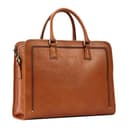
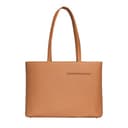
Pick the shape before the bag
The most useful question is not “which bag” but “how do you actually get to work.” The answer eliminates most of the field.
You walk more than ten minutes with a laptop
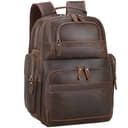
Buy a backpack. Two straps put the weight over your spine rather than hanging it from one shoulder, and a loaded work bag is heavier than people admit. This is the recommendation we make most often and the one most often overridden by dress code — usually for less reason than the wearer thinks. Our work backpack roundup covers the category properly.
You drive, or your commute is short and seated
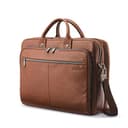
A briefcase or a structured tote is entirely reasonable, and both read more formal than a backpack. The weight objection largely disappears when the bag is only carried between a car and a desk.
You are in and out of the bag all day
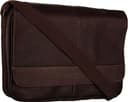
A messenger. The single thing it does better than anything else is open one-handed while still on your body, which across four site visits a day is a real advantage. Our briefcase versus messenger comparison works through that trade in detail.
Your carry is bulky rather than heavy
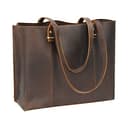
A tote. Folders, fabric, a change of clothes, lunch — a wide opening and a flat base handle awkward cargo far better than a structured case does.
The three specifications that matter
A padded laptop compartment, ideally suspended. Suspended means it does not reach the base of the bag, so the machine is not taking the impact when you put the bag down. That single detail is most of what separates a work bag from a nice bag with a laptop in it.
A base that survives floors. A reinforced base panel and, ideally, metal feet. Bags are set down constantly, and base corners are where abrasion concentrates. Our hardware guide covers what to look for before you buy.
A strap or handle drop that clears a coat. The most common quiet disappointment with a work bag bought online. A tote you can only hand-carry for five months of the year is not the bag you thought you bought.
What the leather grade buys you here
More than in any other category, because work bags take the most structural stress. Full-grain keeps the hide’s densest outer layer rather than sanding it away, which matters when a bag is carrying eight pounds from two attachment points five days a week.
That said, grade is not the only axis. A corrected, sealed hide — which is what most luggage-brand bags use — resists staining and scuffing better and keeps looking uniform, which is a defensible priority in a business accessory. It simply will not patina. Our grade guide sets out the trade, and our pricing guide explains where the money goes.
Weight, stated plainly
A structured leather work bag runs roughly two and a half to four pounds empty, against about one for a nylon equivalent. Add a laptop, a charger, a bottle and a notebook and you are carrying eight to twelve pounds.
On one shoulder, for twenty minutes, twice a day, five days a week, that is a real physical load and the reason we keep pushing people toward backpacks. If you are set on a one-shoulder bag, favor the lighter, softer picks and be disciplined about what actually needs to be in the bag.
Keeping a daily bag alive
Work bags wear at the base corners and the strap attachments, and both respond to the same two habits: do not set the bag on wet ground, and do not store it loaded. Condition twice a year with a thin coat, handles and corners first, since handling dries those fastest.
The one work-specific addition is weather. A bag that goes out in rain five days a week benefits from a protector spray two or three times a year — our protector roundup covers what to use, and the waterproofing guide covers what to do when a bag gets soaked anyway.