Two bags, not one
This is the single most useful thing on the page. Almost every travel-bag problem — security, access, weight, looking like a tourist — gets easier when you split the job.
The carry bag holds the bulk: a laptop or tablet, a jacket, a book, snacks, a water bottle. It lives under the seat, on your back through the terminal and on a hotel chair the rest of the time. The body bag is small, closes properly and never comes off in public: passport, phone, cards, keys.
Done that way, you are not opening a large bag in a queue with everything visible, you are not putting a bag down in a café to find your phone, and if the big bag is out of reach in an overhead locker, nothing important is in it. Our travel crossbody roundup covers the second half of that pairing in detail.
What each shape is actually good for
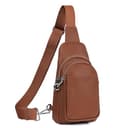
Crossbody
The body bag. Worn across the chest, closed with a zip, small enough to keep in front of you in a crowd. The befen here is the real-leather anti-theft pick — most bags in that sub-category are synthetic, which we say plainly on the crossbody page rather than quietly.
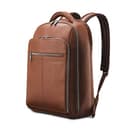
Backpack
The best carry bag for anything involving stairs, walking or a bike. Two straps keep your hands free for tickets and handrails, and the load sits over your spine rather than on one shoulder for a whole travel day. Our travel backpack roundup goes deeper on personal-item sizing.
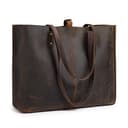
Tote
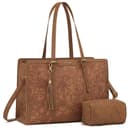
Ideal shape, worst weight. A tote slides over a suitcase handle, opens wide, and lives out of easily in a hotel room. It is also the least secure shape there is, and a leather one is heavy on one shoulder. Our travel tote page covers when it is the right call.
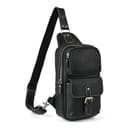
Sling / chest bag
The specialist. It sits high and tight, does not swing, and spins to the front in one motion so the opening is under your eyes. If your trip involves markets, festivals or busy transit, it does the body-bag job better than a conventional crossbody — our sling versus crossbody comparison works through the difference.
Security, stated honestly
We are careful with the word anti-theft on this site. Locking zips, RFID-blocking pockets and slash-resistant panels are real features that raise the effort a thief has to make, and that is worth having. None of them makes a bag theft-proof, and any listing suggesting otherwise is selling reassurance rather than a specification.
What actually reduces risk, in order: a bag that closes; wearing it in front of you in a crowd rather than behind; not putting it on the back of a chair; and not carrying everything in one bag. The last of those is free and does more than any feature.
One more point specific to leather: a good leather bag is more visible than a nylon one. That cuts both ways — it looks like something worth taking, and it also looks like something an owner is paying attention to. We would not choose a bag for either reason, but it is worth knowing that “discreet” is not a property leather has.
The weight problem
An empty leather bag is a meaningful share of a typical personal-item allowance before anything goes in it, and full-grain is heavier than corrected grain because the hide has not been split down. If you are the kind of traveler who fills whatever bag they are given, that matters.
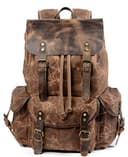
The lighter route is a mixed-material bag — the WUDON here is a waxed canvas body with leather trim, which is substantially lighter than a full-leather pack of the same volume and still looks like a considered object rather than a nylon sack. Our leather versus canvas comparison covers that trade properly, including where canvas is simply the better buy.
Weather and humidity
Two things go wrong with leather on trips, and neither is dramatic.
Rain.A soaking leaves water marks and, if the bag is dried too fast, a stiff panel. Blot, stuff loosely, dry at room temperature, never on a radiator. A repellent spray before you leave raises the threshold — our protector spray page is specific about what those products do and do not do, and the waterproofing guide covers the emergency version.
Humidity.The genuine hazard, and it happens after the trip rather than during it. A damp bag packed into a suitcase, or put straight into a wardrobe when you get home, is how bags develop mold. Air it out for a day before it goes away — our storage guide and our mold guide cover both sides of that.
Which combination to buy
City breaks and flights: the Samsonite backpack plus the befen anti-theft crossbody. Hands free through the airport, valuables on your body, and both bags look appropriate at dinner.
Trips where you are living out of the bag: the S-ZONE tote plus a small crossbody. The tote goes over a suitcase handle and opens wide; the crossbody handles everything you need while walking around.
Markets, festivals and dense crowds:the Le’aokuu chest sling, worn on the front, plus whatever you like for the bulk. This is the one situation where a sling genuinely beats a crossbody.
If you are carrying a laptop and want the features:the LOVEVOOK, and it is a PU bag. It has the padded 15.6-inch compartment and the luggage strap the leather options do not, and we would rather say that plainly than let a “vintage leather” product name do the work.