What Portland Leather actually claims about its leather
This is the part worth reading closely, because the brand is unusually specific for a direct-to-consumer label and that specificity is most of what you are buying.
Its “About the Leather” page sets out four materials. Full-grain, which it describes as sourced from the finest hides and as developing a patina over time. Top-grain, which it says starts from the same premium zone of the hide but is lightly sanded and finished for a more uniform surface — keeping most of the strength while gaining color consistency. Pebbled, which it says is produced by a natural tumbling process rather than artificial stamping. And suede, made by splitting the hide and buffing the underside.
Those descriptions are accurate. Top-grain genuinely does trade patina for uniformity, exactly as our own grade comparison sets out, and tumbled pebbling is genuinely the hide’s own grain concentrated rather than a pattern pressed into a corrected surface — a distinction most brands never draw, and one we cover in our pebbled versus smooth guide.
The brand also states that batch and color variation is normal because leather is a natural material. That is honest and it is also a warning: if you want the exact shade in the photograph, this is not the category to buy in.
What it does not publish
Its leather page does not name tannery locations, and it does not state a Leather Working Group certification on that page. We looked, we did not find it there, and we are not going to assert an environmental credential a brand has not made on the page we checked.
Where the bags are made
The brand is Portland, Oregon based, and its FAQ states that orders ship from a warehouse in Terrell, Texas, with goods shipped up from its workshop in León, Mexico.
León is one of the world’s long-established leather-manufacturing centers, so this is not a red flag — but it is worth knowing, because a brand named after an American city and marketed on American craftsmanship is easy to read as American-made, and the bags are not made in Portland. The brand states this in its own FAQ rather than hiding it, which is more than many do.
The guarantee is the strongest part of the proposition
This is where Portland Leather genuinely separates itself from the marketplace, and it is not close.
Its FAQ states a lifetime guarantee on leather goods covering manufacturing defects in leather, hardware and stitching. On hardware specifically: within six months they cover repair and shipping; between six months and two years you pay shipping to them and they cover materials, labor and return shipping; and after two years they still cover materials and labor while you pay shipping both ways. That last tier is the one that makes “lifetime” mean something — the cover does not quietly stop at the two-year mark, it just shifts the postage to you. Footwear is separate, at 90 days.
That matters more than it sounds, because hardware is what actually fails on leather bags. A zip, a D-ring or the stitching where a handle meets the body is the realistic failure point on almost every bag we cover — our hardware guide explains why. A written commitment to repair exactly that, for life, is a real product feature and it is one no anonymous marketplace seller offers.
The returns policy is ordinary but clearly stated: thirty days from delivery, extended around holidays, items unused and in new condition, return shipping deducted from the refund on orders under $300 ($6.95 under a pound, $14.95 over), no restocking fee.
The Amazon listing, and an oddity worth flagging
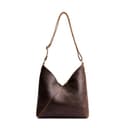
Some Portland Leather items are carried on Amazon, and the Naomi shoulder bag above is the one we have verified — its price and image come from Amazon’s live API rather than from anything typed into this page.
Here is the oddity: that Amazon listing does not name a leather grade.The brand’s own product pages generally do. So a buyer who finds Portland Leather on Amazon and never visits the brand’s site gets less information than a buyer who goes direct — which is the reverse of how we usually find things. Our registry records the material as the listing states it, which is why the specification table above says “Leather” rather than a grade. We do not upgrade a claim a listing has not made.
The practical consequence: if the grade matters to you, buy direct or check the specific product page on their site first. If the convenience and the returns route of Amazon matter more, the listing is real and the brand is real.
Who Portland Leather is genuinely for
Someone who wants a leather bag from an identifiable company with a published grade policy, a repair commitment and a returns process, and who does not want to buy from a seller name they have never heard of. That is a legitimate thing to want, and the marketplace does not offer it at any price.
It is also a reasonable choice for a gift, for the same reasons: a recognizable brand, a real returns window and a guarantee are worth more on a bag someone else chose than on one you chose yourself.
Who should buy a marketplace bag instead
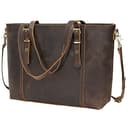
Someone buying on grade. Full-grain marketplace bags state the grade on the listing and cost meaningfully less — the TIDING full-grain tote above is the clearest example, and our full-grain tote roundup has the rest. If you want the top grade and you are prepared to buy from a marketplace maker, your money goes further.
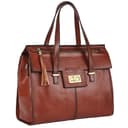
Someone buying the shape rather than the brand. The Naomi is a slouchy shoulder bag with an adjustable crossbody strap; the befen top-grain hobo above is the same silhouette in a stated grade for less. Our small tote roundup covers that shelf.
And anyone who has read our piece on where the money goes and concluded, reasonably, that brand and guarantee are not what they want to pay for.
The verdict
Portland Leather Goods is doing the honest version of the direct-to-consumer leather pitch: it names its grades, it explains what each one trades away, it says where the bags are made, and it backs them with a lifetime guarantee against manufacturing defects. Very few brands at any price do all four.
What you are paying for is that infrastructure, not a material advantage. A marketplace full-grain bag can match or beat the leather for less money; what it cannot do is take the bag back in thirty days or fix the zip in year four. Decide which of those you are actually buying, and the answer becomes obvious.