Leather Totes & Work Bags
The everyday and work tote, in leather that lasts — soft genuine hide, full-grain upgrades and the honest truth about the PU 'leather look' laptop totes.
A tote is the most useful bag most people own: one open mouth, two handles, and enough room for a laptop, a folder, lunch and the day’s odds and ends. In leather, a good one does double duty as a work bag and a weekend carry, and it keeps looking better as it wears in. The picks here split three ways — the everyday women’s tote in soft genuine leather, the tote built specifically to swallow a 15.6-inch laptop, and the larger, simpler men’s carry — because the right tote depends far more on what you load into it than on the label.
One warning before you shop, because it trips up more buyers than any other detail on this page: a large share of the “vintage leather” and “leather look” laptop totes on the marketplace are PU (synthetic or vegan leather), not real hide. That is not automatically a bad buy — the PU totes often have the smartest layouts, with a padded laptop sleeve and a luggage strap that the real-leather bags skip — but you should know which one you’re buying. We label the material plainly on every pick, so you can choose the feature-packed synthetic on purpose rather than by accident.
Everything in Totes
Best Leather Tote Bags for Women
From soft genuine leather to buy-once full-grain — the totes that handle a daily carry and a work day.
Our top pick
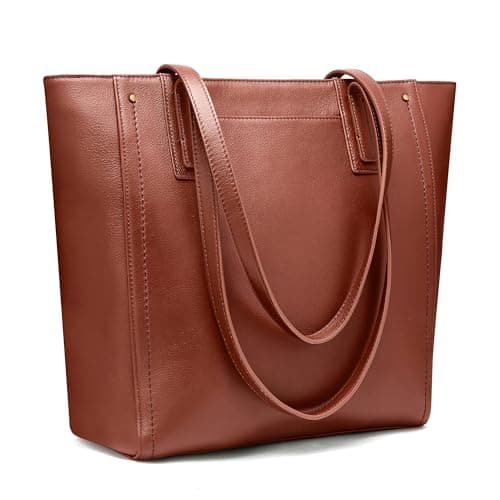
Kattee Genuine Leather Tote
Best Leather Laptop Totes for Work
Totes that actually fit a 15.6-inch laptop — the real-leather picks and the best-value PU option, labeled plainly.
Our top pick
Raymaple Top Grain Leather 15.6" Laptop Tote
Best Leather Tote Bags for Men
Large, simple leather totes for the gym-and-work carry, plus the name-brand options.
Our top pick
IRAMY Large Leather Shoulder Tote
Best Leather Tote Bags on Amazon
The leather totes worth buying on Amazon specifically — what the listings really mean, and the picks that survive the grade check.
Our top pick
Kattee Genuine Leather Tote
Best Full-Grain Leather Totes
Buy-once totes in the top leather grade — plus the honest case for when top-grain is the smarter purchase.
Our top pick
TIDING Full Grain Leather Tote for Women
$105.99 · View on AmazonPrice as of October 20, 2026. #ad How we’re funded
Tote Bag vs Shoulder Bag
Capacity, security and how each one wears over a long day — the practical difference behind two words used loosely.
Best Large Leather Tote Bags
Totes that are genuinely big rather than nominally big — and the honest warning about what a heavy leather tote does to your shoulder.
Our top pick
IRAMY Large Leather Shoulder Tote
Best Leather Tote Bags Under $100
Where the real-leather tote market is strongest — six picks under three figures, with the synthetics labeled plainly.
Our top pick
Kattee Genuine Leather Tote
Kattee Genuine Leather Tote Review
The tote we recommend more than any other, examined properly — what genuine leather buys you here, and who should spend more.
Our top pick
Kattee Genuine Leather Tote
Best Leather Tote Bags for Travel
Personal-item sizing, a luggage strap that actually exists, and the honest warning about taking a heavy leather tote through an airport.
Our top pick
S-ZONE Genuine Leather Large Shoulder Work Tote
Best Small Leather Tote Bags
Totes scaled for a normal day rather than a work commute — the shape most people actually want when they say tote.
Leather Tote vs Backpack for Work
One looks better walking into a meeting, the other is kinder to your shoulder. How to work out which trade-off is yours.
Raymaple Top Grain Leather Laptop Tote Review
The real-leather work tote that fits a 15.6-inch laptop, examined honestly — including the one thing it does not have.
Our top pick
Raymaple Top Grain Leather 15.6" Laptop Tote
Best Vintage Leather Tote Bags
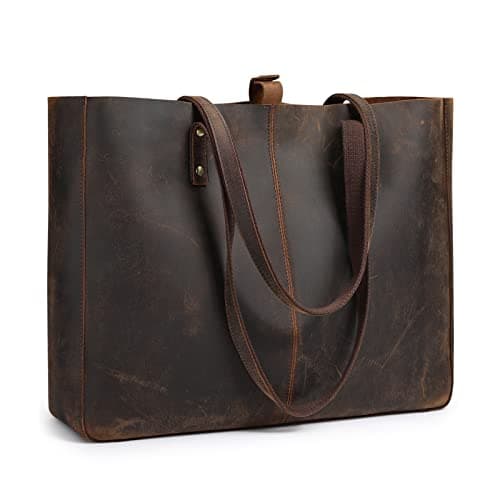
Waxed, distressed and vegetable-tanned totes that are meant to mark — plus the honest read on the listings that call themselves full-grain and genuine leather in the same breath.
Our top pick
Morriloom Vintage Leather Work Tote (15.6-inch)
$75.99 · View on AmazonPrice as of October 20, 2026. #ad How we’re funded
Best Leather Tote Bags with a Zipper
Real-leather totes that zip fully shut, not just a zipped pocket — ranked on the closure each listing states in words, the grade and whether a laptop is protected.
Our top pick
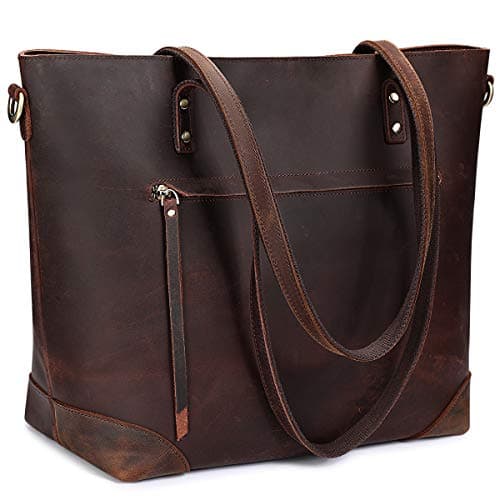
S-ZONE Vintage Leather Top-Zip Work Tote (15.6" Laptop)
Best Leather Shoulder Bags for Work
Leather bags that carry on the shoulder rather than across the body, ranked on how they sit under a load and whether they survive an office.
Our top pick
Kattee Genuine Leather Tote
Best Top-Grain Leather Tote Bags
The grade below full-grain, and the honest case for it: softer, more even and lighter, at the cost of the patina. Three totes that state it and mean it.
Our top pick
Raymaple Top Grain Leather 15.6" Laptop Tote
Best Leather Tote Bags for School and College
Five totes filtered on the three things a campus day actually tests — a padded laptop sleeve, a closure you can trust in a shared space, and a published weight.
Our top pick
Morriloom Vintage Leather Work Tote (15.6-inch)
$75.99 · View on AmazonPrice as of October 20, 2026. #ad How we’re funded
Best Leather Tote Bags for Teachers
Letter-size paper flat, a finish that survives a classroom, and a laptop only if you want one — the tote shortlist for a job spent on your feet.
Our top pick
befen Vintage Waxed Leather Structured Tote
$79.99 · View on AmazonPrice as of October 20, 2026. #ad How we’re funded
Best Leather Tote Bags with a Crossbody Strap
Four of our totes state a strap that detaches, one publishes a drop figure — and drop is the number that decides whether you can wear it across your body.
Best Leather Tote Bags for Nurses
A wipeable sealed finish, a closure and a weight you can carry for twelve hours — the opposite specification from a classroom tote, and here is why.
Our top pick
Fossil Jessie Top Zip Leather Tote
$230.00 · View on AmazonPrice as of October 20, 2026. #ad How we’re funded
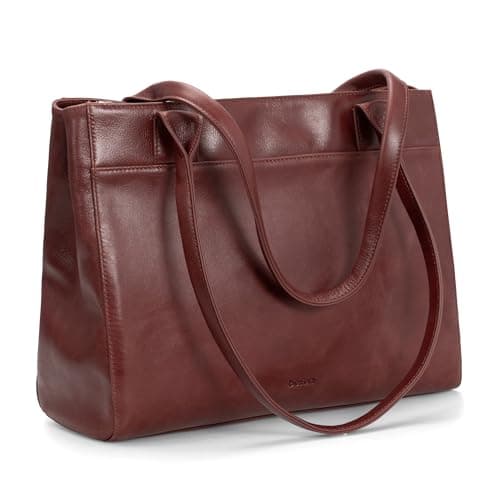
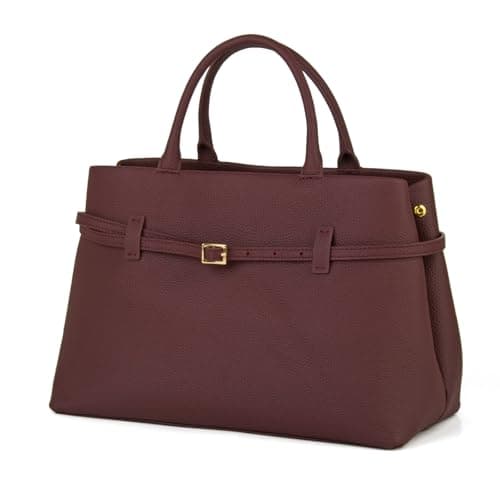
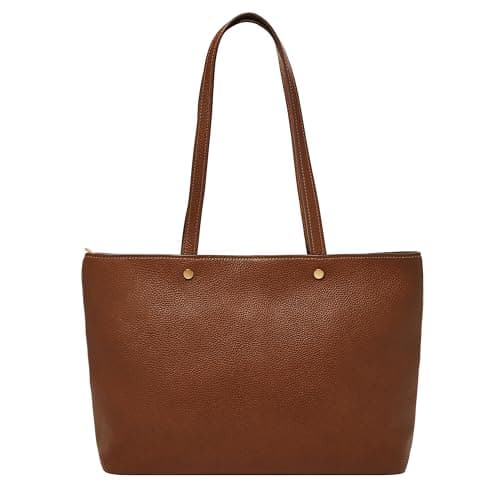
How to choose a leather tote
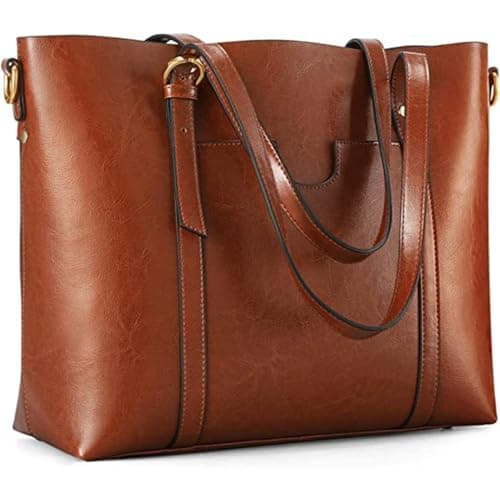
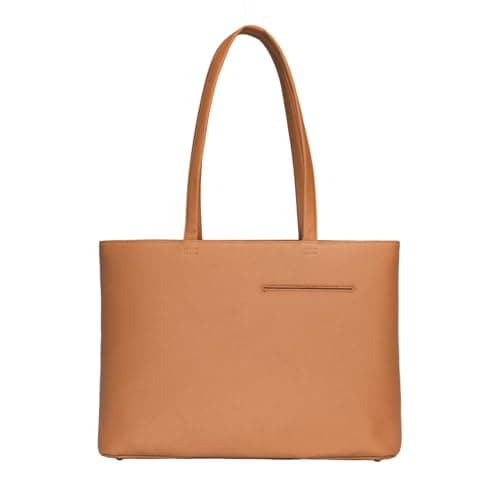
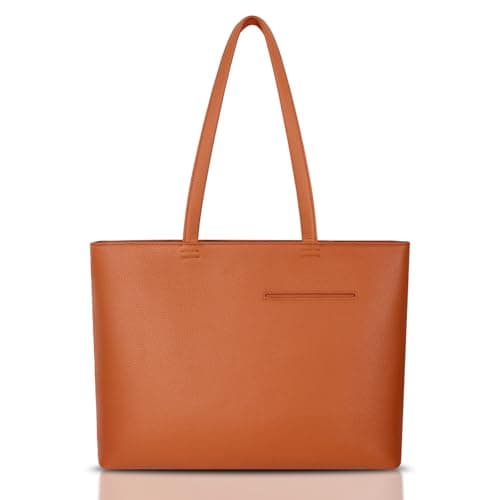
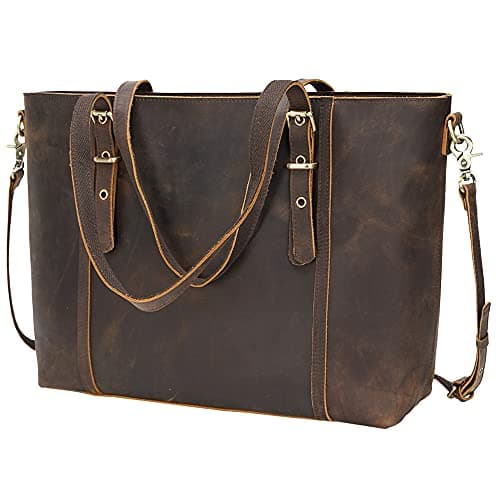
Start with the load, not the look. If your daily carry is a phone, a wallet, a water bottle and a 13-inch laptop, a soft genuine-leather tote with dual top handles is the sweet spot — roomy, comfortable on the shoulder, and dressy enough for an office. If you carry a full-size 15.6-inch machine to work every day, you want a tote that actually states that fit and ideally has a padded section, because a laptop dropped into an unpadded leather bag rides against your keys. And if you’re hauling gym kit and a change of clothes alongside work, a large men’s tote with one big main compartment beats a structured bag with lots of small pockets.
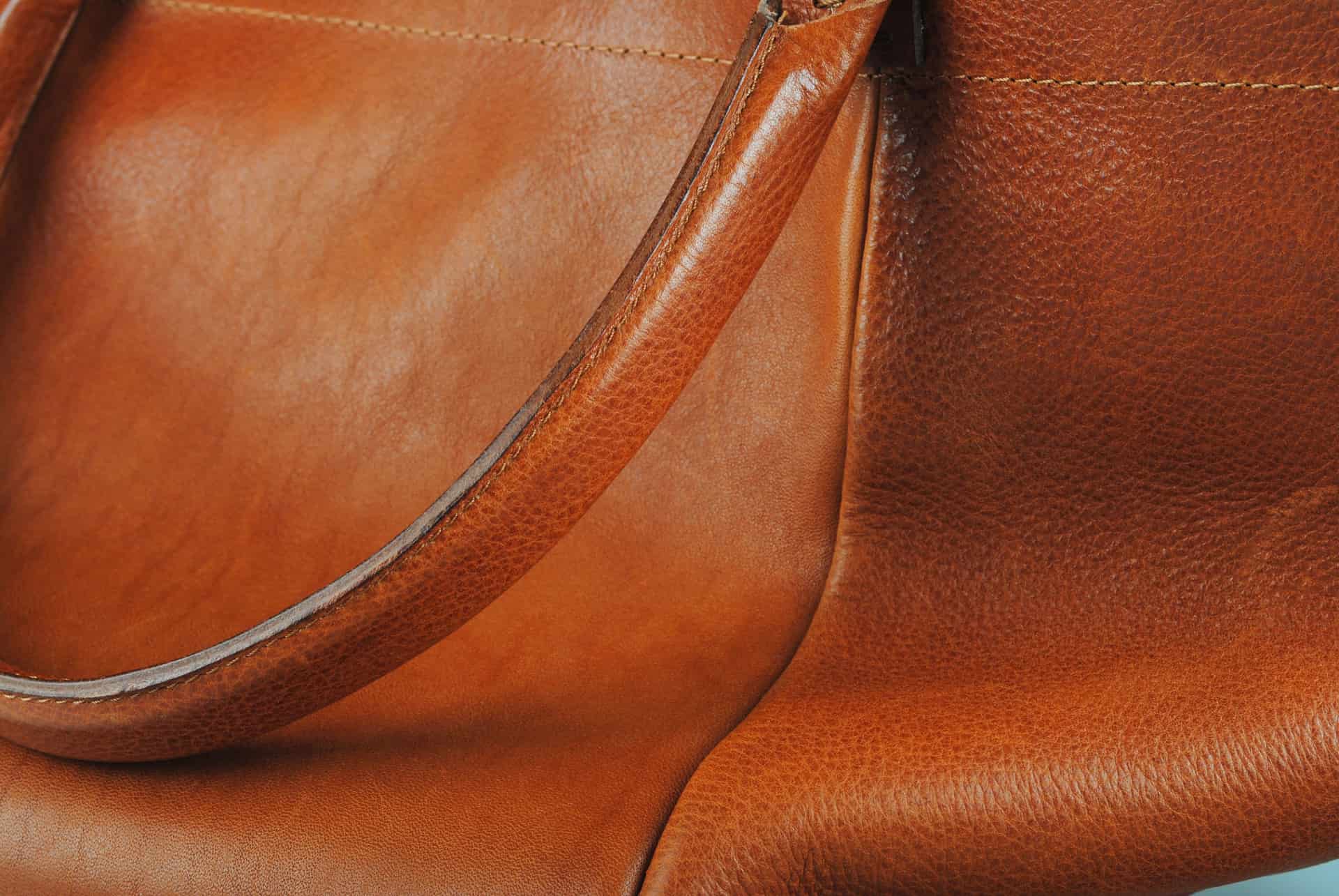
After capacity, look at the grade. Full-grain is the top layer of the hide with its natural surface intact, and it’s the grade that develops patina and lasts for years rather than flaking. Top-grain has been lightly sanded and finished — a touch more uniform, still real and hard-wearing. A listing that says only “genuine leather” is usually a corrected-grain hide, which is fine for the money but won’t age the same way. None of that makes a bag good or bad on its own; it tells you what you’re paying for and how the bag will look in five years.
What decides the price
Three things move a tote’s price more than anything else: the leather grade, whether there’s a real brand behind it, and how much structure and hardware the bag has. A full-grain work tote costs more than a soft corrected-grain one because the hide is more expensive and heavier. A Cole Haan or Michael Kors tote costs more again because you’re paying for the label, the finishing and the returns support — sometimes worth it, sometimes not, depending on how much the name matters to you. The PU laptop totes sit at the bottom on price precisely because the material is cheap to make, which is also why they can pack in a padded sleeve and a cup holder without pushing the cost up.
The mistake buyers make
The common mistake is buying on the word “leather” in the title and ignoring the material line further down. A tote can be photographed to look like rich full-grain hide and still be a coated synthetic that won’t patina and can crack at the fold lines over years of hard use. The fix is simple: read the material field before you read the reviews, decide whether you want real hide or the smarter synthetic layout, and buy that on purpose. The second mistake is over-buying on capacity — a giant tote you carry half-empty is heavy and slouches, so size the bag to a normal day, not your worst one.