The Patina Bench

Leather Honey vs Lexol: Which One Does Your Bag Want?

Two completely different application philosophies, not two versions of the same thing. One is an oil-rich soak the maker says lasts at least six months. The other is a spray you apply in light coats and come back to. That difference decides it.

By Stephen V.Last updated How we pick

If you want to condition your bag twice a year and forget about it

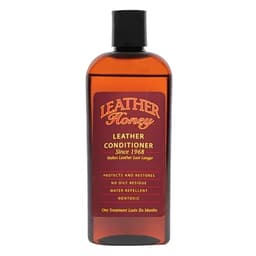
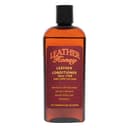
Leather Honey Leather Conditioner

Leather Honey Leather Conditioner

$19.99 · View on Amazon

$27.9929% off

Price as of October 18, 2026. #ad How we’re funded

For one leather bag, Leather Honey is the better buy, and the reason is maintenance rather than chemistry. It is built to penetrate rather than sit on the surface, and the maker publishes a durability claim you can plan around: one application lasts at least six months. On a bag that is used daily and conditioned rarely, that is the whole value proposition.

Lexol wins a narrower, real argument. It is the cheaper bottle, its own directions are built around light repeated coats rather than one deep feed, and on a pale or thin finished bag that cautious approach is a feature. But Lexol’s page for this conditioner makes no non-darkening claim, and it tells you to spot-test before eachuse. Both cases are below, with what each maker states and — more usefully — what each one declines to.

Read the full write-up

These two bottles get compared constantly, and almost every comparison treats them as rivals doing the same job at different prices. They are not. They are two different maintenance strategies, and the one you should buy depends far more on how often you will realistically open the bottle than on which formula is “better.”

Leather Honey is oil-rich and designed to be absorbed, with a published claim that a single application lasts at least six months. Lexol’s own directions point the other way: one or two sprays onto a cloth, wipe off the excess after a few minutes, and “multiple light coats are better than one heavy coat.” Neither approach is wrong. They suit different bags and different owners, and picking the wrong one is how people end up with either a darkened bag or a dry one.

There is also an asymmetry in what the two brands are willing to put in writing, and it is the most useful thing on this page. Our Leather Honey versus Bick 4 head-to-head turns on Bickmore stating flatly that Bick 4 will not darken leather. Lexol makes no such claim for the conditioner compared here. It makes it for a different product in the same line. That matters, and we work through why below.

Four picks: each conditioner, plus the cleaner its own maker tells you to use first, because both brands make the cleaning step part of their published routine rather than an optional extra. We have not run laboratory tests on either product and will not pretend we have. Everything here is a careful read of what each maker publishes on its own pages, matched against what a leather bag actually needs. Our conditioner roundup is the wider field if neither of these two is where you want to land.

How this is funded:we earn a commission if you buy through our links, at no extra cost to you. It never changes which product we recommend, and we’ll tell you when we’d skip one. Full disclosure.

Quick picks

Ranked on leather grade, construction, capacity and value. Select a row to jump to the full write-up. We have not wear-tested these bags — here is exactly what we do instead.

Specs are what each listing itself publishes, read on July 21, 2026 – October 10, 2026; anything a listing does not state reads “Not published” rather than a guess. Prices are live as of October 18, 2026.

#ProductWhat it isBest forPrice
1
Leather Honey Leather Conditioner

Leather Honey Leather Conditioner

The default conditioner we'd hand almost anyone: a long-running, non-toxic formula that a little of goes a long way with. It softens and protects most finished leathers and it's the safe first bottle for a new bag owner.

Leather conditionerBest for infrequent, lasting conditioning
$19.99 · View on Amazon

$27.9929% off

Price as of October 18, 2026. #ad How we’re funded

2
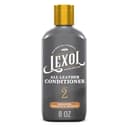
Lexol All Leather Conditioner (8 oz)

Lexol All Leather Conditioner (8 oz)

The light-coat conditioner, and the one to buy if you would rather do a little often than a lot occasionally. Lexol's own directions are the opposite philosophy from an oil-rich soak: one or two sprays onto a cloth, wipe the excess after a few minutes, and "multiple light coats are better than one heavy coat". That makes it forgiving on a finished handbag, where over-application is the usual way people ruin leather. The catch is what the brand does not publish — the conditioner page carries no non-darkening claim and no pH figure, and it tells you to spot-test before each use.

Leather conditioner (spray-applied liquid)Best for light, frequent upkeep
$9.42 · View on Amazon

Price as of October 18, 2026. #ad How we’re funded

3
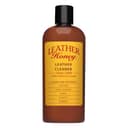
Leather Honey Leather Cleaner

Leather Honey Leather Cleaner

The cleaner half of the routine, from the same maker as our top conditioner. A concentrate you dilute, so one bottle cleans a lot of leather — use it before conditioning to lift dirt the conditioner would otherwise seal in.

Leather cleanerBest cleaner for a handbag
$16.99 · View on Amazon

$24.9932% off

Price as of October 18, 2026. #ad How we’re funded

4
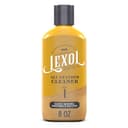
Lexol pH-Balanced Leather Cleaner (8 oz)

Lexol pH-Balanced Leather Cleaner (8 oz)

The cleaning half of the Lexol two-step, and the bottle in the Lexol line that actually carries the pH-balanced claim. It is the gentler of the two cleaners on our head-to-head: a foaming spray worked up on a wet cloth, which suits a handbag you clean a few times a year rather than a salt-stained boot. The brand's own directions for the conditioner tell you to use this first, so the two-bottle cost is the maker's routine rather than an upsell we invented.

Leather cleaner (pH-balanced foaming spray)Best gentle pH-balanced cleaner
$7.59 · View on Amazon

$8.298% off

Price as of October 18, 2026. #ad How we’re funded

The picks in full

#1Best for infrequent, lasting conditioning

Leather Honey Leather Conditioner

The default conditioner we'd hand almost anyone: a long-running, non-toxic formula that a little of goes a long way with. It softens and protects most finished leathers and it's the safe first bottle for a new bag owner.

Strengths

  • Non-toxic formula that's been sold since 1968
  • A few drops cover a whole bag — one bottle lasts years
  • Works across bags, boots, furniture and auto leather

Trade-offs

  • Can slightly darken some untreated or light leathers — spot-test first
  • Not a cleaner — pair it with a leather cleaner for grime
TypeLeather conditioner
FormLiquid conditioner
Size8 oz
Best forConditioning finished leather, Reviving dry bags, Routine care

Specs read from the product listing, on July 21, 2026. “Not published” means the brand does not state that figure.

#2Best for light, frequent upkeep

Lexol All Leather Conditioner (8 oz)

The light-coat conditioner, and the one to buy if you would rather do a little often than a lot occasionally. Lexol's own directions are the opposite philosophy from an oil-rich soak: one or two sprays onto a cloth, wipe the excess after a few minutes, and "multiple light coats are better than one heavy coat". That makes it forgiving on a finished handbag, where over-application is the usual way people ruin leather. The catch is what the brand does not publish — the conditioner page carries no non-darkening claim and no pH figure, and it tells you to spot-test before each use.

Strengths

  • Maker's directions are explicitly light-coat: "a little bit of Lexol goes a long way"
  • Its own listing names bags among the intended items, which most tack-aisle conditioners do not
  • Cheapest of the four bottles on our head-to-head, and an 8 oz bottle lasts a long time at this application rate
  • Brand states it softens leather and helps prevent cracking, and pairs it with a named cleaner for the step before

Trade-offs

  • Lexol's page for THIS conditioner makes no non-darkening claim — only the separate Neatsfoot version does
  • Brand instruction is to spot-test "before each use", which is more cautious than a flat no-darkening guarantee
  • No pH figure published for the conditioner; the pH-balanced claim in the Lexol line belongs to the cleaner
  • No stated interval between applications, so there is no published answer to "how often"
  • Lineup is confusing: several listing names and at least one genuinely different formula sit under "Lexol conditioner"
TypeLeather conditioner (spray-applied liquid)
FormLiquid conditioner (spray bottle)
Size8 oz
Best forRoutine upkeep on a finished bag, Light frequent conditioning, Step two after Lexol Cleaner

Construction note. Brand directions: shake well, clean first with Lexol Leather Cleaner if the leather is dirty, apply one or two sprays to a cloth or sponge over the whole surface, wipe off the excess after a few minutes and buff. Store below 140F. Spot-test on a hidden area before each use.

Specs read from the product listing, on October 10, 2026. “Not published” means the brand does not state that figure.

#3Best cleaner for a handbag

Leather Honey Leather Cleaner

The cleaner half of the routine, from the same maker as our top conditioner. A concentrate you dilute, so one bottle cleans a lot of leather — use it before conditioning to lift dirt the conditioner would otherwise seal in.

Strengths

  • Concentrated — dilutes to clean many bags per bottle
  • Non-toxic and safe on most finished leathers
  • Pairs cleanly with the Leather Honey conditioner

Trade-offs

  • It's a cleaner only — you still need a conditioner after
  • Always spot-test on delicate or unfinished leather
TypeLeather cleaner
FormLiquid cleaner (concentrate)
Size8 oz
Best forCleaning before conditioning, Routine care, Removing surface grime

Specs read from the product listing, on July 21, 2026. “Not published” means the brand does not state that figure.

#4Best gentle pH-balanced cleaner

Lexol pH-Balanced Leather Cleaner (8 oz)

The cleaning half of the Lexol two-step, and the bottle in the Lexol line that actually carries the pH-balanced claim. It is the gentler of the two cleaners on our head-to-head: a foaming spray worked up on a wet cloth, which suits a handbag you clean a few times a year rather than a salt-stained boot. The brand's own directions for the conditioner tell you to use this first, so the two-bottle cost is the maker's routine rather than an upsell we invented.

Strengths

  • pH-balanced claim is stated by the brand and carried in the listing title itself
  • Brand states it leaves "no scum or residue left behind", which matters before you condition
  • Foaming, cloth-applied method puts very little liquid onto the leather
  • Cheapest bottle of the four on our Leather Honey versus Lexol comparison

Trade-offs

  • A second purchase: the conditioner's own directions send you here first, so the real entry cost is two bottles
  • Brand publishes no pH number, only that the formula is balanced
  • Not for suede or nubuck — napped leather needs a dedicated napped cleaner
  • Like every cleaner it lifts oils, so conditioning afterwards is part of the job, not optional
TypeLeather cleaner (pH-balanced foaming spray)
FormLiquid cleaner (spray bottle)
Size8 oz
Best forRoutine bag cleaning, Step one before a conditioner, Finished smooth leather

Construction note. Brand directions: test on a hidden area first, apply one or two sprays to a WET cloth, work up a foam to lift the dirt, then wipe with a damp cloth. The brand pairs it with either Lexol Conditioner or Lexol Neatsfoot for the step after.

Specs read from the product listing, on October 10, 2026. “Not published” means the brand does not state that figure.

The five criteria

We judged these on the things that change the outcome on a bag, in the order they matter. Scent, bottle design and the length of the surface list on the label are noise.

  1. Will it change the color? Darkening is the most common regret in this category and it is effectively permanent. On a bag you chose partly for its shade, this outranks everything.
  2. How is it meant to be applied — deep or light? This is the real difference between these two, and it determines how often you will be doing this.
  3. How long does one application last? Only one of these two brands publishes an answer. That is not a small gap.
  4. Is it one purchase or two? Both makers tell you to clean before conditioning. Whether that is a second bottle changes the real cost.
  5. What does the maker refuse to promise? A brand that stays quiet about darkening on a product line where a sibling product does claim non-darkening is telling you something.

Criterion 1: darkening, and the claim Lexol does not make

This is where the comparison gets genuinely interesting, and it needs a careful reading of three separate Lexol pages.

Lexol’s page for the standard Lexol Leather Conditioner — the product on this page — says it softens leather and helps prevent cracking, and prolongs the life of the leather. It says nothing at all about color. What it does say is: “Always test Lexol Leather Conditioner on a small, hidden area before each use.” Before each use, not before the first use.

Lexol’s page for the separate Lexol Neatsfoot Conditioner — a different product, a neatsfoot-oil formula, not the one in our table — describes it as “non-darkening for light leather.” So the brand is perfectly willing to make a color claim when it believes it. It makes that claim for one product in the line and not for the other.

We are not going to read that as a confession. An oil-bearing conditioner can deepen a light finish, and the honest summary is that Lexol has chosen not to tell you whether this one will. Leather Honey is in exactly the same position: it is an oil-rich formula and we have always said on this site that it is the wrong first choice for a pale bag. On this criterion, both of these bottles lose to Bick 4, which states plainly that it will not darken leather. If darkening is your main fear, our Bick 4 comparison is the page you actually want, and the answer there is Bick 4.

Either way: spot-test. On the underside, near a seam, where a shade change will not bother you. Our conditioning guide shows where on a bag to do it and how long to wait before judging the result.

Criterion 2: a deep feed versus light repeated coats

Read the two sets of directions side by side and the products stop looking similar.

Leather Honeyis formulated to penetrate. The brand’s care guidance is about getting the conditioner into the leather and letting it work, and its headline claim — one application lasting at least six months — only makes sense for a formula that goes in rather than sits on top. You do a thorough job, twice a year, and the bag is handled.

Lexol is explicitly the opposite. Its directions are one or two sprays onto a cloth or sponge, spread over the cleaned surface, excess wiped off after a few minutes, and then this sentence: “a little bit of Lexol goes a long way. Multiple light coats are better than one heavy coat.” That is a maintenance product rather than a restoration one.

Which is right for you is a question about your habits, not about leather. If you are the kind of person who will genuinely wipe the bag down every few weeks, the light-coat approach is gentler and less likely to over-treat — and over-treating is a real risk that museum conservation guidance warns about directly. If you are honest with yourself that this bottle will come out of the cupboard twice a year at best, a formula designed for light frequent coats is the wrong tool, and Leather Honey is the better buy.

Most people fall in the second group. That is the single biggest reason Leather Honey is our pick for one leather bag.

Criterion 3: how long one application lasts

Leather Honey publishes an interval. Lexol does not publish one anywhere we could find on its own product page — no reapplication frequency, no duration, nothing to plan around. For a product whose directions are built on repetition, that absence is awkward: the brand tells you to use light repeated coats without saying how often to repeat them.

In practice this is less of a problem than it reads, because leather tells you. A bag that has gone matte, feels dry under your thumb or has started to look thirsty at the flex points wants conditioning. Our guide to how long leather bags last covers what the early signs look like. But a published interval is still worth something, and only one of these two brands gives you one.

Criterion 4: one bottle or two

Neither brand lets you skip cleaning, and both say so in their own directions. Leather Honey’s care guidance has you clean first. Lexol’s conditioner directions open with “Shake well. If leather is dirty, clean it first with Lexol Leather Cleaner” and close with “For best results, use with Lexol Cleaner.” So both are two-bottle systems by design, which is why both cleaners are in our table.

The two cleaners are not equivalent. Lexol’s cleaneris the bottle in the Lexol line that carries the pH-balanced claim — a point worth noticing, because people routinely attribute that claim to the conditioner. It is a foaming spray worked up on a wet cloth, which puts very little liquid onto the leather, and the brand states it leaves no scum or residue behind. Leather Honey’s cleaner is the one we point handbag owners to, and it remains our pick in the cleaner roundup.

Both are gentler than the aggressive route. If your bag is genuinely grimy rather than dusty — salt marks, ground-in grime, a season of neglect — neither of these is strong enough, and our bag-cleaning guide covers what to escalate to.

Criterion 5: what neither brand will tell you

Worth being blunt about the limits of this comparison. Lexol’s own conditioner page publishes no pH figure, no statement about wax or silicone content, no non-darkening claim and no reapplication interval. Leather Honey publishes a durability claim and non-toxic, made-in-the-USA provenance, but not a full ingredient breakdown either.

That means nobody — us included — can tell you from published sources whether either formula seals the pores, which was the decisive question in our Bick 4 comparison, because Bickmore publishes an explicit wax-free claim. Neither of these two brands does. Anyone presenting a confident pore-sealing verdict on these bottles is guessing, and we would rather say so than join in.

Which one to buy

For one leather bag, most of the time: Leather Honey. The published six-month interval matches how people actually behave, the formula is built to feed leather that has gone dry, and it is the product our conditioner roundup names best overall. Spot-test it on a pale bag, and read our full Leather Honey review for where it falls short.

If you will genuinely maintain the bag often: Lexol.Light coats, little and often, and the cheapest entry on the table. It is also the more sensible choice if you have several leather items — a car interior, boots, a saddle — because the brand is built around exactly that and the 8 oz bottle goes a long way at this application rate.

If your bag is pale and you cannot risk it: neither. Buy Bick 4, which is the only one of the three that states in writing that it will not darken leather. We would rather send you to the bottle that makes the promise than defend one that stays quiet.

If your bag is suede or nubuck: none of these four. Napped leather needs a dedicated napped-leather product and will be ruined by a liquid conditioner. Our suede bag care guide has the right kit.

If you are starting from nothing: our leather care starter kit puts the cleaner, conditioner and protector together in the order you will actually use them, and costs less than people expect.

Applying either one without damaging the bag

Less product than you think.This is the single most common mistake, and both brands effectively warn about it — Lexol in that light-coats sentence, Leather Honey by telling you to wipe excess rather than leave it. Conservation guidance on leather objects is consistently more cautious about over-treatment than any brand is.

Clean first, always. Conditioning over dirt drives the dirt in and seals it there. Both makers put the cleaning step in their own directions for a reason.

Cloth, not straight onto the leather.Both brands’ directions say to apply to a cloth or sponge first. It controls how much goes on and prevents the blotching you get from a concentrated spray landing in one spot.

Then leave it alone. Give it time to absorb before you buff, and do not judge the color for a day. Leather often looks darker wet and comes back lighter. Our patina guide explains which color changes are the finish and which are the leather genuinely aging.

Keep it off the hardware. Oil-bearing conditioners dull plated hardware over time and collect grit around the stitching. Our hardware guide covers what to wipe and what to leave.

There is a third pairing in this cluster. Our Bick 4 versus Lexol comparison sets Lexol against the one bottle on this site whose maker does publish a non-darkening claim, which is the criterion Lexol loses here.
Frequently asked questions

Is Leather Honey or Lexol better for a leather bag?

For a single leather bag, Leather Honey, because its published six-month interval matches how often people really condition a bag. Lexol is the better choice if you will genuinely maintain the bag often in light coats, or if you have several leather items to look after. Neither is the right answer for a pale bag you cannot risk darkening.

Does Lexol darken leather?

Lexol does not say. The brand's page for its standard Leather Conditioner makes no non-darkening claim and instead tells you to spot-test on a hidden area before each use. Notably, Lexol's separate Neatsfoot conditioner is described as non-darkening for light leather, so the brand does make the claim where it believes it. Treat the standard conditioner as capable of deepening a light finish and test first.

Is Lexol pH balanced?

The pH-balanced claim in the Lexol line belongs to the cleaner, not the conditioner. Lexol's cleaner is described as pH balanced for safe cleaning and leaving no scum or residue; the conditioner's own page publishes no pH figure at all. People often attribute the claim to the wrong bottle.

How often should I apply Lexol to a bag?

Lexol does not publish an interval, which is a real gap for a product whose directions are built on multiple light coats. Go by the leather instead: if it looks matte, feels dry under your thumb, or is drying at the flex points, it wants conditioning. Leather Honey, by contrast, publishes a claim of at least six months per application.

Do I need the cleaner as well, or just the conditioner?

Both makers say to clean first in their own directions, so budget for two bottles. Lexol's conditioner directions name Lexol Leather Cleaner specifically; Leather Honey's care guidance has you clean before conditioning too. Conditioning over dirt drives grime into the leather and seals it there.

Can I use Lexol on suede?

No. Neither of these conditioners nor either cleaner belongs on suede or nubuck. Napped leather needs a dedicated napped-leather cleaner and protector, and a liquid conditioner will mat the nap permanently. Our suede bag care guide covers the right products.

Does Lexol or Leather Honey seal the leather's pores?

Neither brand publishes enough to answer that honestly. It was the decisive question in our Bick 4 comparison only because Bickmore makes an explicit wax-free claim. Lexol and Leather Honey both publish no wax or silicone statement for these products, so any confident verdict on pore-sealing is guesswork rather than sourcing.

Which is cheaper?

Lexol, on both bottles, and by a clear margin at the 8 oz size we compare here. Prices on this page are read live rather than typed in, so the table above is the current answer rather than one we recorded weeks ago. Worth weighing against the fact that Leather Honey publishes a far longer interval between applications.

Sources

  • Lexol (Manna Pro) — Lexol® Leather Conditioner — The maker's own product page for the conditioner itself: it "softens leather and helps prevent cracking" and "helps to prolong the life of your leather and protect your tack investment"; "Voted by The Horse Journal as the best leather conditioner in 20 years!"; directions are "Shake well. If leather is dirty, clean it first with Lexol® Leather Cleaner", then "Apply 1 or 2 sprays of Conditioner to a clean cloth or sponge and apply Conditioner over entire cleaned surface", then "After a few minutes wipe off excess and buff with a clean cloth", with "a little bit of Lexol® goes a long way. Multiple light coats are better than one heavy coat"; "Always test Lexol® Leather Conditioner on a small, hidden area before each use"; "For best results, use with Lexol Cleaner"; "Store at temperatures no higher than 140F to avoid container weakening". The page publishes NO pH figure, NO wax or silicone statement, NO non-darkening claim and NO durability interval (accessed October 10, 2026)
  • Lexol (Manna Pro) — Lexol® Leather Cleaner — The maker's own page for the cleaner: it is "pH balanced for safe cleaning" with "No scum or residue left behind"; directions are to test on a hidden area first, then apply 1 to 2 sprays to a wet cloth, work up a foam to lift dirt and wipe with a damp cloth; and "use Lexol Conditioner or Neatsfoot for best results". The pH-balanced claim in the Lexol line attaches to the CLEANER, not to the conditioner (accessed October 10, 2026)
  • Lexol (Manna Pro) — Lexol® Leather Neatsfoot Conditioner — The maker's page for the SEPARATE neatsfoot-oil conditioner, cited only to show where Lexol does make a color claim: this product is described as "Non-darkening for light leather" and as extending leather lifespan, softening and preventing cracking, "Best used with Lexol Cleaner", with the same instruction to "Always test Lexol® Neatsfoot Leather Conditioner on a small, hidden area before each use". The standard Lexol Leather Conditioner page makes no equivalent non-darkening claim (accessed October 10, 2026)
  • Leather Honey — Ultimate Guide to Leather Care — A leather-care manufacturer's step-by-step guidance on cleaning and conditioning leather goods (accessed July 21, 2026)
  • Bickmore — Bick 4 Leather Conditioner (8 oz) — The maker's own product page: "Unlike most leather conditioners, Bick 4 Leather Conditioner will NOT darken your leather"; "Unlike other brands, Bick 4 is a completely wax-free product" so "the leather pores will not seal up"; it is "essential for maintaining all types of smooth finished leather" including handbags; "Do not use on suede, rough-out, distressed or napped leathers"; directions are "Apply liberally with a clean cloth. Let dry and buff. Repeat as necessary", with "If item is very dirty, clean with Bickmore Saddle Soap or Bick 1" and "For extra protection and waterproofing apply Gard-More after conditioning" (accessed October 3, 2026)
  • U.S. National Park Service — Curatorial Care of Objects Made From Leather and Skin Products — NPS museum-handbook guidance on cleaning, handling, humidity and the risks of over-treating leather (accessed July 21, 2026)

Keep reading