The three questions that decide your shape
None of them is about leather, which is why so many people buy the wrong bag beautifully made.
1. What is the heaviest thing you carry every day?
A phone and a card holder points at a crossbody, and at the small end of it — a small bag barely stresses the hide, so size matters far more than grade. A laptop, a folder or a water bottle points at a tote, a backpack or a briefcase, and there the grade starts to matter a great deal, because seams, handles and strap anchors are carrying that weight every single day.
2. How long is the bag on your body while you are moving?
Under ten minutes: choose on looks and on how quickly you can get into it. Over twenty minutes on foot or on transit: choose on how the weight sits. Two straps across your back beat one shoulder every time, and leather is heavy before you load it. This is the single most common regret in the category, and our crossbody versus shoulder bag comparison is the clearest version of the trade-off.
3. How many times a day do you open it?
The question nobody asks and everybody feels. A bag opened twice a day can have a flap, a buckle and a drawstring. A bag opened fifteen times needs one zip and an exterior pocket, or it becomes an irritation by Wednesday.
The five shapes, and who each is for
Crossbody
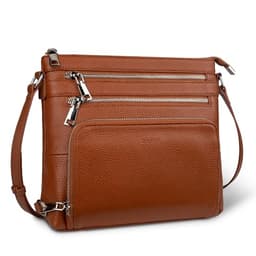
The default recommendation for anyone not carrying a laptop. Worn diagonally it spreads its weight, leaves both hands free and is much harder to lose track of than a shoulder bag. The category splits by size rather than by brand, and getting the size right is most of the decision — our sizing guide takes three minutes. Full shortlists on the women’s and men’s pages.
Tote
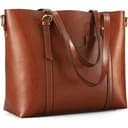
The right answer when your daily load is bulky rather than heavy. A soft leather tote swallows a laptop, a lunch and a book without complaint and is the least fussy shape to get into. The cost is that everything hangs from one shoulder. Start with our women’s tote roundup or totes under $100, which is where this category is strongest.
Backpack
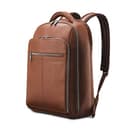
The shape that fixes the shoulder problem, and the one to buy if you commute with a laptop or walk any distance. It is also the shape where the material claims are least reliable, because a structured pack in real hide is expensive to make and a coated synthetic photographs identically. Our marketplace shortlist sets out the four checks that separate the two, and under $200 is where value peaks.
Sling
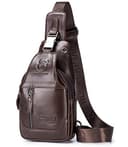
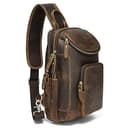
A crossbody worn high on the torso rather than at the hip. It is the fastest shape to open one-handed and the most secure in a crowd, and it holds less than it looks like it should. If you are choosing between this and a hip-height crossbody, our sling versus crossbody piece is the two-minute version.
Work bag
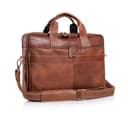
Briefcase, messenger or laptop bag — the structured shapes. This is where full-grain earns its money, because a bag that holds a rigid shape under load for years is exactly what a better hide is good at. It is also where the weight penalty is worst. Our work bag roundup covers all three shapes together.
What “everyday” costs you in leather grade
A bag used daily is stressed daily, and that changes which grade is the right purchase rather than simply the best one.
Genuine leatheris real hide of a mid-tier grade. For a small crossbody, a soft tote or a purse-sized backpack it is genuinely enough — it looks and smells like leather and it handles daily wear with occasional conditioning. It will not develop the patina full-grain does. Our explainer is the honest version of what the phrase means and does not mean.
Top-grain is the sensible middle for a bag that carries weight: thinner and more uniform than full-grain, lighter, and more resistant to staining because it is usually finished.
Full-grain is the buy-once grade and the only one that ages into something better rather than merely surviving. It is also the heaviest, which is a real cost in a bag you carry for twenty minutes twice a day. Full-grain versus top-grain is the ten-minute version of that decision, and our patina guide explains what you are actually buying at the top.
Two habits that decide how long it lasts
Care for an everyday bag is fifteen minutes twice a year, not a hobby. The whole kit is four items and it is set out on our care starter kit page.
Clean before you condition. Conditioning a dirty bag drives the dirt into the hide and seals it there, which is why bags occasionally look worse after being looked after. The order is the whole trick.
Treat the straps and back panel first.They flex constantly and take body heat, so they dry, stiffen and eventually crack long before the panels show anything — and they are the parts nobody inspects. The conditioning guide covers how little to use, and the storage guide covers the humid-closet problem that ruins more bags than wear ever does.