The Patina Bench

Buffalo Leather vs Cowhide

Two hides, one real difference: buffalo is thicker and more coarsely grained, cowhide is more consistent and comes in everything. The grade still matters more than the species.

By Stephen V.Last updated How we pick

Here is the verdict first, because this comparison gets over-complicated. If you want a rugged bag with visible character and the most hide per dollar, buffalo is the better buy— and in our registry the bag that does it best is the KomalC full-grain buffalo briefcase. If you want a bag that looks sharp in an office, comes in the color you had in mind and weighs as little as leather can, cowhide is the better buy, and the TIDING full-grain backpack is the cleanest example of it. Neither hide is a grade, and that is the part most comparisons get wrong.

Buffalo leather on a bag means water buffalo hide. The animal is bigger, the skin is thicker, and the grain pattern is more pronounced and less even than a cow’s. Cowhide is the default material of the entire leather-goods industry, which is exactly why it is so available in every thickness, color and finish you can think of. Both come in full-grain, top-grain and corrected versions, and the grade tells you much more about how a bag will wear than the species does.

So before you compare hides, settle three questions: what grade is it(full-grain, top-grain, or an unnamed “genuine leather”), how heavy are you willing to carry, and do you want the bag to show its history or hide it. Once those are answered the species question usually answers itself. The three bags below are the ones in our registry whose listings name their hide explicitly, so you can see each argument in a real product with a live price rather than in the abstract.

How this is funded:we earn a commission if you buy through our links, at no extra cost to you. It never changes which product we recommend, and we’ll tell you when we’d skip one. Full disclosure.

Quick picks

Ranked on leather grade, construction, capacity and value. Select a row to jump to the full write-up. We have not wear-tested these bags — here is exactly what we do instead.

Specs are what each listing itself publishes, read on July 21, 2026 – August 29, 2026; anything a listing does not state reads “Not published” rather than a guess. Prices are live as of October 5, 2026.

#ProductMaterialBest forPrice
1
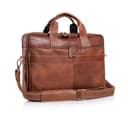
KomalC Buffalo Leather 16" Briefcase

KomalC Buffalo Leather 16" Briefcase

The best value in real leather here. KomalC's full-grain buffalo satchel gives you a rugged, characterful hide and a 16-inch laptop bag for well under the brand-name briefcases — with the trade-off that it's a softer satchel, not a hard-structured case.

Full-grain buffalo leatherBest buffalo: full-grain
$89.99 · View on Amazon

Price as of October 5, 2026. #ad How we’re funded

2
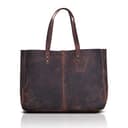
KomalC Buffalo Distressed Leather Tote (18.5 in)

KomalC Buffalo Distressed Leather Tote (18.5 in)

The biggest bag here by a wide margin, in distressed buffalo hide from the maker behind the briefcase we already recommend. It is a shopper rather than an organizer — one large compartment and a single pocket — and it is honest about that.

Distressed buffalo leatherBest buffalo: top-grain
$66.99 · View on Amazon

Price as of October 5, 2026. #ad How we’re funded

3
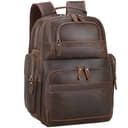
TIDING Full Grain Leather 15.6" Backpack

TIDING Full Grain Leather 15.6" Backpack

The full-grain pick, and our choice for work. TIDING states full-grain leather, fits a 15.6-inch laptop, and has the multi-pocket layout a work commute actually needs — a bag built to patina rather than peel.

Full-grain leatherBest cowhide: full-grain
$169.99 · View on Amazon

Price as of October 5, 2026. #ad How we’re funded

The picks in full

#1Best buffalo: full-grain

KomalC Buffalo Leather 16" Briefcase

The best value in real leather here. KomalC's full-grain buffalo satchel gives you a rugged, characterful hide and a 16-inch laptop bag for well under the brand-name briefcases — with the trade-off that it's a softer satchel, not a hard-structured case.

Strengths

  • Full-grain buffalo leather with genuine rugged character
  • Fits a 16-inch laptop plus files
  • Priced well below the brand-name briefcases

Trade-offs

  • Soft satchel shape, not a rigid structured briefcase
  • Heavy buffalo hide with a strong initial leather smell
LeatherFull-grain
DimensionsNot published
WeightNot published
Laptop fitFits a 16-inch laptop
Best forEveryday work, Creative offices, College and grad school

Construction note. Full-grain buffalo hide is thick and rugged; expect a pronounced leather smell and visible grain that softens with use.

Specs read from the product listing, on July 21, 2026. “Not published” means the brand does not state that figure.

#2Best buffalo: top-grain

KomalC Buffalo Distressed Leather Tote (18.5 in)

The biggest bag here by a wide margin, in distressed buffalo hide from the maker behind the briefcase we already recommend. It is a shopper rather than an organizer — one large compartment and a single pocket — and it is honest about that.

Strengths

  • Top-grain buffalo leather, named plainly in the listing
  • 18.5 inches across — genuinely large rather than nominally large
  • Distressed tan finish hides the first year of scuffs completely

Trade-offs

  • One main compartment and one inner pocket — almost no organization
  • No laptop protection of any kind
  • The listing's weight field says 0.65 lb, which is not credible for a bag this size
LeatherTop-grain
Dimensions18.5 w x 13.25 h x 3.5 d in
WeightNot published
Laptop fitNo dedicated laptop compartment
Best forShopping and market carry, Books and files, Weekend carry-all

Construction note. Buffalo hide is thicker and more coarsely grained than cowhide, which is why distressed finishes read so strongly on it. Weight is recorded as not published: the listing's own weight field says 0.65 lb, and a bag of these dimensions in buffalo leather cannot weigh that, so we do not repeat the number as fact.

Specs read from the product listing, on August 29, 2026. “Not published” means the brand does not state that figure.

#3Best cowhide: full-grain

TIDING Full Grain Leather 15.6" Backpack

The full-grain pick, and our choice for work. TIDING states full-grain leather, fits a 15.6-inch laptop, and has the multi-pocket layout a work commute actually needs — a bag built to patina rather than peel.

Strengths

  • Full-grain leather — the most durable grade, stated on the listing
  • Fits a 15.6-inch laptop with real organization
  • Large capacity for a full work-and-travel day

Trade-offs

  • Heavy — full-grain leather plus a big body
  • Premium price
LeatherFull-grain
DimensionsNot published
WeightNot published
Laptop fitFits a 15.6-inch laptop
Best forWork commute, Business travel, Buy-once carry

Construction note. Full-grain leather is heavy and stiff at first, then softens and darkens with use — the trade-off for a backpack that lasts.

Specs read from the product listing, on July 21, 2026. “Not published” means the brand does not state that figure.

The differences that actually show up in a bag

Thickness and stiffness

Buffalo hide is thicker. In a finished bag that reads as a heavier, firmer panel that holds a shape and takes an impact well, and as a bag that needs more breaking in before it softens. Our own note on the KomalC briefcase is blunt about the trade: heavy buffalo hide, a strong initial leather smell, and a satchel that is soft-sided rather than rigid despite the thickness. Cowhide at the same grade is thinner and more pliable, which is why nearly every soft, slouchy bag you have handled is cow.

Grain, and what a distressed finish does to it

The grain on buffalo is coarser and more irregular, with visible pores and a pebbled texture that varies across the hide. That is the single reason distressed and antiqued finishes look so strong on buffalo: the finish catches on a surface that already has relief. Put the same distressing on smooth cowhide and it reads as a treatment; put it on buffalo and it reads as the hide. Our guide to distressed leather goes through how those finishes are made and which ones are real.

Weight

Thicker hide means a heavier bag at the same size, and on a bag you carry every day that matters more than most buyers expect. It is also the reason buffalo shows up mostly in briefcases, messengers and large totes rather than in small bags, where the weight would be absurd relative to the contents. Our bag weight guide collects every empty weight our registry publishes, and it is a useful reality check before you buy any thick-hide bag.

Consistency and color range

This is cowhide’s win, and it is a decisive one for a lot of buyers. Cow hides are more uniform, more plentiful and processed at enormous scale, so they come in more colors, more finishes and more thicknesses, and two bags from the same run look alike. Buffalo bags cluster around browns, tans and distressed finishes because that is where the hide looks best and because the variation is part of the sell. If you want black, structured and matching, you want cow.

Price

For the same bag at the same grade, buffalo usually costs less, and that is the quiet reason it is everywhere in the handmade segment. The KomalC briefcase is a good illustration: full-grain hide and a 16-inch laptop bag at a price well below the brand-name structured cases on our laptop bag page. You are paying for leather rather than for structure or a label, and our full review of that briefcase goes through what the trade costs you in practice.

Species is not grade, and grade matters more

This is the part worth taking away. “Buffalo leather” tells you which animal the hide came from. It tells you nothing about which layer of that hide you are getting, and the layer is what determines whether the bag develops a patina or wears through a coating. A corrected-grain buffalo bag will not outlast a full-grain cowhide one because it is buffalo.

You can see both grades of buffalo on this page. The KomalC briefcase states full-grain buffalo, which keeps the hide’s outer surface intact and will darken and soften with years of handling. The KomalC tote states top-grain buffalo, where that surface has been sanded and sealed for an even finish, so it trades patina for consistency. Same maker, same species, two different futures for the bag. Our full-grain versus top-grain guide explains why, and our guide to “genuine leather” covers the term that is used when a seller does not want to name a grade at all.

It is also worth knowing what the labeling rules do and do not cover. The FTC’s leather guides are concerned with whether a material may be called leather at all and with disclosing imitations — not with ranking hides by species. So “buffalo leather” on a listing is a description the seller has chosen, and the useful follow-up question is always the same one: which layer, and does the title agree with the bullets?

Which to choose, by what you are buying

A work briefcase or messenger: buffalo, if the office allows it. Thickness is an advantage where a bag is dragged in and out of cars, set on floors and loaded with a laptop and files. Buy it knowing it will be heavy and will smell strongly of leather for the first few weeks.

A structured, formal case: cowhide. Even color, crisper edges, black available, and lighter at the same size. Our full-grain briefcase roundup is the page for that.

A large tote for hauling: either, but check the weight. The KomalC buffalo tote is the biggest bag in our registry at 18.5 inches across, and it is a single-compartment shopper rather than an organizer. If capacity with organization is the goal, our large tote roundup compares the cowhide alternatives.

A small bag: cowhide, almost always.Buffalo’s thickness is dead weight on a crossbody and makes small panels and fine stitching harder to execute. Our full-grain crossbody page is all cowhide for exactly this reason.

A first real-leather bag: whichever names its grade. That single piece of candor predicts satisfaction better than the species does. Our leather bag buying guide works through the whole decision in order.

Does buffalo need different care?

Not fundamentally. Both are animal hide and both want the same routine: clean before conditioning, condition thinly and rarely, keep them away from direct heat, and let them dry naturally if they get wet. Our conditioning guide and cleaning guide apply to both without modification.

Two practical differences are worth knowing. A thick full-grain buffalo hide will absorb more conditioner than a thin sealed cowhide, so the same thin coat goes less far and the bag may want treating a little more often in its first year. And the strong leather smell that buffalo bags are known for is a finishing and tannage question rather than a defect; it fades with use and air. If it is bothering you, our guide to removing smells from a leather bag covers what helps and what makes it worse.
Frequently asked questions

Is buffalo leather better than cowhide?

It is thicker, more coarsely grained and usually cheaper at the same grade, which makes it better for rugged bags with visible character. Cowhide is more consistent, lighter at the same size and available in far more colors and finishes, which makes it better for structured or formal bags. Neither is better in general.

Is buffalo leather stronger than cowhide?

A buffalo bag is usually made from a thicker piece of hide, and thickness is a real advantage against abrasion and impact. But grade matters more: a full-grain cowhide bag keeps the hide's strongest outer surface intact, and that will outlast a corrected-grain buffalo bag.

Why do buffalo leather bags smell so strongly?

It comes from the tannage and finishing on a thick hide, not from a fault. It is common enough that we record it as a con on the buffalo briefcase we recommend. It fades with use and fresh air over a few weeks.

Is water buffalo leather the same as buffalo leather on a bag listing?

On bags, yes, in practice. When a bag listing says buffalo it means water buffalo hide, which is the hide used across the handmade leather-goods trade. The follow-up question that actually matters is which layer of that hide you are getting.

Which hide takes a distressed finish better?

Buffalo, clearly. Its grain already has relief and irregularity, so a distressed or antiqued finish catches on the surface and reads as the hide itself rather than as a treatment applied to a smooth panel.

Is buffalo leather heavier?

Yes, at the same bag size, because the hide is thicker. That is why buffalo appears mostly in briefcases, messengers and big totes and almost never in small crossbodies, and why it is worth checking the published empty weight before committing to one as a daily bag.

Sources

Keep reading