1. The worn edge — the repair almost everyone needs
Run a fingernail along the edge of your handle. If it catches on rough, lifting flakes, or if a line of pale raw leather shows through a darker painted edge, that is edge-paint wear and it is normal on a bag past its first year. The painted edge is a sacrificial layer; renewing it is maintenance rather than repair.
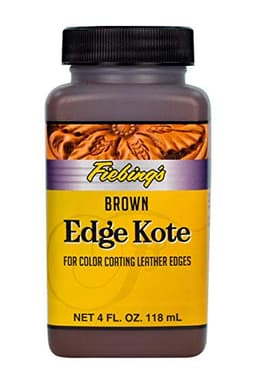
Do it in this order. Scrape the flaking paint back with the edge of a blunt blade or a fine abrasive until the edge is smooth and the remaining paint is solidly attached — this step is the whole job, and skipping it is why home edge repairs peel. Wipe the dust off. Then apply edge paint in two thin coats with a fine brush, letting the first dry fully. Keep it on the edge: any paint that strays onto the grain side has to come off immediately. Expect a slightly glossier finish than a factory matte edge.
Our repair-kit roundup covers the kits that bundle edge products with fillers and colours, if you would rather buy one box than three bottles.
2. The sticky handle — and the one case that cannot be saved
A tacky, slightly dark, slightly greasy handle is the second most common complaint and it has two completely different causes. Telling them apart takes thirty seconds with a cotton bud and a little cleaner.
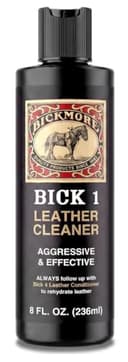
If the bud comes away dirty, it is grime.Hands deposit sebum, sunscreen, hand cream and ordinary dirt onto the same two inches of leather every day, and over a few years that builds into a layer that feels tacky and looks almost black. It cleans off. Use a proper leather cleaner, work a small section at a time, change the cloth as it loads up, and expect to go round two or three times — this deposit is years old. Condition afterwards, because cleaning lifts the leather’s own oils along with the imported ones.
If the bud comes away coloured, or the surface smears and lifts, the finish itself is failing.On a coated or synthetic-finished bag that is hydrolysis: the polyurethane layer is absorbing moisture and breaking down into a sticky residue, and it progresses to crumbling. There is no treatment. It is also the clearest signal that a bag sold as “leather” was coated, and our leather versus vegan leather guide explains why that layer has a shelf life while hide does not.
One thing to be clear about: a handle going darker is not damage. That is patina, it is the most honest kind, and our patina guide makes the case for leaving it alone. The problem is stickiness, not colour.
3. The pale, raw handle — a colour problem
Where a hand closes repeatedly in the same place, the surface finish abrades away and the lighter leather underneath shows through. No amount of cleaning brings that back, because nothing is dirty — pigment is missing.
Two products do this job and they suit different leathers. A recolouring balm is pigment in a wax or cream carrier that works into the leather, which suits absorbent, open-finish hide; it is the gentler option and it keeps the hand of the leather. A leather repair paint sits on the surface and suits sealed, pigmented leather, which is what most mainstream bags are made of, and it is the only honest option where a balm will simply not take. Our scratch-removal page runs through the same decision in more detail, including the test for which kind of leather you have.
Whichever you use, test on the base of the bag, build it in thin layers, and stop early. The failure mode here is a handle that is visibly a different shade and a different sheen from the rest of the bag — which reads worse to the eye than honest wear did.
4. The failed strap — when to stop and replace
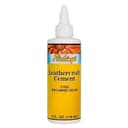
This is the part of the page that will save someone a bag. A strap or handle that carries weight is a stitched and riveted structural component, and adhesive is not a structural fix. Leather cement is excellent for a lifted edge, a peeling lining or a loose keeper; it is the wrong tool for anything your shoulder depends on, and the failure mode is the bag hitting the pavement with your laptop in it.
Three realistic routes when the strap has actually failed:
- Buy a replacement strap.If the bag has clasps or D-rings, this is the cheapest and best outcome — aftermarket leather and webbing straps are a stock item, and a bag with detachable hardware is a bag whose strap was always meant to be consumable. Match the clasp to the ring’s internal width, and the length to the drop you want: about 11 to 13 inches of drop for shoulder carry and 20 to 25 for crossbody. Our crossbody-strap tote roundup explains that measurement properly.
- Take it to a cobbler or leather repairer. Re-stitching a handle, replacing a rivet or fitting a new fixed strap is routine work for someone with a stitching machine and the right thread, and it is almost always worth it on a bag whose body is sound. Ask for the stitch to be done through a reinforced tab rather than through a single layer.
- Accept the bag is done.If the leather around the anchor has torn — not the stitching, the hide itself — the repair has nothing sound to attach to. A patch behind the tear can buy time, but the same panel will keep failing under load.
The pre-purchase version of all of this is in our hardware guide: rivets through reinforced tabs, D-rings that are closed rather than bent shut, and stitching that runs back on itself at the stress points. Those three details are most of the difference between a strap that lasts a decade and one that lasts a year.
Keeping handles out of this page
Three habits do most of the work. Clean the handles and the strap’s contact areas on a schedule rather than when they look bad, because the deposit is far easier to remove at six months than at six years. Condition the handle when you condition the bag — it is the panel that most needs it and the one people skip. And when you store the bag, store it so nothing presses on the handle fold; our storage guide covers the rest, and the care starter kit is the shortest list of products that covers both jobs.
One part of a strap is not leather at all, and it fails on its own schedule: the clip, the rings and the rivets. A seized or snapped clasp on a detachable strap is genuinely a kitchen-table repair, and tarnished rings are a cleaning job with one large trap in it — our page on bag hardware care and repair covers both, including why the polish aisle is the wrong aisle for plated fittings.