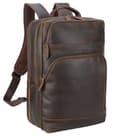
What makes a backpack good for travel specifically
It fits under the seat.Airline personal-item allowances vary, but most sit around 18 x 14 x 8 inches, and several budget carriers are stricter. A slim backpack clears this comfortably; a fully loaded structured one may not. If you fly often enough to care, measure the bag packed rather than empty — a soft backpack grows when you fill it.
It protects a laptop through security. Airport security means taking the machine out and putting it back, often in a hurry, on a metal bench. A compartment that opens flat and has a padded, suspended sleeve makes that painless. One buried under the main compartment makes it a small ordeal every single time.
It has a luggage pass-through, or you will wish it did. A sleeve on the back panel that slides over a roller handle takes the backpack off your shoulders for the length of a terminal. Once you have traveled with one, a bag without it feels like an oversight.
It is not too heavy empty. This is where leather costs you. A structured leather backpack can weigh three or four pounds before you put anything in it, and on a personal-item allowance measured in weight rather than volume, that is real. If you fly with weight-limited carriers, favor the slimmer, softer picks.
Leather and weather: the honest version
Leather handles a shower better than people expect and standing rain worse than they hope. A brief soaking will not ruin a good bag — blot it dry with a cloth, let it dry away from direct heat, and condition it once it is fully dry. What causes lasting damage is heat-drying a wet bag, which stiffens and cracks the fibers, and repeated wet-dry cycles without conditioning.
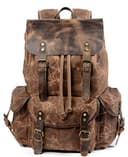
If your travel involves genuinely wet places, the waxed-canvas-and-leather option on this list is the sensible answer. Waxed canvas sheds water in a way untreated leather does not, and the leather trim keeps it looking like a considered bag rather than a technical one. It is on this list precisely because pretending a full-leather bag is the right choice in a monsoon would be dishonest.
Our troubleshooting guide covers water marks, musty smells and mold — the three problems travel actually causes.
Which one to buy
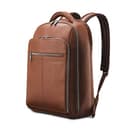
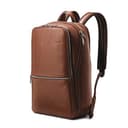
The Samsonite classic is the overall pick: a structured leather backpack from a luggage company that understands airports, with the laptop protection and the build quality to match. The slim version is the one to buy if you fly budget carriers or want to be certain of the personal-item allowance — it gives up some capacity for a much easier life at the gate.
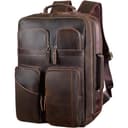
If you travel with a large laptop, the TIDING full-grain 17.3-inch backpack is the only pick here built for it, and full-grain means it will look better after fifty flights than it does now. The WUDON waxed canvas is the bad-weather answer. And the Masa Kawa is the value pick — real leather, proper laptop protection, and a price well under the branded options.
Packing a leather backpack well
Two habits extend the life of a travel backpack more than any product will. First, do not overstuff it: leather stretches, and a bag packed past its shape permanently loses that shape, especially around the zip line where the teeth then start to separate under load. Second, put the heavy things against the back panel, not against the outer face — it is more comfortable and it stops the front panel bulging into a permanent curve.
On arrival, unpack it rather than living out of it, and let it air. A closed, packed leather bag in a humid hotel room for a week is exactly the condition that grows mold, which is the single most common travel-related leather problem and the most annoying one to fix.