What actually gets cut under $50
Cheap leather bags are not shrunken versions of expensive ones. Specific things have been economized, and knowing which lets you judge whether you mind.
The grade, usually
Most of this bracket is genuine leather— real hide, but a mid-tier grade, often a corrected or split layer with a finish sprayed over the top. It looks and smells like leather and stands up to daily use. What it will not do is develop a patina. The SUIKIHUM here is the exception and the reason it earns a spot: full-grain under $50 is genuinely unusual. Our leather types guide sets out exactly where each grade sits.
The hardware
Plated rather than solid, and lighter gauge. On a bag you open ten times a day, the zip is the part most likely to fail first — well before the leather does. If you can see a branded zip in the listing photos, treat that as a meaningful signal. Our hardware guide covers what to look at.
The lining and the edges
Cheaper bags use thinner linings and raw or lightly painted edges rather than folded, burnished ones. Neither is a defect exactly, but edge finishing is where a bag starts to look worn first, and a thin lining tears sooner than the leather it protects.
What does not get cut
Fit, capacity and how the bag actually carries are frequently as good as on a bag costing three times as much. You are trading longevity and finish, not function — which is precisely why a sub-$50 crossbody is such a sensible first real-leather purchase.
How to shop this bracket safely
Three checks, thirty seconds each. Read the title for a stated grade rather than the word leather — “full-grain,” “top-grain” and “genuine leather” are real answers, while “vegan leather,” “PU” and “faux” mean plastic. Then confirm it in the structured material field further down the page, which sellers write more carefully than titles. Then sanity-check the price against the size: a small crossbody can honestly be cheap, but a large “leather” bag at this price is not leather. Our guide to spotting fake leather covers the rest.
Which one to buy
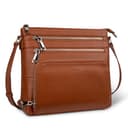
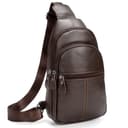
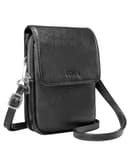
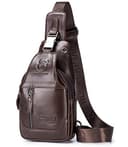
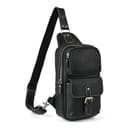
The befen everyday crossbody is the safest answer for most people: real leather, enough zip and slip pockets to find a phone without digging, and a size that suits a normal daily carry. If you want to spend as little as possible on real hide, the molshine sling is the value pick by a clear margin. The black befen is the one that disappears against any outfit and still works for dinner.
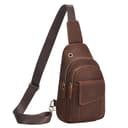
If the grade is what you care about, the SUIKIHUM is full-grain and its matte brown finish will deepen with handling over the first year — the whole point of buying the grade at all, and something no other bag on this list will do. The BULLCAPTAIN and the Le’aokuu are the two that read as men’s bags, the first as a slim everyday sling and the second as a proper chest bag. If you are torn between those two shapes, our sling versus crossbody comparison works through it.
Making a cheap leather bag last
A budget bag that is looked after will comfortably outlast an expensive one that is not, and the care costs almost nothing. Keep it off wet surfaces, do not store it stuffed against a radiator or sealed in plastic, and condition it once or twice a year with a thin coat. The whole routine is about ten minutes — our conditioning guide walks through it, and the amounts are smaller than most people apply.