What a teaching bag actually has to do
Four things, in this order. They are not the same four a work-commute page would use, which is why this is a separate page rather than a section on our work backpack roundup.
1. Take a variable paper load
The single most teacher-specific requirement. A set of thirty books is bulky on Monday and gone by Wednesday, so the bag needs a main compartment that can be full without being strained and half-empty without collapsing. That favors a structured pack over a soft one, and it is the main reason two of the picks below rank where they do.
2. Protect a laptop that gets set down hard
Padding matters more here than almost anywhere, because a teaching bag is put on the floor rather than lowered onto a desk. Look for a stated padded sleeve rather than a compartment that a machine merely fits into — and where a listing does not claim padding, the card below says so.
3. Weigh little enough to carry all day
This is the requirement people underestimate. A heavy leather pack is fine for a twenty-minute commute and tiring across a building, five times a day. Where a listing publishes a weight, the spec table shows it; where it does not, it says “Not published” rather than guessing. Two picks here publish one, and that is a genuine point in their favor.
4. Look worn rather than ruined
A teaching bag will get scuffed, and no amount of care prevents that. What you want is a finish where scuffing reads as character. Distressed and vegetable-tanned hides do this well and black corrected-grain does it worst — a scuff on black leather shows as a grey line. Our color guide covers which shades forgive daily life.
Is leather even the right material for a classroom?
Honest answer: not automatically, and we would rather say so than sell you a bag. Leather is heavier than nylon, it does not like being soaked, and it costs more. What it does better is age — a good leather pack looks better after five years of teaching than a nylon one looks after two, and it can be conditioned back from most of what a school year does to it.
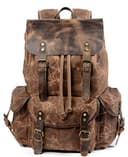
If the weight or the weather is the sticking point, the waxed-canvas pick below is not a consolation prize. It is lighter, considerably more weather-resistant, and it has leather where leather earns its keep — the base and the straps. We make the full case in leather versus canvas backpacks, and are leather backpacks worth it is the wider version of the same question.
The classroom-floor problem
Every teaching bag ends up on a floor, and floors are where leather bags are quietly destroyed. Not by scuffing — that is cosmetic — but by water. A wet floor wicks into the base, dries out the oils in the hide, and leaves a stiff, pale tide line that never fully goes.
Two things help. A bag with a leather base rather than a fabric one, which all but one of these have. And a repellent applied twice a year, which is the single highest-value five minutes you can spend on a school bag. What repellents genuinely do — and the plain fact that none of them makes leather waterproof — is covered in our protector spray roundup.
Which one to buy
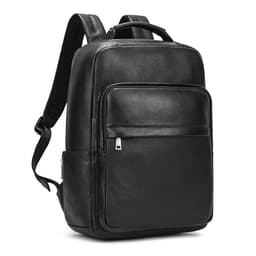
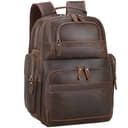
The Yevabo is the answer for most teachers, and it is not close. It is real hide at the bottom of the price range, it publishes dimensions and a weight, it states a padded 15.6-inch sleeve, and the mesh back panel is a genuine comfort feature on a day spent upright. You are buying a plain black business shape with no character to develop — that is the trade, and for a bag that lives on classroom floors it is arguably the right one.
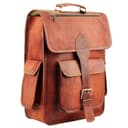
Take the HULSH if the paper load is the problem. It is a bigger, deeper rucksack in top-grain veg-tan with a separate padded sleeve, and it swallows an awkward stack in a way a flat business pack will not. It will also darken noticeably in the first year, which our tannage guide explains before you mistake it for damage.
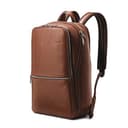
Take the Samsonite Slim if you want a padded laptop compartment and a company that answers the phone, and you carry paper rarely. Take the TIDING if you want the bag to outlast the job and you are willing to carry the weight of full-grain every day — read its weight con first, honestly.
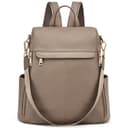
Take the WUDON if you have read all of this and concluded that lighter and more weatherproof beats better-looking. And take the Kattee if your teaching day genuinely does not involve a laptop, because it is a soft, light day bag in real leather that will not wreck your shoulder.
Making a school bag last a decade
Teaching bags fail at the straps and the base, in that order, and both are preventable.
Condition the straps first, twice a year.They flex all day and take sweat, so they dry and stiffen before the panels do — and they are the parts nobody thinks to treat. The routine is in our conditioning guide, and what to own is in our care starter kit.
Empty it before a weekend or a holiday. A packed bag left damp holds moisture against the base and the back panel, which is exactly how mildew starts in a cupboard over a long break. If it has already happened, here is the full procedure.
Never hang it loaded by one strap. It is the fastest way to tear a strap anchor, and it is exactly what a bag on the back of a classroom chair invites.
Plenty of teachers would rather carry a tote, and the deciding measurement is different for that shape. Our leather totes for teachers page measures interior height against letter and A4 paper, which is the number that actually settles it.