What $300 buys you, and what it does not
Under three hundred dollars you can reliably get: real leather, a structured body that stands up on its own, a padded laptop compartment sized for a specific machine, and hardware from a brand with a warranty process. That is a proper briefcase, and for most working people it is all the briefcase there is any reason to own.
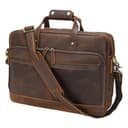
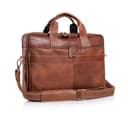
What you generally do not get at this price: full-grain leather from a named tannery, hand-stitching, solid brass rather than plated hardware, or a lifetime repair service. The KomalC is the interesting exception on grade — full-grain buffalo hide well under the line — and it makes the trade elsewhere, in finish consistency and in the fact that it is a marketplace maker rather than an established brand.
The criteria we ranked on
Laptop fit first.A briefcase that does not properly hold your machine is decoration. Every pick states a fit, and where the listing does not publish an exact dimension we say “not published” rather than guessing on your behalf.
Structure second. A briefcase is meant to stand beside a desk without falling over and protect a laptop when it is set down hard. Soft cases are pleasanter to carry and worse at both. That is a genuine trade rather than a defect, which is why a soft messenger is on the list, clearly labeled as the softer alternative.
Then leather grade, then capacity.Grade is stated as the listing states it — full-grain, genuine leather, or Colombian leather with the grade unnamed. We never upgrade vague wording into a grade the seller did not claim. Our grade guide explains what each of those words is worth.
Which one suits you
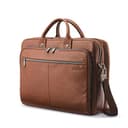
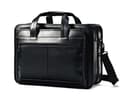
The Samsonite toploader is the safe, correct answer for most people: a recognizable brand, a structured leather case, a laptop compartment that fits properly, and the reassurance of a company that will still exist next year. If your days involve carrying files as well as a laptop, the expandable Samsonite does the same job with a gusset that gives you extra depth when you need it and stays slim when you do not.
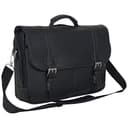
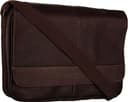
Kenneth Cole’s Colombian portfolio is the pick if you want minimum bulk — a slim case for a laptop and a pad, nothing more. The Masa Kawa is the one to buy if you carry a 17-inch machine, a size most briefcases quietly ignore; our 17-inch roundup covers that whole problem. The Risky Business messenger is the softer, flap-over alternative for a workplace where a hard case reads as too formal. And the KomalC is the value play: full-grain buffalo at a price the rest of this list cannot match.
Where the money actually goes
Two things drive the price of a briefcase far more than the label does. The first is the amount and thickness of the leather: a structured case uses several times the hide of a soft messenger of the same capacity, and leather is sold by the square foot. The second is the internal construction — a padded, suspended laptop compartment with reinforced edges costs meaningfully more to build than a slot.
What does not drive quality: the number of pockets, the presence of a luggage pass-through, or how many colors the listing offers. Those are cheap to add and are often the loudest things in a product title, which is exactly why they are worth discounting when you compare two cases at the same price.
Making it last
A briefcase carried daily takes its wear at the base corners and the strap attachment points. Keep it off wet ground where you can, empty it before storing it for a season, and condition it once or twice a year — the handle and the corners first, since that is where the leather dries fastest from handling. Our conditioning guide covers how much to use, and the troubleshooting page covers what to do when something has already gone wrong.
Price is one filter; how the bag reads is another
Budget narrows the field but it does not answer the question most men ask second, which is whether a given bag will look right in their particular office. A distressed full-grain satchel and a structured black portfolio can sit at the same price and signal completely different things. Our men’s briefcase roundup ranks on that formality register first, and names which of our picks belongs in a corporate, business-casual or deliberately rugged room.