Where the money goes further
Leather is priced by the square foot, and a tote is one of the most hide-hungry shapes there is — two large panels, a base, a gusset and two straps. Halve the dimensions and the material cost falls faster than you would expect, which is why the grade ladder looks completely different at this size.
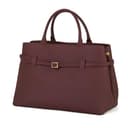
In a large work tote, full-grain is a premium purchase. In a small one it is a mid-range option, and the DONNAIN here is the proof: full-grain cowhide at a price that buys corrected genuine leather in a bigger bag. If you have been putting off buying full-grain because of what the big totes cost, this is where to start — our full-grain versus top-grain guide sets out what you actually get for it.
Structure versus slouch
This is the decision that determines whether you like the bag, and it is almost never discussed in listings.
A slouchy tote
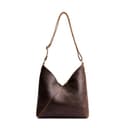
Soft, unstructured, collapses when it is half empty. It looks relaxed and it is more comfortable against the body, because it molds rather than digging in. The befen hobo tote is this shape, and top-grain is the correct grade for it — the buffed, sealed surface is what gives it that even, low-maintenance hand.
A structured tote
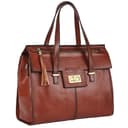
Holds its shape empty, stands up on a floor, protects what is inside. It looks more deliberate and works with tailoring. It is also less forgiving: a structured bag that is over-filled looks over-filled. The DONNAIN satchel and the Banuce both sit here.
If you cannot decide, the honest tiebreaker is where the bag spends its day. On a chair back or a hook, slouch is fine. On a desk, a floor or a restaurant table, structure is worth paying for.
What actually fits in a small tote
Be realistic about this before you buy, because it is the source of nearly every disappointed review in the category. A small leather tote takes a phone, a full-size wallet, keys, sunglasses in a case, a small water bottle and either a paperback or a slim notebook — not both.
What it does not take is a laptop, and mostly not a full-size tablet either. The DONNAIN states a small tablet fit and nothing here claims more. If a machine has to come with you, our laptop tote roundup is the right page, and if you want the biggest bag that is still a tote, the large totes are the other end of this same shelf.
The strap question
Short handles on a small tote are lovely and impractical. A bag carried in the crook of an elbow occupies an arm, and a small bag is exactly the one you want to forget about. Two of the picks here solve it differently: the DONNAIN includes a detachable crossbody strap, and the Portland Leather Naomi has an adjustable crossbody strap as standard.
That single feature changes what the bag is for. A small tote with a long strap is a hands-free everyday bag that happens to look like a tote; one without is a handbag. Neither is wrong, but they are not interchangeable, and the listing photos rarely make it obvious which you are getting.
Which one to buy
The befen hobo tote is the pick for most people. It is real top-grain leather, it is soft in a way structured totes cannot be, the even finish is low-maintenance, and it costs noticeably less than the full-grain bags it sits beside. If you want a leather tote for ordinary days and you are not chasing patina, that is the whole brief satisfied.
Buy the DONNAIN if the grade matters to you — full-grain, a dressier satchel shape and a crossbody strap included, which makes it the most versatile bag on this page. Buy the Portland Leather Naomi if you want a brand people recognize from the leather internet rather than a marketplace no-name; our full Portland Leather Goods review covers what the brand does and does not justify. And the Banuce is the one for a bag that has to look like an occasion — Italian full-grain, fringed, and priced accordingly.
Making a small leather bag last
Small bags get handled more than big ones, so the wear is concentrated: the handles, the corners of the base, and the area around the closure. Those are the three places to condition, and they are the places most people miss because they treat the panels instead. Keep it off wet surfaces, wipe the base occasionally, and use a thin coat of conditioner once or twice a year — the routine is in our conditioning guide.