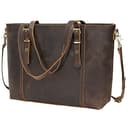
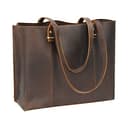
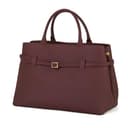
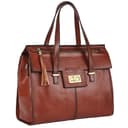
What makes a full-grain tote worth it
The case is structural, not romantic. Leather is strongest at the surface, where the fiber density is highest. Sanding that layer away to remove blemishes — which is what produces top-grain, and more aggressively, corrected grain — removes the strongest part and replaces it with a finish. On a small bag that barely matters. On a tote carrying eight pounds of laptop, books and a water bottle, hanging from two handle attachment points, it matters a great deal.
The second reason is the one people actually notice. Full-grain absorbs oils from your hands and the air, and it darkens unevenly — more where you hold it, more where light hits it. Over a few years the bag stops looking like a product and starts looking like yours. Sealed leather cannot do this; the finish is in the way. Our guide to patina covers what is actually happening and how to encourage it.
Structured or soft: the real decision
Once you have settled on the grade, the choice that will determine whether you like the bag is structure. A structured tote — TIDING’s two picks here — keeps a rectangular shape whether it is full or empty. It stands up next to a desk, it protects what is inside, and it looks deliberate. It also weighs more before you put anything in it, and it will not squash into an overhead locker.
A soft tote collapses around its contents. It is lighter, more forgiving about being overfilled, and it drapes rather than sits. It also slumps when half empty and offers nothing in the way of protection. Neither is better; they are different bags. If you are buying a work tote to carry a laptop, structured is almost always right. If you are buying an everyday tote to live in the back of a car, soft is kinder.
Why a top-grain pick is on this list
The befen hobo tote is top-grain, not full-grain, and it is here on purpose. Top-grain is the grade directly below: the hide’s outer layer is buffed smooth and sealed, which trades away the patina and some strength in exchange for a uniform surface, a softer hand and a lower price.
For a buyer who wants a slouchy, drapey tote in an even finish — and who would be irritated rather than delighted by a bag that visibly changes color — top-grain is not second best, it is the right material. Buying full-grain and then being unhappy that it darkened is a real and common outcome. The full-grain versus top-grain guide works through that decision in detail.
Which one to buy
The TIDING women’s tote is our overall pick: full-grain, structured, in a shape that works as a handbag on the way in and a work bag once you are at the desk. TIDING’s larger work tote is the same material in a more capacious, more obviously professional shape — the one to buy if the bag’s job is the commute.
The DONNAIN satchel tote is the value pick by a clear margin; full-grain at that price is unusual, and the smaller footprint suits a lighter carry. Banuce’s Italian full-grain purse is the splurge, and the most style-driven bag here. And the befen is the soft, even-finished alternative for anyone who wants the hand of leather without the transformation.
If what you actually want is the worn look from day one rather than the grade on paper, our vintage leather tote roundup covers the waxed, distressed and vegetable-tanned finishes — and the listings in that corner of the market that claim full-grain in their bullets and genuine leather in their titles.
Care, briefly
Full-grain totes need less than people think and different care from what the internet suggests. Keep them off wet ground, empty them rather than storing them loaded (handles stretch), and condition twice a year with a light hand — unsealed leather takes up conditioner readily and too much leaves a surface that holds dirt. The base and the handle joins are where wear appears first, so that is where to look when you are deciding whether it is time. Our storage guide covers the mistakes that quietly ruin good totes between seasons.
If full-grain is more bag than you want
Full-grain is the most durable grade and also the heaviest and stiffest, and on a large tote carried on one shoulder that is a real cost rather than a theoretical one. The grade immediately below it is often the correct choice for a soft tote rather than a downgrade: our top-grain leather tote roundup makes that case with the three totes in our registry that state the grade and mean it.