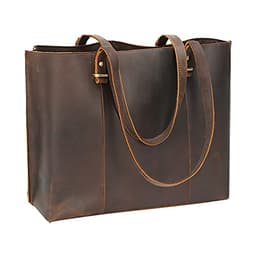
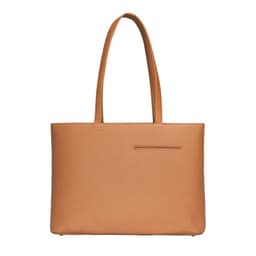
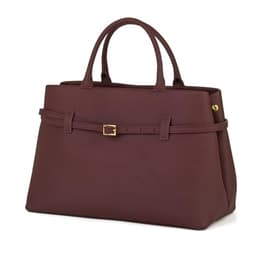
What “genuine leather” means here
This is the single most misunderstood label in the category, so it is worth being exact. Genuine leather is real animal hide. It is not a synthetic, and it is not a euphemism for one — the FTC’s guides on leather products require material that only looks like leather to be disclosed as imitation, which is why plastic bags say “vegan leather” or “PU” instead.
What genuine leather is not is a top grade. It sits below full-grain and top-grain, and typically comes from the lower layers of the hide or from a corrected surface with a finish applied. In a soft tote that trade is reasonable: you get the hand, the smell and the drape of real leather at a fraction of the price, and the bag will handle years of daily use with basic care.
The consequence to understand is that it will not patina. Patina needs an unsealed full-grain surface that can absorb oils from your hands; a finished mid-grade hide has a barrier in the way, so it wears rather than deepens. If watching a bag change is why you want leather, this is the wrong bag — our full-grain tote picks are the right ones.
Size and daily use
The Kattee sits in the useful middle of the tote range: comfortably larger than a handbag, meaningfully smaller than the oversized work totes in our large tote roundup. In practice that means a slim laptop, a notebook, a wallet, keys and a bottle without the bag distorting.
The softness is the defining characteristic, and how you feel about it decides whether you like the bag. Soft leather drapes, it is forgiving when you overfill it, and it is lighter than a structured tote of the same capacity. It also slumps when it is half empty and it offers essentially no crush protection. There is no version of this bag that does both.
The two things it does not do
It does not protect a laptop. The bag will hold one; it will not shield one. There is no padded, suspended compartment, so a machine rests against the base and takes the impact when you set the bag down. If a laptop rides in it daily, a padded sleeve is not optional, or buy a purpose-built laptop tote instead.
It does not hold a shape. Covered above, but it is the second most common source of disappointment after the grade. If you want a tote that looks deliberate standing beside a desk, you want structure, and structure costs weight and money.
Build details worth knowing
The listing does not publish exact dimensions or a weight, which is why our spec table says “Not published” in those rows rather than showing a figure we estimated. That is a genuine gap in what the seller discloses, and if a specific item has to fit, treat it as an unknown rather than assuming.
Hardware at this price is plated rather than solid. On a tote the hardware that matters most is the handle attachment, because that is where the entire load concentrates — and on any tote, that is where failure happens long before the leather gives up. Our hardware guide covers what to inspect.
Who should buy it
Buy it if you want one everyday leather tote and you would rather not think hard about it. Buy it if your carry is bulky but light — folders, fabric, a change of clothes, a lunch. Buy it if you are buying your first real leather bag and want to find out whether you like the material before committing to full-grain money. And buy it as a gift, because a soft mid-brown tote is about as safe as bag gifting gets.
Who should not
Skip it if patina is the point. Skip it if a laptop is the main cargo and you will not use a sleeve. Skip it if you want the bag to stand up on its own. And skip it if you want something that will still be in service in fifteen years — that is a full-grain proposition, and the honest arithmetic is in our cost-per-year guide.
Making it last
Totes take their wear at the base, from being set down, and at the handle joins, from carrying everything. Keep it off wet ground, do not store it loaded — hanging a full tote for months permanently stretches the handle attachments — and condition it once or twice a year with a thin coat, concentrating on the handles, which dry fastest from handling. A mid-grade finished hide absorbs less than full-grain does, so heavy application just sits on the surface. Our conditioning guide covers the amounts.