What we mean by minimalist
Four things, in this order. They are deliberately visual, because this is a visual search — nobody types “modern leather backpack” hoping to read about tannage.
1. A quiet exterior
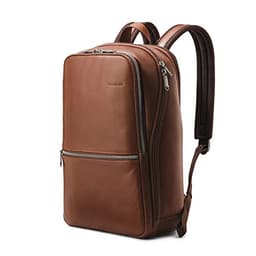
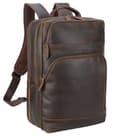
One panel, one closure, at most one exterior pocket. The moment a pack has two front pockets, a bottle sleeve and a webbing loop, it reads as gear rather than as a bag. Every pick here keeps its exterior detail low, and the two we rank highest keep it lowest.
2. No visible branding
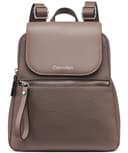
A small hardware stamp is fine. A printed logo across the front panel is the thing minimalism is defined against. This is also where the honest trade-off on this page lives: our sixth pick has the cleanest silhouette of the six and is the one carrying the most visible branding, because it is a fashion-label bag.
3. Slim depth, not small volume
Minimal is about profile, not capacity. A pack that is 16 inches tall and four inches deep looks restrained; the same volume in a rounder shape does not. Depth is the dimension to read, and it is the one most listings decline to publish — where a seller does publish it, the spec table below shows it, and where they do not, it says so.
4. The grade, exactly as stated
The visual brief does not suspend the material rules. “Full-grain,” “top-grain” and “genuine leather” are three different products, and one pick here claims two of them in the same sentence. Where a listing contradicts itself, the spec table records the lower claim. Our explainer on what “genuine leather” actually means is the fastest way to stop being sold to.
Why minimal leather packs are hard to find
A plain rectangle in leather is unforgiving. There is no distressing to hide a poor cut, no hardware to distract from a wandering seam, and no pocket stitched over the panel that would otherwise show a scar. Sellers who are not confident in their hide add texture, and texture is the opposite of what you are looking for.
That is why the strongest picks here are either brand-backed or explicitly sold as slim. Both are ways of saying the seller expects you to look closely at the leather rather than at the features list.
It is also why the vintage and rucksack shapes covered on our vintage leather backpack page are so much easier to buy well at a low price. A bag designed to look scuffed can be made from a hide that already is.
Black or brown for a minimal pack?
Black reads as more modern and hides less than people expect — scuffs on black leather show as grey, and they show early. Brown reads warmer, hides wear far better, and is the only one of the two that develops a patina you would want to look at. If the whole point of the bag is that it stays looking plain and new, black is the honest answer; if the point is that it improves, brown is. Our guide to leather bag colors covers what each shade does over a few years.
What you give up going minimal
Three things, and all three are worth knowing before you buy rather than after.
Fast access. Fewer exterior pockets means a phone, a pass and a set of keys all live inside the main compartment. If you open the bag fifteen times a day, a slim pack with one pocket becomes irritating quickly.
Bulky-item capacity.A slim pack takes a laptop, a notebook and a charger comfortably and refuses a gym kit, a lunch box or a rolled coat. That is the shape working as intended, not a defect — but check it against your actual week.
Weather tolerance. A flat leather panel with a top zip has nowhere for water to run off. None of these is a rain bag. The realistic fix is a repellent and a habit, both covered in how to waterproof a leather bag.
Which one to buy
The Samsonite is the answer for most people. It is the only pick here that pairs a genuinely slim shape with a padded laptop compartment and a brand with a warranty process, and it is the pack least likely to be described by a colleague as “interesting.” That is the compliment you want here.
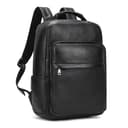
Take the Tzowla if you want the same silhouette for meaningfully less and you can live with a listing that describes its own leather in two contradictory ways. Take the Yevabo if the budget is the binding constraint — it is the cheapest real hide on the page, it publishes both its dimensions and a weight, and its back panel is mesh rather than more leather.
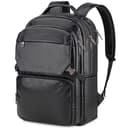
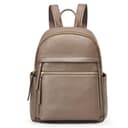
Take the Masa Kawa if your machine is 16 inches, because that is the one number the smaller packs here cannot cover. Take the Kattee if you want a small, soft everyday bag rather than a work pack — it is the least corporate shape on the page by a distance.
And take the Calvin Klein only if the look is genuinely the point. It is the cleanest silhouette of the six and it is not leather; its own listing describes a coated signature material, and we have labeled it that way in the table rather than letting the brand do the work. What a coated synthetic really is is worth two minutes before you decide that is fine.
Keeping a plain leather pack looking plain
Minimal bags show neglect faster than busy ones, for the same reason they show quality faster: there is nothing else to look at. Two habits cover most of it.
Condition the straps and the back panel before the front. Those are the parts that flex and take sweat, so they dry and stiffen first — and they are the parts nobody looks at. Twice a year, thinly, is enough; the method is in our conditioning guide.
Do not overfill a slim pack.Stuffing a flat bag rounds it out permanently, and a slim pack that has been stretched into a bulge never goes back. If you are regularly forcing the zip, you bought the wrong size — our work backpack roundup covers the tier up, and if the plain exterior turns out to be a pocket you actually needed, our roundup of leather backpacks with lots of pockets is the deliberate opposite of this page — every pick there publishes an itemized layout rather than claiming one.