What Size Crossbody Bag Should You Get?
Almost everyone buys one size too big. Here is the three-step way to land on the right one first time — and the leather pick that matches each answer.
The size most people should buy
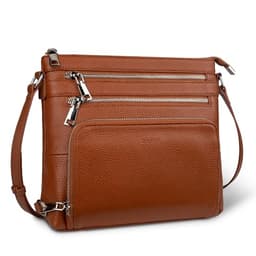
befen Soft Real Leather Crossbody Bag
Price as of October 20, 2026. #ad How we’re funded
Medium is the answer for the majority of people who ask this question: a phone, a wallet, keys, sunglasses and a few small things, with real organization so you are not digging. This is the genuine-leather version of that size at a price most people can say yes to.
How this is funded:we earn a commission if you buy through our links, at no extra cost to you. It never changes which product we recommend, and we’ll tell you when we’d skip one. Full disclosure.
The mistake almost everyone makes is buying from a photograph. A crossbody looks small on a model and enormous on a hook by the door, and the gap between those two impressions is where a lot of money gets wasted. The fix is not a size chart. It is three minutes with the things you actually carry.
Step one: empty your current bag
Genuinely empty it, onto a table. Then split what comes out into two piles: things you have used in the last week, and things you have not. Almost everyone finds that the second pile is bigger, and that it is the pile they have been sizing their bags around for years.
The first pile is your real daily carry. Lay it flat, in one layer, and look at the footprint it makes. That footprint — not the volume, the footprint — is what your bag needs to cover, because a crossbody carries flat against your body and anything stacked front-to-back makes it stick out.
Step two: match the footprint to a size band
There are four useful bands in leather crossbodies. Widths are approximate, because sellers measure inconsistently and plenty of them publish no dimensions at all — where a listing does publish them, our spec tables show them, and where it does not, they say so.
Small — roughly 7 to 9 inches wide
A large phone laid flat, a card holder, keys, a lip balm. Nothing else, and that is the point. This is the size that reads dressiest, disappears under a coat and weighs nothing. It is also the size people abandon fastest if they carry sunglasses or headphones, because there is genuinely no room.
Buy this band if your honest first pile is four items or fewer. Our small zippered crossbody picks are the shortlist, and the zip matters more at this size than any other — a small open-top bag is a bag that empties itself when you bend over.
Medium — roughly 9 to 11 inches wide
The right answer for most people. Phone, wallet, keys, sunglasses, a small pouch, headphones, and enough internal organization that you are not excavating for a card at a checkout. It still sits flat under a coat and it still weighs almost nothing loaded.
This is the band our women’s pick above sits in, and it is where the genuine-leather market is deepest and cheapest. The full shortlist is on our women’s crossbody roundup and the men’s equivalents are on the men’s page.
Large — roughly 11 to 13 inches wide
Everything above plus a water bottle, a paperback or a small umbrella. This is the band where a crossbody starts behaving like a day bag, and where the weight starts being carried by one strap in a way you notice by the evening.
Buy it if your day genuinely includes a bottle or a book. Do not buy it as insurance — a large bag carried half-empty is the most common regret in this whole category, and the volume gets filled by things you did not need. Our large crossbody picks are the ones with real volume that still carry like a crossbody.
Tablet-sized — stated fit only
A separate band rather than simply “bigger,” because a tablet is a rigid rectangle and either it goes in or it does not. An iPad is roughly 9.8 by 7 inches; an iPad Pro is closer to 11 by 8.5.
The rule here is absolute: buy a bag that states a tablet size in its own listing, rather than one that looks big enough in a photograph. Several leather slings do state one. If a listing does not, our spec tables say “Not published,” and that is a reason to keep looking rather than a reason to gamble.
Step three: check the two numbers that are not size
Once the band is settled, two things decide whether you are happy with the bag, and neither is its width.
Strap length, at its maximum
The bag should sit at the top of your hip, which for most adults means a total strap length somewhere around 45 to 55 inches. Almost every crossbody adjusts within that range, but the maximum is where budget bags fail — a strap that tops out short is the single most common complaint on cheap crossbody listings, and it is not fixable.
Where a listing publishes a strap range, buy on that number. Our guide to wearing a crossbody covers where the bag should actually sit and why over or under a coat changes it.
Strap width
This matters more for comfort than bag size does, and almost nobody checks it. A crossbody puts its entire load on one strap across your torso, so a narrow strap concentrates that weight into a line. If you are buying in the large band, a wide strap is not a style preference — it is the difference between a bag you wear all day and one you take off after an hour.
The depth trap
One last thing, because it catches people who did everything else right. Width gets published; depth often does not. A bag that is the right width and four inches deep sticks out from your body, swings when you walk and photographs badly. A bag the same width and two inches deep sits flat.
If a listing publishes three dimensions, read the smallest one first. If it publishes one number and calls it “large capacity,” it has told you nothing — the same problem we describe in our guide to reading listings honestly.
Does the leather grade change with size?
Practically, yes. A small crossbody uses very little hide, which is why the small band is where real leather is cheapest and where full-grain turns up at prices that look like mistakes. A large crossbody uses several times the material, so the same budget buys a lower grade — and the load is heavier, which is exactly when a better hide would have mattered.
The practical consequence: if you want full-grain, the small and medium bands are where your money goes furthest. Our full-grain crossbody page is that shortlist, and full-grain versus top-grain explains what the upgrade actually buys.
Sizing a bigger bag
The method here scales, and the reference objects change. Once a bag has to take A4 paper or a laptop, width becomes the deciding measurement rather than capacity: our leather bag size guide works through the four size classes with real published dimensions, and shows how to convert a laptop screen diagonal into the width a bag actually needs.
Size is only half the question and shape is the other half. Our crossbody versus tote comparison settles that one with a dimension rather than a preference — anything flat and wider than about 11 inches rules a crossbody out — and if the answer turns out to be a tote you can still wear across your body, our crossbody-strap tote roundup is the shortlist.
Frequently asked questions
What size crossbody bag should I get?
Start from what you carry, not from a size chart. If it is a phone, cards and keys, buy small — anything bigger is dead weight you will carry every day. If you add sunglasses, a small pouch and a set of headphones, buy medium, which is the right answer for most people. Only go large if a water bottle, a book or a tablet is part of your daily kit.
What is considered a small crossbody bag?
Roughly 7 to 9 inches wide — enough for a large phone laid flat, a card holder and keys, and not much else. It is the size that looks dressiest and disappears under a coat, and the size people most often regret buying if they carry anything at all beyond the essentials.
Is a bigger crossbody bag more comfortable?
No, the opposite. A crossbody carries its load on a single strap across your torso, so every extra inch of bag is extra weight in the same place. The comfortable choice is the smallest bag that holds what you carry, with the widest strap you can find. Strap width matters more than bag size for comfort.
What size crossbody fits a tablet?
You need a bag that states a tablet size, not one that looks big enough. An iPad is roughly 9.8 by 7 inches and an iPad Pro closer to 11 by 8.5, so a bag has to be wider than that internally with the seams accounted for. Several leather slings state a specific tablet fit — buy one of those rather than measuring a photograph.
How long should the crossbody strap be?
For most adults the bag should sit at the top of the hip, which usually means a strap of roughly 45 to 55 inches end to end. Almost every crossbody is adjustable within that range. Where the strap length genuinely matters is at the extremes — a very short maximum length is the single most common complaint on budget crossbody listings.
Does crossbody size depend on your height?
Less than people expect. Height changes where the bag sits, which is a strap-length question, not a size question. What actually decides size is what you carry and how long you are out. A small bag on a tall person looks intentional; a large bag full of nothing looks like a mistake at any height.
Sources
- U.S. FTC — Leather Guides — The FTC guides on how leather and imitation-leather products must be described (accessed July 21, 2026)
- Buffalo Jackson — Full Grain Leather vs. Top Grain Leather — Industry explainer on how full-grain and top-grain leather are made and how they age (accessed July 21, 2026)
Keep reading
Best Leather Crossbody Bags for Women
The full women's roundup, from minimalist phone bags to roomier slings.
See the picksBest Small Leather Crossbody Bags with Zippers
If the answer was small, these are the ones that actually close.
See the picksBest Large Leather Crossbody Bags
If the answer was large, here is real volume without a shoulder bag.
See the picksHow to Wear a Crossbody Bag
Strap length, which side, over or under a coat.
Read the guideCrossbody Bag vs Shoulder Bag
Once you know the size, this is the carry decision.
Read the comparison