The Patina Bench

Leather Bag Warranties and Lifetime Guarantees

Whose lifetime? A written warranty is a legal document with defined terms, and the words on the label mean specific things. Here is how to read one before you spend the money.

By Stephen V.Last updated How we pick

Best for after-sale support: an established brand with a service network

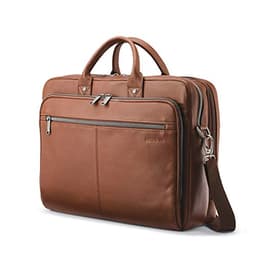
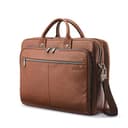
Samsonite Classic Leather Toploader Briefcase

Samsonite Classic Leather Toploader Briefcase

$190.90 · View on Amazon

$259.9927% off

Price as of October 25, 2026. #ad How we’re funded

A warranty is only worth the infrastructure behind it. The practical difference between a brand-name bag and a marketplace bag is not usually the leather — it is whether there is a company, a warranty administrator and an authorized repair route still in existence in four years when a rivet pulls through. Samsonite is the most established brand in our registry, and this is the briefcase we point most people to first on that basis as much as on its specs.

What we are notdoing is quoting you a term length. Warranty periods on luggage and leather goods vary by product line and by the market you buy in, and the only figure that applies to you is the one printed on the warranty supplied with the specific item — which, as the FTC points out below, the law says you are entitled to read before you buy. Check it on the listing, then check it in the box.

Read the full write-up

Search for a leather bag with a lifetime warranty and you will find plenty of products claiming one. What you will almost never find is a straight answer to the obvious question: whose lifetime, and covering what?

That is not a rhetorical complaint. It is the exact point the U.S. Federal Trade Commission makes in its own guidance to businesses that write warranties: “lifetime” can mean the life of the product, the period you personally own it, or the span of your own life, and the agency instructs warrantors to say which one they mean, because otherwise consumers cannot know the duration they are being promised.

This page is about the words rather than the bags. It explains what “full” and “limited” legally mean, why nearly every bag warranty you will encounter is a limited one, what protects you when there is nowritten warranty at all — which is the usual situation on a marketplace purchase — and the specific categories of leather damage that no warranty has ever covered. The picks below are chosen for after-sale support rather than for leather grade, and the last one is there deliberately as the honest counter-example.

How this is funded:we earn a commission if you buy through our links, at no extra cost to you. It never changes which product we recommend, and we’ll tell you when we’d skip one. Full disclosure.

Quick picks

Ranked on leather grade, construction, capacity and value. Select a row to jump to the full write-up. We have not wear-tested these bags — here is exactly what we do instead.

Specs are what each listing itself publishes, read on July 21, 2026 – September 25, 2026; anything a listing does not state reads “Not published” rather than a guess. Prices are live as of October 25, 2026.

#ProductGrade statedBest forPrice
1
Samsonite Classic Leather Toploader Briefcase

Samsonite Classic Leather Toploader Briefcase

The safe, grown-up default. Samsonite's classic leather line is the one to buy if you want a real-brand briefcase with a structured, professional look, a padded laptop section and a warranty behind it — not a marketplace gamble.

LeatherBest brand-backed support
$190.90 · View on Amazon

$259.9927% off

Price as of October 25, 2026. #ad How we’re funded

2
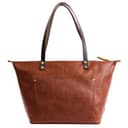
Portland Leather Goods Large Zipper Tote

Portland Leather Goods Large Zipper Tote

The zip-top version of the tote Portland Leather Goods is best known for, in a full-grain hide the listing names consistently. It is simple on purpose: unlined, two pockets, no laptop padding. You are paying for the leather and the maker, not for features.

Full-grainBest published guarantee terms
$196.00 · View on Amazon

Price as of October 25, 2026. #ad How we’re funded

3
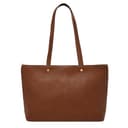
Fossil Jessie Top Zip Leather Tote

Fossil Jessie Top Zip Leather Tote

A mainstream-brand tote that zips shut, from a company with a retail presence far beyond one marketplace. It is shorter and more of a handbag than a work bag, and it costs more than the marketplace picks with a similar grade.

Genuine leatherBest beyond-the-marketplace retail presence
$230.00 · View on Amazon

Price as of October 25, 2026. #ad How we’re funded

4
Michael Kors Hudson Getaway Tote

Michael Kors Hudson Getaway Tote

A designer tote for buyers who want the logo and the finish that comes with it. It's the priciest here; whether it's 'worth it' depends on how much the brand and the polish matter to you versus a marketplace full-grain tote.

LeatherBest designer-label option
$244.54 · View on Amazon

$398.0039% off

Price as of October 25, 2026. #ad How we’re funded

5
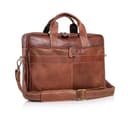
KomalC Buffalo Leather 16" Briefcase

KomalC Buffalo Leather 16" Briefcase

The best value in real leather here. KomalC's full-grain buffalo satchel gives you a rugged, characterful hide and a 16-inch laptop bag for well under the brand-name briefcases — with the trade-off that it's a softer satchel, not a hard-structured case.

Full-grainThe honest counter-example
$89.99 · View on Amazon

Price as of October 25, 2026. #ad How we’re funded

The picks in full

#1Best brand-backed support

Samsonite Classic Leather Toploader Briefcase

The safe, grown-up default. Samsonite's classic leather line is the one to buy if you want a real-brand briefcase with a structured, professional look, a padded laptop section and a warranty behind it — not a marketplace gamble.

Strengths

  • Established brand with a structured, office-ready shape
  • Padded laptop compartment and organized interior
  • Backed by Samsonite's warranty and support

Trade-offs

  • Costs more than marketplace briefcases
  • Classic look is conservative, not fashion-forward
LeatherLeather
DimensionsNot published
WeightNot published
Laptop fitPadded laptop compartment
Best forOffice, Court and client meetings, Business travel

Specs read from the product listing, on July 21, 2026. “Not published” means the brand does not state that figure.

#2Best published guarantee terms

Portland Leather Goods Large Zipper Tote

The zip-top version of the tote Portland Leather Goods is best known for, in a full-grain hide the listing names consistently. It is simple on purpose: unlined, two pockets, no laptop padding. You are paying for the leather and the maker, not for features.

Strengths

  • Full-grain leather, stated consistently across the listing
  • Zippered top on a wide 18-inch opening that still loads easily
  • Published size (13 in base, 18 in top, 6 in deep, 12 in tall) and handle drop (10.5 in)

Trade-offs

  • Unlined, so the inside is the rough side of the hide and there is no laptop padding
  • Only one interior and one exterior pocket, plus a key loop
  • Heavy for a tote at a published 3.35 lb empty, and the price sits well above the marketplace picks
LeatherFull-grain
Dimensions13 (base) / 18 (top) x 6 x 12 in
Weight3.35 lb
Laptop fitStated to fit a 15-inch laptop snugly; no padded sleeve
Best forEveryday carry, Full-grain buyers, Brand-name buyers

Construction note. Unlined means there is no fabric layer inside: the flesh side of the hide is the interior. That keeps the bag simple, but it also means nothing between a laptop and your keys, so use a sleeve.

Specs read from the product listing, on September 25, 2026. “Not published” means the brand does not state that figure.

#3Best beyond-the-marketplace retail presence

Fossil Jessie Top Zip Leather Tote

A mainstream-brand tote that zips shut, from a company with a retail presence far beyond one marketplace. It is shorter and more of a handbag than a work bag, and it costs more than the marketplace picks with a similar grade.

Strengths

  • Top zip closure stated by the brand
  • Cotton-lined, with one zip pocket and two slide pockets inside
  • Fossil says its leather products support responsible manufacturing via the Leather Working Group

Trade-offs

  • Only 9.5 inches tall and no laptop fit stated, so it is not a work-laptop tote
  • Genuine leather with no grade named, at the highest price on this page
  • Stock varies by color: the black version showed only one left when we checked on September 15, 2026
LeatherGenuine leather
Dimensions16 x 5 x 9.5 in
WeightNot published
Laptop fitNo laptop fit stated
Best forEveryday handbag carry, Brand-name buyers, Gift

Construction note. The listing's own weight field says 0.13 lb, which is not credible for a 16-inch leather tote, so our table records the weight as not published.

Specs read from the product listing, on September 15, 2026. “Not published” means the brand does not state that figure.

#4Best designer-label option

Michael Kors Hudson Getaway Tote

A designer tote for buyers who want the logo and the finish that comes with it. It's the priciest here; whether it's 'worth it' depends on how much the brand and the polish matter to you versus a marketplace full-grain tote.

Strengths

  • Designer brand with a refined, structured look
  • Gunmetal hardware and clean lines
  • Strong resale and gift recognition

Trade-offs

  • Highest price in this group
  • You're partly paying for the label
LeatherLeather
DimensionsNot published
WeightNot published
Laptop fitNot designed as a laptop bag
Best forDressier carry, Travel, Gift

Specs read from the product listing, on July 21, 2026. “Not published” means the brand does not state that figure.

#5The honest counter-example

KomalC Buffalo Leather 16" Briefcase

The best value in real leather here. KomalC's full-grain buffalo satchel gives you a rugged, characterful hide and a 16-inch laptop bag for well under the brand-name briefcases — with the trade-off that it's a softer satchel, not a hard-structured case.

Strengths

  • Full-grain buffalo leather with genuine rugged character
  • Fits a 16-inch laptop plus files
  • Priced well below the brand-name briefcases

Trade-offs

  • Soft satchel shape, not a rigid structured briefcase
  • Heavy buffalo hide with a strong initial leather smell
LeatherFull-grain
DimensionsNot published
WeightNot published
Laptop fitFits a 16-inch laptop
Best forEveryday work, Creative offices, College and grad school

Construction note. Full-grain buffalo hide is thick and rugged; expect a pronounced leather smell and visible grain that softens with use.

Specs read from the product listing, on July 21, 2026. “Not published” means the brand does not state that figure.

1. “Lifetime” is not a length of time

Start here, because it collapses most of the confusion. The FTC's guide to federal warranty law states that “‘Lifetime’ can be used in at least three ways” and tells warrantors to “clarify what you are talking about when you advertise a ‘lifetime’ warranty,” because “ads should tell consumers which ‘life’ measures the warranty’s duration.”

For a bag, those three readings produce wildly different promises:

  • The life of the product.Circular, and the weakest reading — the warranty lasts as long as the bag lasts, which tells you nothing. In practice this version ends when the maker decides the bag has reached the end of its serviceable life.
  • For as long as you own it. The most common real meaning, and the reason lifetime guarantees are so often non-transferable. Sell or gift the bag and the cover ends.
  • For the rest of your life. The reading buyers assume, and the rarest in writing.

So the first question to ask of any lifetime claim is not whether it is genuine. It is which life. If the page does not say, you do not know what you have been offered.

2. “Full” and “limited” are legal terms, not marketing

This is the part almost no bag-shopping article mentions, and it is the most useful thing on this page. Under federal law a written warranty is either “full” or “limited,” and the FTC publishes the test. A warranty is full only if all five of these are true:

  1. “You do not limit the duration of implied warranties.”
  2. “You provide warranty service to anyone who owns the product during the warranty period.” — i.e. it transfers with the bag.
  3. “You provide warranty service free of charge.”
  4. You provide, “at the consumer’s choice, either a replacement or a full refund if, after a reasonable number of tries” the product cannot be fixed.
  5. You do not require the consumer “to perform any duty as a precondition for receiving service, except notifying you that service is needed, unless you can demonstrate that the duty is reasonable.”

And then the line that matters: “If any of these statements is not true, then your warranty is ‘limited.’”

Run a bag warranty against that list and you will see why essentially all of them are limited. A non-transferable guarantee fails test two. A guarantee that asks you to pay return shipping fails test three. A guarantee that requires registration within thirty days fails test five. None of that makes the warranty worthless — a limited warranty can be excellent — but it does mean the word “limited” on the card is a disclosure, not an apology, and the exclusions are where the real terms live.

3. What no leather bag warranty covers

Warranties cover defects. They do not cover use. The FTC's consumer guidance puts the general rule bluntly: “A warranty won’t necessarily cover all situations or repairs,” and for anything not listed, “if they aren’t listed, assume they aren’t covered.” Coverage also turns on whether you “change the way a product works or misuse it.”

Applied to leather, that excludes nearly everything that will actually happen to your bag:

  • Patina and darkening. The hide changing color is the material behaving correctly, not failing. Our patina guide explains what the change is; no warranty treats it as damage, and nor should you.
  • Scratches, scuffs and corner wear.Abrasion is use. The repairs are yours, and they are mostly straightforward — see removing scratches and corner and edge wear.
  • Water, salt and stains. Environmental damage, excluded almost universally. What to do instead is on our pages for a bag that got wet and ink.
  • Drying out and cracking from neglect. This one is worth dwelling on, because it is the failure people most expect to be covered and it is the one most reliably refused: a hide that cracks because it was never conditioned has not manufactured badly, it has been left alone. Our conditioning guide is the five-minute version of avoiding it.
  • Overloading. A strap pulled out by weight the bag was not built for is misuse, and the hardware is where it shows. The strap and handle repair page covers which of those failures are home repairs and which are not.

What is typically covered is narrow and specific: stitching that comes apart along a seam that was sewn wrong, a zip that was installed crooked, hardware that fails without external force, a lining that separates at a glue line, delamination on a coated finish. All of those tend to show up in the first weeks or months of ownership, which is a much better guide to what a warranty is for than its headline duration. A warranty is insurance against a bad unit, not against a bag wearing out.

4. The protection you have even with no written warranty

Most leather bags sold on a marketplace come with no written warranty at all. That is not the same as having no recourse, and this is the second genuinely useful point on this page.

The FTC's consumer guidance states that “laws in every state create implied warranties — unspoken promises — that cover almost everything you buy,” that those implied warranties “cover products even when there isn’t a written warranty,” and that they “might cover problems a written warranty doesn’t.”

For a bag, the practical shape of that is a product that has to be fit for ordinary use as a bag. A handbag whose strap detaches on a first outing is not fit for ordinary use, whatever the listing did or did not promise. Combine that with the retailer's own returns window — which on a marketplace purchase is usually the fastest and most reliable route by a wide margin — and the realistic protection on a no-name bag is: return it quickly if it is wrong, and rely on the implied warranty if it fails early in a way no reasonable person would call wear.

The corollary is a buying rule. On an unbranded bag, the return window is your warranty, so inspect a new bag properly on day one rather than in month three. Check the stitch line where the strap meets the body, run a finger inside every corner, work every zip to both ends, and look at the back of the hardware rather than the face of it.

5. The law says you can read it before you buy

The FTC's consumer page is unambiguous: of the warranty, “the law says it must be available for you to read before you buy.” Its business-facing guide describes the mechanism — the Pre-Sale Availability Rule, which “requires that sellers make warranties readily available to prospective buyers,” with in-store sellers obliged to “make written warranties available at the point of sale” and catalog sellers obliged to include “either the warranty or a statement telling consumers how to get a copy.”

So here is the check, and it takes about a minute:

  1. Find the actual terms, not the claim.A bullet point saying “lifetime warranty” is an advertisement. The terms are a document. If a seller advertises a warranty and cannot produce the text, treat the claim as unsupported. The same logic applies to every other claim on a listing, and some categories publish almost nothing you could check — our leather bucket bag roundup is built entirely on that finding, with one bag in five publishing even its dimensions.
  2. Read the exclusions first, then the duration. The exclusion list tells you what the warranty is; the duration only tells you how long that is true for.
  3. Check three specifics: does it transfer if the bag is gifted or resold; who pays shipping both ways on a claim; and is registration or proof of purchase required (keep the receipt either way).

6. What good published terms look like

One brand in our registry publishes terms detailed enough to be worth holding up as the standard, and it is worth seeing what “specific” looks like. Portland Leather Goods publishes a 30-day return window (extended around the holidays), a stated return-shipping deduction rather than a vague restocking policy, and a lifetime guarantee against manufacturing defects in leather, hardware and stitching — with hardware cover explicitly tiered by age at under six months, six months to two years, and after two years. It also publishes a separate, much shorter warranty for footwear.

Notice what that does. It names the components covered, so you know stitching and hardware are included rather than hoping. It tiers the hardware cover by age, which is an admission that a clasp at year five is a different claim from a clasp at month two — and an honest one. And it carves footwear out separately instead of letting one word cover products that wear at completely different rates. Our Portland Leather Goods review goes through the brand in full, including where we think the bags themselves are and are not worth the money.

Hold any “lifetime guarantee” up against that list of specifics. If it does not name the components, tier the hardware, or say whether it transfers, it is not a worse guarantee than Portland's — it is an unknown one.

7. Does a warranty tell you a bag is well made?

A little, and less than you would think. A long warranty signals that a company expects a low defect rate and intends to still exist, which is real information. But it is also a marketing instrument, priced in, and it is cheapest to offer on exactly the failures that are rarest.

The construction signals are better predictors, and they are free to check on a listing. Our guides to bag hardware and linings cover the two components that fail first on a bag that fails at all, and how long leather bags last sets realistic expectations by grade. If you want the short version of where durability actually comes from, it is the grade of the hide, the stitch density at the stress points and solid rather than plated hardware — none of which appears in a warranty document.

And if the bag you are looking at has no published warranty but is the right bag, buy it anyway. Our final pick above is exactly that case: a full-grain buffalo briefcase we rate highly, and a listing from which we recorded no warranty terms at all when we read it. We would rather say that than imply otherwise. The implied warranty, the return window and a careful day-one inspection are the protection there, and for most buyers they are enough.
Frequently asked questions

Do leather bags come with a lifetime warranty?

A few brands offer one; most bags, and nearly all marketplace bags, do not. Where a lifetime guarantee exists it is almost always limited to manufacturing defects and is often non-transferable, so it ends if the bag changes hands. The FTC specifically tells warrantors to say which 'life' a lifetime claim measures, because it can mean the life of the product, the period you own it, or your own lifetime.

What is the difference between a full and a limited warranty?

It is a legal distinction, not a marketing one. The FTC publishes five conditions a warranty must meet to be 'full': no limit on implied warranties, service for anyone who owns the product during the period, free service, a replacement or full refund at the consumer's choice after a reasonable number of failed repairs, and no preconditions on the consumer beyond notifying the warrantor. If any one of those is untrue, the warranty is legally 'limited'. Almost every bag warranty is limited.

Does a warranty cover a leather bag that cracked?

Usually not. Cracking from dryness is attributed to lack of conditioning, which counts as wear or neglect rather than a manufacturing defect. Cracking that appears in the first weeks on a bag that was never allowed to dry out is a stronger claim, because that points to the hide or the finish rather than to use.

What protection do I have if a bag has no written warranty?

Implied warranties. The FTC states that laws in every state create implied warranties that cover almost everything you buy, that they apply even when there is no written warranty, and that they may cover problems a written warranty does not. In practice the retailer's return window is the faster route, so inspect a new bag thoroughly on day one.

Can I see a warranty before I buy?

Yes — the FTC states plainly that the law says a warranty must be available for you to read before you buy, and the Pre-Sale Availability Rule requires sellers to make warranties readily available to prospective buyers. If a seller advertises a warranty but cannot produce the terms, treat the claim as unsupported.

Is a longer warranty a sign of a better bag?

Weakly. It signals that the maker expects few defects and plans to remain in business, which is worth something. But it is also a marketing tool, and it is cheapest to offer against the failures that are rarest. Hide grade, stitch density at the stress points and solid rather than plated hardware predict durability better, and none of them appear in a warranty document.

Does a bag warranty transfer if I sell or gift the bag?

Only if it says so. Transferability is one of the five conditions the FTC uses to separate a full warranty from a limited one, which means a warranty that stops at the original purchaser is legally limited by definition. Check it before buying a bag secondhand on the strength of its guarantee.

Sources

  • U.S. FTC — Businessperson's Guide to Federal Warranty Law — The FTC's own guide to the Magnuson-Moss Warranty Act. It states that a warranty is "full" only if all five of the following are true: "You do not limit the duration of implied warranties"; "You provide warranty service to anyone who owns the product during the warranty period"; "You provide warranty service free of charge"; you provide "at the consumer's choice, either a replacement or a full refund if, after a reasonable number of tries" the product cannot be repaired; and "You do not require consumers to perform any duty as a precondition for receiving service, except notifying you that service is needed, unless you can demonstrate that the duty is reasonable" — and that "If any of these statements is not true, then your warranty is 'limited.'" On duration it states that "'Lifetime' can be used in at least three ways" and instructs warrantors to "Clarify what you are talking about when you advertise a 'lifetime' warranty", because "to avoid confusing consumers about the duration of a 'lifetime' warranty or guarantee, ads should tell consumers which 'life' measures the warranty's duration". On availability it states that "The Pre-Sale Availability Rule requires that sellers make warranties readily available to prospective buyers", that in-store sellers "must make written warranties available at the point of sale", and that for mail order "your catalog or other advertising must include either the warranty or a statement telling consumers how to get a copy" (accessed October 24, 2026)
  • U.S. FTC — Warranties (consumer guidance) — The FTC's consumer-facing page on warranties: "Laws in every state create implied warranties - unspoken promises - that cover almost everything you buy", those implied warranties "cover products even when there isn't a written warranty" and "might cover problems a written warranty doesn't". On written warranties it states that "Warranties might cover a lot or a little, but the details should be in writing", that "A warranty won't necessarily cover all situations or repairs" and that for repairs or situations not listed "If they aren't listed, assume they aren't covered", with coverage depending on whether you "change the way a product works or misuse it". On checking before purchase it states plainly that "the law says it must be available for you to read before you buy" (accessed October 24, 2026)
  • Portland Leather Goods — FAQ — The brand's stated 30-day return window (extended around holidays), its $6.95 / $14.95 return-shipping deduction on orders under $300 and no restocking fee, its lifetime guarantee against manufacturing defects in leather, hardware and stitching with hardware cover tiered at under six months / six months to two years / after two years, the separate 90-day footwear warranty, and its León, MX workshop shipping from Terrell, TX (accessed October 2, 2026)
  • U.S. National Park Service — Curatorial Care of Objects Made From Leather and Skin Products — NPS museum-handbook guidance on cleaning, handling, humidity and the risks of over-treating leather (accessed July 21, 2026)

Keep reading