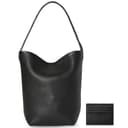
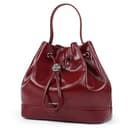
What a bucket bag is, and what it is not
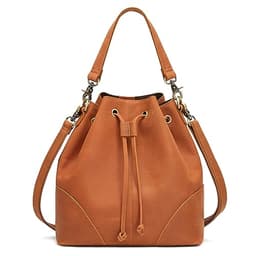
The name is literal. A bucket bag is a soft-sided cylinder or tapered tub with a round or oval base, gathered at the top by a drawstring or a pair of straps that pull the opening closed. It is not a tote with sloped sides, and it is not a hobo — a hobo is a crescent that slumps along the body, while a bucket keeps its volume at the bottom and stands up on its own footprint when it is full.
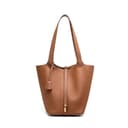
That distinction is worth having because it predicts the behavior. A tote opens wide at the top and keeps its contents in a shallow layer you can see. A bucket opens narrow at the top and keeps its contents in a deep well you cannot. The TOGO pick is the only bag here that publishes figures, and its figures make the point precisely: 8.9 inches wide, 7.7 deep and 12.2 tall. That is a bag noticeably taller than it is wide. Anything small you drop into it ends up at the bottom, under everything else, out of sight and out of reach of a quick look.
Compare that with the tote proportions on our large leather tote roundup, where the bags are wider than they are tall and the whole contents sit in one visible plane. Neither is better. They fail in opposite directions, and knowing which failure you can live with is the entire buying decision.
The three problems, and which picks address them
1. The open top
A drawstring narrows an opening; it does not close it. Pull it tight and there is still a gathered gap at the center, and the moment you loosen it to get your phone out, the bag is wide open. Two consequences follow.
The first is security. On a crowded train or in a market, a drawstring bucket is the easiest shape in this entire category to reach into, because it has no zip, no flap and no clasp to defeat — only tension on a cord. If you want the bucket look with real security, the honest answer is that you cannot have both, and the next-best thing is a bag worn tight across the front of your body. Our guide to how to wear a crossbody bag covers the positioning that actually helps.
The second is weather. An open top collects rain directly into the bag rather than onto the leather, and a wet lining is a slower problem to fix than a wet exterior. If that is a real risk where you live, read what to do when a leather bag gets wet before it happens rather than after.
What we found: not one of the five listings here states a zip closure of any kind. We are not going to pretend one of them is secure. The best any of them manage is a drawstring plus a top-handle gather, and we have said so on every card.
2. No internal structure
A bucket is one cavity. Nothing inside it stands anything else up, so the contents settle into a single heap at the base. This is the complaint people actually have about the shape once they own one — not that it is insecure, but that they cannot find their keys.
Two of our five address this. The S-ZONE top pick states multiple interior pockets (without publishing a count, which we have flagged). The TRow pick goes further and ships with a cotton insert pocket— an inner bag that divides the well into compartments and lifts small items up to where you can see them. In a shape whose main weakness is organizational, a bag that comes with its own organizer is a genuinely different product, not a marketing bullet.
The other three state nothing about the interior at all, which we record as “Not published” rather than guessing. If you buy one of those, budget for a separate insert and treat it as part of the price.
3. The round base
A round base has no long flat side, which rules out an entire class of contents. A laptop will not go in a bucket bag. Neither will a 13-inch folder, a hardback book laid flat, or a letter-size document without curling it — letter paper is 8.5 by 11 inches, and the TOGO's published 8.9-inch width is the only figure in this group that even gets close, with about two tenths of an inch of clearance and a tapered wall fighting you.
That is not a flaw to be fixed; it is the definition of the shape. But it means a bucket bag cannot be your only bag if you carry a machine. If you need one that does, our leather laptop tote roundup and the crossbody size guide both work from published dimensions rather than photographs, and the latter explains the measurement that actually predicts fit.
How we chose these five
Criteria first, in the order we applied them. Every pick had to clear the first two; the rest decided the ranking.
- Real leather, stated.The listing has to claim hide, not “vegan leather,” PU or “leather-look.” The bucket shape is heavily represented in coated synthetics because a soft synthetic drapes cheaply, and a lot of what ranks for this query is not leather at all. If you are not sure how to tell on a listing, our guide to spotting fake leather is the shortest version.
- Currently purchasable. Every one of the five was returned In Stock with a live price on the day this page was written. A bucket bag roundup full of dead listings is worse than no roundup.
- A carry that suits the shape. Preference to listings that state a crossbody or adjustable strap rather than a top handle alone, because a bulky-based bag held in the hand does not get used.
- Published facts over adjectives.A listing that publishes its dimensions beats one that publishes three more adjectives. This is why the TOGO ranks second despite a weaker spec sheet elsewhere — it is the only bag you can size in advance.
- Something inside to organize against. Stated pockets, or better, an included insert.
Two things we deliberately did notweight. Colorway, because the bucket shape is sold almost entirely on color and we are not going to pretend a photograph is a specification — our leather bag colors guide covers how the shade behaves over years, which is the part that matters. And star ratings, for the reason set out in our methodology: we have not handled these bags, so a number from us would be an invented measurement.
Grade claims in this category, read carefully
Of the five, two name full-grain (the TOGO and the full-grain S-ZONE), two say top-grain in a subtitle while also saying genuine leather in the title (the S-ZONE two-strap and the TRow), and one claims only genuine leather (the LA FESTIN).
That middle pattern — two grades on one listing — is common across this whole market, and our rule for it is fixed: we record the lowerclaim every time, never the flattering one. “Genuine leather” is not a compliment; it is the industry's term for real hide of unspecified grade, and it is routinely used for split hide with a finish sprayed on top. Our guides to what “genuine leather” actually means and full-grain versus top-grain explain why the gap between those words is the biggest single difference in how a bag ages.
For a bucket bag the grade matters in one specific way beyond durability. The shape depends on drape: the body has to collapse softly and gather at the top. A stiff, heavily corrected and coated hide will not do that gracefully, and a coated finish on a panel that creases in the same places every day is where coatings crack first. Full-grain in a soft temper is the ideal here, which is why the grade pick earns its place even though its listing publishes almost nothing else.
Caring for the shape
Two care points are specific to buckets rather than general leather advice.
First, the drawstring channel. The cord runs through a row of holes or loops at the top edge, and that edge takes the whole closing motion every single time the bag is opened — pulled, bunched and released. It is the first place on a bucket bag to show wear, and it is a finished edge, so the wear shows as lost color rather than scuffing. Our page on corner and edge wear covers the repair, and the strap-side version of the same problem is on our strap and handle repair page.
Second, stuffing it when stored. A soft cylinder with nothing in it collapses into a flat oval and sets a crease across the body. That matters more here than on a structured bag, because there is no internal frame to spring back. Our storage guide covers what to stuff it with and the sealed-plastic mistake that causes most storage damage. On the upside, the soft hides that suit this shape are also the ones that develop the most character — our patina guide explains what to expect over the first couple of years.
One product note, because this shape skews pale. Bucket bags sell heavily in tan, cream and natural, and most rich conditioners darken leather noticeably — which on a cream bucket is not a patina, it is a mistake you cannot undo. Our Bick 4 conditioner review covers the one product in this category whose maker publishes a non-darkening claim, and the four kinds of hide it should be kept away from.
Who should buy a bucket bag, honestly
Buy one if your daily carry is a phone, wallet, keys, a small cosmetics pouch and maybe a paperback, you want a soft shape that looks unstructured on purpose, and you are willing to add an insert or accept a rummage. It is a genuinely pleasant bag to live with in that role, and it is the shape that most rewards a soft full-grain hide.
Do not buy oneif you carry a laptop or anything flat and rigid, if you need to get into the bag repeatedly while standing, or if security on public transport is a real concern. In those cases a zip-top tote or a compact crossbody is simply the right tool — see our zip-top tote roundup or small zippered crossbody picks. And if you are still deciding between the shapes themselves, our crossbody versus tote comparison decides it on dimensions and weight path rather than style.