What top-grain actually is
A hide has layers. The outermost surface, the one that faced the world, is the tightest and strongest fiber structure in the skin. Full-grain leaves it intact. Top-grain sands it off, which is why the two grades behave so differently in the same bag.
- Even color, every time. Removing the surface removes the marks. A top-grain tote looks like the photograph, and the second one off the shelf looks like the first.
- A softer, more pliable hand. Thinner and more worked, so it drapes and slouches instead of standing up on its own.
- A sealed surface. More resistant to stains and water than an open full-grain finish, and easier to wipe down.
- Much less patina. This is the real cost. The sealed surface will not darken and deepen with hand oils and light the way full-grain does, so the bag mostly stays the color it arrived in until the finish eventually wears.
- Noticeably cheaper. More of a hide is usable, so the same bag costs less in top-grain than in full-grain.
The failure mode to understand is different too. Full-grain wears thin and darkens; top-grain can eventually have its finish wear or crack at the fold points, and once a sealed surface is broken, a conditioner cannot feed the hide through it the way it can on full-grain. Our full-grain versus top-grain guide takes that apart properly, and our patina guide explains which finishes can develop one at all.
When top-grain is the right choice
When you want the bag to look the same in three years. Not everyone wants a bag that records its own history. If you want a neat, even-colored leather tote for an office, top-grain is not a downgrade from full-grain, it is the grade that does what you asked.
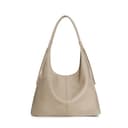
When the bag has to be soft.A slouchy hobo in full-grain is an awkward object — the hide is too stiff to drape properly until it has been carried for months. The befen hobo on this page is the clearest example of a bag where top-grain is simply the correct material for the shape.
When you carry it on one shoulder. Full-grain is the heaviest hide per square foot, and a large full-grain tote is a real weight before anything goes in. Our bag weight guide lists every published figure we have; the Raymaple’s 1.76 pounds is at the light end for a 15.6-inch work tote.
When the budget is the constraint. Top-grain is the honest middle of the market: real hide of a named grade, for noticeably less than full-grain. If that is still a stretch, our totes under $100 page is the right page and is clear about what you give up at that price.
And the other way round: if you want a bag that develops a patina, go full-grain and accept the weight, the stiffness and the price. Nothing about top-grain will give you that, and a seller who promises both is describing two different materials.
Which one to buy
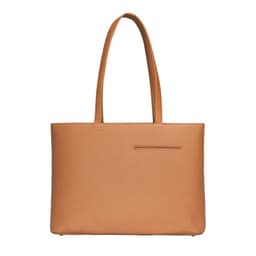
For work, the Raymaple.Pebbled top-grain, a stated 15.6-inch laptop fit, a reinforced base that keeps the bag upright on a floor and metal feet to take the wear. Buy it knowing the main compartment is open by the listing’s own description, and that there is no padded sleeve, so a slim laptop sleeve inside it is money well spent — our full Raymaple review goes through the rest of that listing in detail. If a closing top is a requirement, our zip-top tote roundup only lists bags whose listings state one in words.
For a soft everyday bag, the befen hobo. This is the pick where the grade is the point: top-grain gives a slouch a structured full-grain tote cannot, at a price below the full-grain totes it sits beside. The finish limits how much patina it will ever develop, and the unstructured body sags when it is only half full. It is also the pick we would choose as a first real-leather bag for someone who does not want a maintenance project.
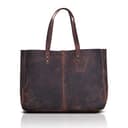
For hauling, the KomalC buffalo tote.Top-grain buffalo rather than cowhide, 18.5 inches across, in a distressed tan finish that hides the first year of scuffs completely. It is a shopper rather than an organizer — one main compartment, one inner pocket, no laptop protection of any kind — and we record its weight as not published, because the listing’s own weight field says 0.65 pounds and a bag of those dimensions in buffalo hide cannot weigh that. Buffalo is a thicker, coarser-grained hide than cow, which is most of why distressed finishes read so strongly on it; our buffalo versus cowhide guide goes through the differences.
What we left out, and why
Totes whose bullets claim top-grain and whose titles do not. The biggest excluded group, and the reason this page is short. The S-ZONE top-zip work tote is the clearest case: its bullets say top-grain, its title says genuine leather, so our table records genuine leather and it appears instead on our zip-top and laptop pages on its real strengths. The rule is not a judgement on those bags. It is a judgement on what the seller was willing to put its name to.
Full-grain totes. They have their own page, and mixing the grades would make both lists worse. If you are undecided between the two, read the comparison guide first and then pick the page.
Top-grain bags that are not totes. Only one other bag in our registry records top-grain as its grade: the HULSH vegetable-tanned rucksack, which is unusual for naming both its grade and its tannage under $100. It is a backpack, so it lives on our under-$100 backpack page rather than here.
Coated synthetics that imitate a top-grain finish. A uniform, sealed, pebbled surface is exactly what good PU imitates best, which makes this the grade where real and fake are hardest to tell apart in photographs. Our guide to spotting fake leather covers the checks that survive a listing photo, and our leather versus vegan leather comparison sets out when a synthetic is the sensible buy anyway.
Caring for a top-grain tote
Clean more, condition less. A sealed surface does not drink conditioner the way full-grain does, so most of what you apply sits on top, attracts dust and goes tacky. Keep it clean, condition thinly and only when the leather looks dry, and follow our cleaning guide before any conditioner goes near it.
Protect the fold points. The finish is the part that fails, and it fails where the leather bends: handle roots, the top edge of the opening, the corners of the base. Those are the places to keep conditioned and the first places to inspect.
Do not try to force a patina. Oils and heavy waxes will darken a top-grain bag unevenly and permanently rather than giving it the depth full-grain develops. Our conditioner versus mink oil comparison explains which products do what, and which ones to keep off a sealed handbag finish.
Store it stuffed and upright. Soft top-grain creases easily and keeps creases, especially on a slouchy shape. Paper inside and an upright shelf is the whole trick; our storage guide has the routine and explains why a plastic bag is the wrong cover.