How to read a leather backpack listing on Amazon
Four checks, in this order. They take about ninety seconds per listing and they will disqualify most of what a search returns.
1. Read the material field, never the title
An Amazon title is a keyword field. Sellers write it to match what buyers type, and buyers type “leather.” Scroll past it to the structured product-details block and the feature bullets, which is where “PU,” “vegan leather,” “faux leather” and “leather trim” tend to live. When the two fields disagree, believe the less flattering one — that is the rule our spec tables follow on every page of this site. The FTC guides in our sources require imitation leather to be disclosed as such; the disclosure is usually there, just not where the marketing is.
2. Read the grade word, and treat vagueness as a downgrade
“Full-grain,” “top-grain” and “genuine leather” are three different products, and only the first two are compliments. A seller who actually bought full-grain hide says so repeatedly, because it is the single most expensive thing about the bag. A seller writing “high-quality genuine leather material” is describing nothing at all. If that distinction is new to you, our guide to what “genuine leather” really means is the fastest way to stop being sold to, and the full-grain versus top-grain comparison covers the tier above it.
3. Check the laptop size is a number, then ignore how confident it sounds
A stated laptop size is one of the more reliable claims in any bag listing, because getting it wrong generates returns. What it does not tell you is whether the sleeve is padded, and whether it is suspended off the base of the bag. Fitting and protecting are different jobs. Setting a pack down hard sends that impact straight into the machine when the compartment bottoms out, and no listing on Amazon will tell you which packs do that.
4. Accept that the strap anchors are unknowable, and price accordingly
Four small points carry the entire loaded weight of the bag, all day, every day. This is where budget leather backpacks fail, and they fail there long before the panels wear out. No listing in this category describes its anchor construction clearly enough to be sure, which is a large part of what you are buying when you pay more for a brand with a returns process. It is the one check you genuinely cannot run from the product page.
The thing Amazon shoppers get backwards
The instinct is to trust the name you recognize and distrust the one you have never heard of. In this specific category that instinct is close to inverted, and the two bags at the ends of this list prove it.
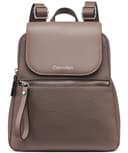
The Calvin Klein pick is a real Calvin Klein bag, cleanly made, with the brand’s quality control behind it — and its own listing says it is faux leather. It is a good bag for someone who wants that look and that label. It is not hide, it will not patina, and the label is doing none of the work people assume it is doing.
TIDING, meanwhile, is a name most buyers have never encountered, and it states full-grain plainly and consistently across its listings. Brand recognition on a marketplace tells you about a company’s marketing budget and its returns process. It does not tell you what the bag is made of. Only the material field does that, which is why it is check number one. Our leather versus vegan leather comparison works through when the coated synthetic is genuinely the better buy — sometimes it is.
What Amazon is genuinely good for here
Three things, and they are not small.
Returns. This is the real argument for buying a leather backpack on a marketplace rather than direct from a small maker. Leather varies between hides and photographs badly, and a backpack in particular has to be tried on loaded before you know whether the straps sit right on your shoulders. A no-questions return window makes that risk survivable.
Price floors. Amazon is where full-grain becomes reachable at all. A handmade full-grain rucksack from a direct-to-consumer brand starts well above anything on this page; the marketplace versions get there by cutting brand, packaging and support rather than hide. Our under-$100 backpack roundup is the extreme version of that trade.
Published numbers. Sellers here publish dimensions, weights and laptop sizes far more often than boutique brands do, because the structured fields are part of how listings compete. Two of the six picks below publish both dimensions and a weight, which is genuinely useful and not something you can take for granted.
What it is not good for
Consistency between units. The bag you receive is not necessarily the bag in the photograph, particularly with vegetable-tanned and vintage finishes where color varies hide to hide. That is inherent to the material rather than a seller cutting corners, but it does mean this is a poor place to shop if you have a precise shade in mind.
Anything resembling repair.A marketplace seller has no repair process. When a zip fails in year three you are paying a cobbler, not claiming a warranty. Factor that into the cost-per-year rather than treating it as a surprise — our note on how long leather bags actually last sets out what is reasonable to expect at each price.
Trusting a rating alone. Star ratings on this category aggregate across colorways and sometimes across quite different bags. Read what the reviews say about the straps and the zips specifically; those are the parts that fail, and the reviews that mention them are worth more than the average.
Which shape are you actually buying?
Three silhouettes share this page and they suit genuinely different lives.
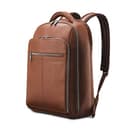
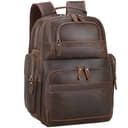
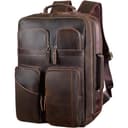
A business pack is flat-backed and zip-opening with a dedicated laptop section. It is the fastest to get into, it looks appropriate in an office, and it is the shape to buy if you open the bag ten times a day. Both Samsonites and both TIDINGs are this shape, and it is the one our work backpack roundup is built around.
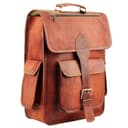
A rucksack is deeper and rounder, usually closing under a buckled flap. It carries an awkward, uneven load far better because the volume is not flat, and it looks relaxed rather than corporate. The trade-off is access, and it is a real daily cost: getting to the bottom of a rucksack in a hurry is genuinely annoying. The HULSH is this shape.
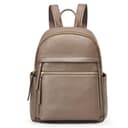
A backpack purse is a small, soft daypack sized for a phone, a wallet and a water bottle rather than a laptop. It is also the sub-category most thoroughly dominated by coated synthetics, which is why we keep a separate page for backpack purses that sorts the real hide from the rest. The Kattee and the Calvin Klein are both this shape, and they are the clearest side-by-side on this page of what the material actually costs.
Which one to buy
The Samsonite Classic is the answer for most people, and what you are buying is not the best leather on this page. It is a company that will still exist in five years, a padded compartment built by people who make luggage for a living, and a consistent finish between one unit and the next. The listing says “leather” without naming a grade, and we record that plainly rather than upgrading it — but for a bag that has to look appropriate in an office every day, the trade is a reasonable one.
Take the TIDING 15.6-inch if the grade is the point. It is full-grain, said consistently, in a business shape, and it is the pack we would buy if the bag had to outlast the job. Its 17.3-inch sibling is the same argument scaled up, and it is the honest answer for a genuinely large machine — a requirement almost nothing in this category meets properly. The rest of that tier is on our full-grain backpack page.
Take the HULSH if you want real hide and a patina without spending three figures. It names a grade above “genuine,” names its tannage, and publishes both dimensions and a weight — three things most sellers in its bracket decline to provide. Buy it knowing a vegetable-tanned finish darkens noticeably in the first year, which our tannage guide explains properly, and knowing a flap-and-buckle rucksack is slower to open than a zip.
Take the Kattee if you want a soft everyday bag in real leather rather than a work pack — it is the women’s pick on our women’s backpack roundup for the same reason. And take the Calvin Klein only if, having read the material line, you want the look and the label and are choosing the coated finish on purpose rather than by accident. That is a legitimate choice. It is just not the choice most people think they are making.
Before you buy anything
Two habits, and the return window is the time to run both.
Load it and wear it indoors for ten minutes.Put your actual daily carry in it — laptop, charger, bottle, whatever else — and walk around the house. Strap comfort is entirely a function of load, and an empty backpack tells you nothing. This is the single check that catches the bags you would have quietly stopped using by week three.
Run the physical material checks. Real hide has an irregular grain, smells like leather rather than like plastic, and warms against your hand; a coating stays cool and repeats its pattern. Our guide to spotting fake leather covers the rest, and doing it on day one rather than month four is the difference between a return and a lesson.
After that, the maintenance that matters most on a backpack is not what people expect. Condition the straps and the back panel before the panels — those are the parts that flex constantly and take sweat, so they are the parts that dry, stiffen and eventually crack. Twice a year, thinly, is enough; the routine is in our conditioning guide. And if this page has convinced you that the material is the whole question, our leather versus canvas comparison makes the case for the honest alternative.