The Patina Bench

Leather Tote vs Backpack for Work

One of these looks better walking into a meeting. The other is far kinder to your shoulder. Here is how to work out which trade-off is actually yours.

By Stephen V.Last updated How we pick

This decision gets argued as a style question and it is mostly a physics question. A backpack splits the load across two shoulders and keeps it close to your spine. A tote hangs the whole thing off one shoulder or one hand. With a laptop, a charger and a notebook inside, that difference is several pounds of asymmetric load repeated every working day.

The counter-argument is real too. A tote sets down, opens fully and is visible on a chair beside you; a backpack has to come off, be put somewhere and be opened blind. And in some rooms a backpack still reads as a student and a tote reads as a professional, however unfair that is.

Below: what each shape genuinely does better, then the best leather pick on each side with a live price, so the comparison ends in something you can actually buy rather than a shrug.

How this is funded:we earn a commission if you buy through our links, at no extra cost to you. It never changes which product we recommend, and we’ll tell you when we’d skip one. Full disclosure.

Quick picks

Ranked on leather grade, construction, capacity and value. Select a row to jump to the full write-up. We have not wear-tested these bags — here is exactly what we do instead.

#ProductBest forPrice
1
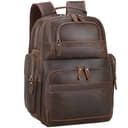
TIDING Full Grain Leather 15.6" Backpack

TIDING Full Grain Leather 15.6" Backpack

The full-grain pick, and our choice for work. TIDING states full-grain leather, fits a 15.6-inch laptop, and has the multi-pocket layout a work commute actually needs — a bag built to patina rather than peel.

Best backpack for work
$169.99 · View on Amazon

Price as of September 5, 2026. #ad How we’re funded

2
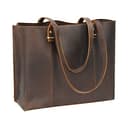
TIDING Full Grain Leather Work Tote

TIDING Full Grain Leather Work Tote

The upgrade pick, and the one full-grain option in this group. If you want a tote that ages into a better bag over years rather than wearing out, full-grain is the grade to buy, and TIDING states it plainly.

Best tote for work
$99.99 · View on Amazon

Price as of September 5, 2026. #ad How we’re funded

3
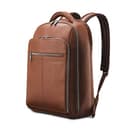
Samsonite Classic Leather Backpack

Samsonite Classic Leather Backpack

The grown-up leather backpack default: a real brand, a padded laptop section and a full-size body that carries a work day comfortably. If you want one leather backpack to buy without overthinking it, this is it.

Best brand-name backpack
$183.99 · View on Amazon

Price as of September 5, 2026. #ad How we’re funded

4
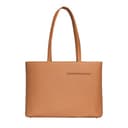
Raymaple Top Grain Leather 15.6" Laptop Tote

Raymaple Top Grain Leather 15.6" Laptop Tote

The genuine-leather laptop tote we'd actually recommend for work: top-grain leather, a zip top and room for a 15.6-inch laptop. It's the honest answer to 'I want a real-leather work tote, not a PU one.'

Best value tote
$69.99 · View on Amazon

Price as of September 5, 2026. #ad How we’re funded

The picks in full

#1Best backpack for work

TIDING Full Grain Leather 15.6" Backpack

The full-grain pick, and our choice for work. TIDING states full-grain leather, fits a 15.6-inch laptop, and has the multi-pocket layout a work commute actually needs — a bag built to patina rather than peel.

Strengths

  • Full-grain leather — the most durable grade, stated on the listing
  • Fits a 15.6-inch laptop with real organization
  • Large capacity for a full work-and-travel day

Trade-offs

  • Heavy — full-grain leather plus a big body
  • Premium price
LeatherFull-grain
DimensionsNot published
WeightNot published
Laptop fitFits a 15.6-inch laptop
Best forWork commute, Business travel, Buy-once carry

Construction note. Full-grain leather is heavy and stiff at first, then softens and darkens with use — the trade-off for a backpack that lasts.

Specs read from the product listing, on July 21, 2026. “Not published” means the brand does not state that figure.

#2Best tote for work

TIDING Full Grain Leather Work Tote

The upgrade pick, and the one full-grain option in this group. If you want a tote that ages into a better bag over years rather than wearing out, full-grain is the grade to buy, and TIDING states it plainly.

Strengths

  • Full-grain leather — the most durable grade, stated on the listing
  • Structured enough to stand up on its own when packed
  • Built for daily work carry, not just looks

Trade-offs

  • Heavier than a soft corrected-grain tote
  • Premium price versus the budget picks
LeatherFull-grain
DimensionsNot published
WeightNot published
Laptop fitFits most laptops; check the listing for your size
Best forWork commute, Everyday carry, Long-term buy

Construction note. Full-grain is the top layer of the hide with its grain intact — the grade that develops patina instead of flaking (see our full-grain vs top-grain guide).

Specs read from the product listing, on July 21, 2026. “Not published” means the brand does not state that figure.

#3Best brand-name backpack

Samsonite Classic Leather Backpack

The grown-up leather backpack default: a real brand, a padded laptop section and a full-size body that carries a work day comfortably. If you want one leather backpack to buy without overthinking it, this is it.

Strengths

  • Established brand with a padded laptop compartment
  • Full-size capacity for a real work load
  • Warranty and support behind it

Trade-offs

  • Premium price versus marketplace backpacks
  • Full-size body is more than a light commuter needs
LeatherLeather
DimensionsNot published
WeightNot published
Laptop fitPadded laptop compartment
Best forWork commute, Business travel, Everyday carry

Specs read from the product listing, on July 21, 2026. “Not published” means the brand does not state that figure.

#4Best value tote

Raymaple Top Grain Leather 15.6" Laptop Tote

The genuine-leather laptop tote we'd actually recommend for work: top-grain leather, a zip top and room for a 15.6-inch laptop. It's the honest answer to 'I want a real-leather work tote, not a PU one.'

Strengths

  • Top-grain leather with a full zip-top closure
  • Fits a 15.6-inch laptop plus a day's paperwork
  • Large capacity without looking like a gym bag

Trade-offs

  • No dedicated padded laptop sleeve — use a slip sleeve
  • Heavier than a synthetic tote of the same size
LeatherTop-grain
DimensionsNot published
WeightNot published
Laptop fitFits a 15.6-inch laptop (no padded sleeve)
Best forWork commute, Laptop carry, Unisex daily tote

Specs read from the product listing, on July 21, 2026. “Not published” means the brand does not state that figure.

Your commute decides this, not your job

The most reliable rule we have found: count the minutes you spend with the bag on you and moving. Not the minutes it sits at a desk — the minutes it is on your body.

Under about ten minutes each way, and mostly car-to-door, the load barely matters and you should choose on looks and access. That is tote territory. Over twenty minutes on foot, on transit, on a bike, or up and down station stairs, the asymmetry starts to matter and a backpack is the better bag regardless of what it looks like. Between the two, it depends on how heavy your carry is.

The same reasoning drives our work bag pillar, which compares every shape — briefcase and messenger included — against the same commute.

What a backpack does better

Load

Two straps halve the weight on each shoulder and a chest-close pack keeps the load over your center of gravity, so your posture stays neutral. This is not a marginal effect: the same laptop-and-charger carry that leaves a tote strap digging into one shoulder is unremarkable in a backpack.

Laptop protection

Backpacks are more likely to have a genuinely padded, suspended laptop compartment — one where the machine does not sit against the base of the bag. Most leather totes have no padding at all, so the laptop takes the impact when you set the bag down. The TIDING backpack here states a 15.6-inch fit with a dedicated compartment; the TIDING tote says it fits most laptops and does not claim padding, which is the usual arrangement.

Hands

Both of them free, all the time, including on stairs and in the rain with an umbrella. A tote occupies an arm or requires you to keep one shoulder raised.

What a tote does better

Access

A tote opens wide and shows you everything. You reach into it while it hangs on a chair, on a table, on the floor beside you. A backpack has to be taken off, turned round and opened, which is a small friction that becomes a real one if you retrieve things ten times a day.

Formality

A structured leather tote works with tailoring. A leather backpack has come a very long way — the Samsonite here is a professional bag by any reasonable standard — but in conservative offices, courts and client meetings a backpack still reads younger. If your work is client-facing and traditional, our briefcase page is probably the honest answer rather than either of these.

Awkward volume

A tote takes a wide, flat, unshaped load — a folder, a box of pastries, a bunch of flowers, a change of shoes — that no backpack handles gracefully. If your day involves carrying things that were not designed to be carried, the tote wins easily.

How each one ages

This is the part specific to leather rather than to bags in general, and it favors the tote slightly.

A tote wears at the handles, the base corners and wherever it rubs against a hip. Those are all places where leather darkens attractively, so a good tote looks better after two years than it did new. A backpack wears at the shoulder straps and the panel against your back, and the back panel is exposed to sweat — which is harsher on leather than anything else in normal use. Salt draws oils out of the hide and leaves it stiff.

None of that is a reason to avoid a leather backpack. It is a reason to wipe the back panel and the straps occasionally and condition them before the panels, which is the opposite of what most people do. Our conditioning guide covers the routine, and our lifespan piece sets out what actually fails first on each shape.

Weight, in numbers you can check

Leather bags are heavy empty, and full-grain is heavier than corrected grain because the hide has not been split down. Both TIDING picks list weight as unpublished, so we do not quote a figure — but the pattern holds: a full-grain work bag of either shape is a substantial object before you put a laptop in it.

Which is why the shape matters more in leather than in nylon. In a light synthetic bag, a tote’s one-shoulder penalty is small. In leather, the bag itself is already a meaningful share of the load, so putting it all on one side is a bigger ask. If you have chosen leather and you have a real commute, the backpack argument gets stronger, not weaker.

The honest verdict

Buy the backpack if you walk or use transit for more than about twenty minutes, if you carry a laptop most days, or if your shoulder already complains. The TIDING full-grain is the buy-once version; the Samsonite is the one to choose if you want a recognizable brand and a warranty behind it.

Buy the tote if you drive or your commute is short, if your day involves carrying odd-shaped things, or if the room you walk into still judges bags. The TIDING full-grain tote is the buy-once version here too; the Raymaple is the sensible-money alternative in real top-grain leather with a stated 15.6-inch fit.

And if you genuinely cannot choose: buy the backpack for the commute and a small tote for the days you do not need a laptop. That combination costs less than one premium bag of either kind and it is what most people who have owned both end up doing. Our small tote roundup covers the second half of that pairing.

Frequently asked questions

Is a leather backpack or a leather tote better for a laptop?

A backpack, in almost every case. Backpacks are far more likely to have a genuinely padded laptop compartment, and two straps keep the weight symmetrical. Most leather totes have no padding at all, so the machine sits against the base of the bag — usable, but it needs a separate sleeve.

Do leather backpacks look unprofessional at work?

Much less than they used to, and a structured leather backpack in a dark color is unremarkable in most offices. Where it still reads younger is in conservative, client-facing settings — law, finance, formal client meetings. If that is your world, a briefcase is a safer answer than either shape here.

Is a tote bad for your shoulder?

A heavy one carried daily is asymmetric load, and leather adds weight before you pack anything. That is not a reason to avoid totes, but it is a reason to be honest about how far you carry it and how much goes in. Switching shoulders regularly and keeping the load under control matters more than the bag you choose.

Which shape ages better in leather?

A tote, marginally. It wears at the handles and base corners, which darken attractively. A backpack wears at the straps and the back panel, and the back panel gets sweat — which draws oils out of the hide and leaves it stiff. Condition the straps and back panel first on a backpack and the difference largely disappears.

Can one bag do both jobs?

Convertible backpack-totes exist and they compromise on both. The straps make a poor tote and the tote shape makes a poor backpack, because the two demands genuinely conflict. If you want both, most people are better served by a work backpack plus a small tote than by one bag pretending to be two.

Which is better for travel?

A backpack through an airport, a tote once you are there. A backpack keeps your hands free through security and on stairs; a tote slides over a suitcase handle better and is easier to live out of. Our travel pages cover both, including the honest weight penalty leather brings to either shape.

Sources

Keep reading