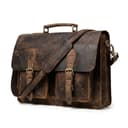
Why full-grain costs what it does in this shape
A briefcase uses several times the hide of a crossbody. Two large panels, a gusset deep enough for a laptop and files, a base, a handle and a strap — and full-grain cannot be stretched or split to go further, because splitting it is precisely what makes it not full-grain any more.
That is why the price ladder in briefcases looks upside down compared with small bags. A full-grain satchel from a small workshop can undercut a structured branded case that contains less and cheaper leather, because the branded case is paying for a rigid frame, padding, quality control and a warranty. Neither is a rip-off. They are different products that happen to share a name.
Full-grain, top-grain and the middle ground
Worth being precise, because the two words look similar and the difference is permanent. Full-grain keeps the hide’s outer surface, including its small imperfections, so it takes on oils and darkens with handling. Top-grain has that surface sanded off and a finish applied, which gives a uniform look that stays uniform.
For a briefcase, that means a full-grain case will look visibly different after three years and a top-grain one will look much as it did. If you want the bag to look brand new in a formal setting for as long as possible, top-grain is genuinely the better choice and we would not argue with it — our grade comparison lays out both sides properly.
What you should not accept is a briefcase sold as leather with no grade named at all. In this price bracket, silence almost always means corrected genuine leather, which is a real hide but the grade least likely to age well under daily load.
Buffalo, cowhide and Italian: does the source matter?
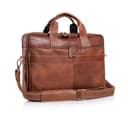
Some, and less than the marketing suggests. Buffalo hide — the KomalC here — is thicker and more heavily grained than cowhide, which gives a rugged look and a bag that feels substantial. It is also heavier, and it arrives with a strong leather smell that takes weeks to fade. That is authentic rather than a defect, but it surprises people.
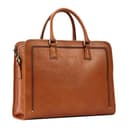
“Italian full-grain” usually indicates a tannery region with a long vegetable-tanning tradition, which tends to mean a hide that develops color well. It is a meaningful signal when the listing states it, as the Banuce does. It is not a guarantee of anything on its own, and it is frequently used loosely. Our tanning guide explains what actually changes.
The structure question, decided properly
Ask what happens when you put the bag down hard on a concrete floor with a laptop inside.
In a structured case — the Banuce here — the shell takes the impact and the machine sits in a padded compartment away from the base. In a soft satchel, the laptop takes it. That does not make satchels unsuitable; it makes a padded sleeve non-optional. The KomalC does state a padded laptop slot, which is a meaningful step up from a plain compartment.
The counter-argument for satchels is comfort and aging. A soft bag molds to your body, hangs better on a strap and develops far more character. It is the shape that looks like it has a history, and after five years it will. Our briefcase versus messenger piece works the same trade through in more detail.
Which one to buy
The KomalC is the answer for most people: full-grain buffalo, a stated 16-inch laptop fit with a padded slot, and a price well under the branded cases. It is soft rather than rigid and it smells strongly of leather for the first month, and if neither of those bothers you it is the best leather-per-pound on this site.
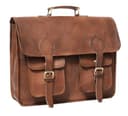
The Leather Room case is the one to choose if you want the vintage look — the finish absorbs the first year of scuffs rather than displaying them — and it publishes its exterior dimensions, which almost nothing in this category does. The Banuce is the structured, formal, buy-once option and the only genuine women’s briefcase we have found in full-grain; it is expensive and it is meant to be the last one you buy.
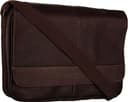
The Kenneth Cole is the pick if a flap-over messenger fits your working life better than a case, and the cuero if you need genuinely oversized — a 17-inch laptop is a requirement almost nothing meets.
Living with a full-grain work bag
Two things to expect and one thing to do. Expect it to be stiff for the first few weeks — full-grain has not been softened by processing, so it breaks in rather than arriving broken in, and our breaking-in guide covers how. Expect it to darken unevenly at first, most obviously where your hand rests on the handle. That is patina starting and it evens out.
The thing to do is condition it lightly twice a year, concentrating on the handle, the strap and the base corners rather than the flat panels. Those are the parts that flex, and flexing dry leather is what eventually cracks it. The amounts are smaller than most people use — our conditioning guide is specific about it.
If the grade is not your first filter
This page is filtered hard on one thing, which is why it is a short and relatively expensive list. Plenty of buyers care more about whether the bag reads correctly in their office than about whether its hide is full-grain — and that is a defensible priority, because a briefcase lives a much gentler life than a daily crossbody. Our men’s leather briefcase roundup ranks formality register first and grade last for exactly that reason, and it sets out the three registers this category actually splits into.