How we ranked them
1. How formal the bag reads
There are three registers in this category and almost no listing names which one it belongs to, so here is the map.
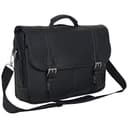
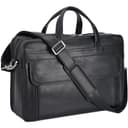
Corporate. Structured, black, squared corners, minimal visible stitching, no distressing. The Kenneth Cole portfolio and the Masa Kawa black briefcase are the two here. These are the bags for a suit-and-black-shoes office, a courtroom, a client pitch, or any room where you want the bag to be invisible. Our briefcases for lawyers page goes deeper on that specific end of the scale.
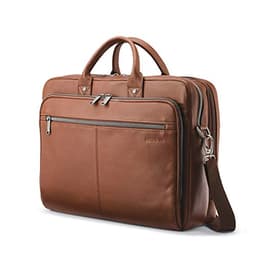
Business casual. Brown or cognac, softer edges, a visible but tidy construction. The Samsonite toploader in cognac and the KomalC buffalo briefcase live here, and this is where most men actually work now. It is also the safest register if you are not sure: it reads as considered rather than as either stiff or scruffy.
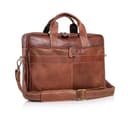
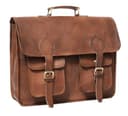
Deliberately rugged.Distressed or vintage finishes, visible hand-stitching, antique hardware. The Leather Room satchel is the clearest example, and the KomalC’s distressed brown pushes partway into it. These look excellent in a studio, a university department or a startup, and slightly wrong in a bank.
Nobody can tell you which register your workplace runs. But you already know, and picking the register first narrows six bags to two or three in about ten seconds — which is more progress than comparing liters of capacity will get you.
2. Laptop fit, as the listing states it
Five of these six publish a laptop size in words, which is better than this category usually manages. The spread is wide: the RAINSMORE and the KomalC state 16 inches, the Leather Room states 15.6, and both Masa Kawa bags state 17. The Kenneth Cole states a padded 16-inch compartment, and the Samsonite states a padded laptop compartment without naming a size — the one gap in the set, and worth checking against your own machine before you buy.
Two things worth knowing. First, a stated laptop size is a claim about the compartment, not a promise about your specific machine, and a thick gaming laptop can defeat a bag rated for its diagonal. Second, padding is not implied by fit: a bag can honestly “fit a 16-inch laptop” in an unpadded slot. The Samsonite and the Kenneth Cole are the two here whose listings state padding as such. For the arithmetic on what a diagonal actually means in inches of width, our 15-inch laptop bag page works it through, and our 17-inch page is the one to read if you own a genuinely large machine.
3. How it carries
This is the third-most-searched thing about men’s briefcases and it is a straightforward win: five of the six state a shoulder strap alongside the top handle. The Samsonite and the Kenneth Cole state top handles plus a shoulder strap, the Samsonite’s detachable; the KomalC states a top handle plus an adjustable strap; the Masa Kawa and the Leather Room both state a shoulder strap; the RAINSMORE states an adjustable shoulder strap.
Buy the strap. A loaded briefcase carried by the handle is a one-armed exercise that gets old within a block, and the detachable kind gives you the formal handle-only look when you walk into the room and the sane option for the walk there. If your commute is genuinely long or involves stairs and crowds, the honest answer is that a briefcase is the wrong shape entirely — our briefcase versus backpack comparison makes that case properly, and our work backpack roundup is where to go if it convinces you.
4. Grade, recorded at the lowest claim
Two of the six state full-grain: the KomalC buffalo briefcase and the Leather Room satchel. Both Masa Kawa bags and the RAINSMORE state genuine leather, which means real hide without a named grade. The Samsonite and the Kenneth Cole name no grade at all — “leather” and “Colombian leather” respectively, which is an origin claim rather than a grade claim.
We record the lower claim whenever a listing makes two, and we do not upgrade “genuine leather” to full-grain to make a bag look better. If the vocabulary is unfamiliar, our guides to full-grain leather and what “genuine leather” actually means are the two to read before you spend, because the second phrase is the most misunderstood term in this entire category.
Which one to buy
For most men, the Samsonite toploader. It is the lowest-risk purchase on the page: a padded laptop compartment, a detachable strap, two colorways that cover both ends of the shoe question, and a brand you can get serviced and returned without drama. It names no grade and it is the priciest bag here, and we still think it is the right default.
For the most leather per dollar, the KomalC. Full-grain buffalo hide with a padded 16-inch laptop slot at a mid price, which is a genuinely unusual combination — full-grain normally costs considerably more. Buffalo is thicker and more coarsely grained than cowhide, and its distressed brown finish is a specific look rather than a neutral one, so check it reads correctly in your office. Our buffalo versus cowhide guide covers what the species difference does and does not mean, and our full KomalC review is the deeper look.
For a formal office, the Kenneth Cole portfolio. Structured, black, a padded 16-inch compartment and a business organizer interior — the bag that disappears correctly in a conservative room. “Colombian leather” is an origin claim and not a grade, and the structured shape is less forgiving about being overfilled than any soft bag here.
For a 17-inch laptop, the Masa Kawa in black. Large machines are badly served in leather and this is the formal answer: cowhide, a stated 17-inch fit, black, with a shoulder strap and top handle. Its listing publishes no interior breakdown at all, which is a real gap at this price, and a 17-inch bag full of a 17-inch laptop is heavy however good the leather is.
For a less corporate look, the Leather Room satchel. Handmade full-grain in a vintage finish, a stated 15.6-inch fit, and published dimensions of 16 by 12 inches — one of the few here that gives you a real measurement. It is a satchel rather than a squared-off briefcase, so it reads softer and more personal, and it will look out of place in the kind of office the Kenneth Cole suits.
On a budget, the RAINSMORE.The cheapest real-hide 16-inch bag we track, in vintage brown, with an adjustable shoulder strap. Genuine leather with no named grade, no published dimensions or weight, and a messenger silhouette rather than a true briefcase — which for some offices is a feature. For the wider budget picture, our briefcases under $300 roundup shows what each price band actually buys.
What a briefcase costs, and where the money goes
Three honest observations about pricing in this category, stated as brackets rather than numbers — the live figures are in the table above.
The brand premium is real and it is not only branding. The two most expensive bags here are from luggage and fashion houses and neither names a leather grade. What you are paying for is returns you can rely on, a shape designed by people who do this full time, and padding stated as padding. Whether that is worth more than a grade claim is a genuine judgment call, and we do not think either answer is foolish.
Full-grain at a mid price exists, from brands you have not heard of. That is the KomalC and the Leather Room. The trade is brand recourse and consistency: you are buying from a marketplace seller rather than a company with a service counter. Our guide to why leather bags are expensive breaks down where the cost actually sits.
Under the budget line, the category turns synthetic fast.Below the RAINSMORE, most “leather” briefcases are coated synthetics, and a bag whose title says leather while its bullets say PU is the single most common trap here. Our guide to spotting fake leather has the tells, and it is worth five minutes before you spend.
Making a leather briefcase last
Do not overload it.A briefcase carries its weight from two handle attachment points, and that is where these bags fail — not in the leather. Our hardware guide covers what to inspect when the bag arrives and what a repairer can replace later.
Condition it twice a year, and the handle more often. Handles take hand oil, sweat and constant flexing, so they dry and crack first. Our conditioning guide has the routine, and it uses noticeably less product than most people apply.
Do not store it on the floor or in a plastic bag. Stuff it loosely, keep it somewhere with ordinary room humidity and let it breathe. Our storage guide explains why a sealed bag is how mold starts.
Expect a break-in period on the full-grain bags. The KomalC and the Leather Room will both feel stiffer out of the box than the Samsonite does, and that is the grade behaving correctly rather than a defect. Our break-in guide covers what helps and what to leave alone.