What buffalo full-grain actually is
Buffalo hide is thicker than cowhide and far more heavily grained — the surface has a visible, irregular pebbling that is the hide’s own rather than an embossed pattern. Full-grain means that surface has been left intact: nothing sanded off, nothing sprayed over the top.
Two consequences follow. The bag is substantial in the hand in a way a corrected-grain case is not, and it will darken and soften visibly over the first couple of years instead of staying static. That is the whole case for the grade, and our patina guide covers what to expect and how quickly.
The third consequence is one listings rarely mention: it smells. Strongly, of leather, for weeks. Most people who buy a bag like this consider that a feature. If you work in a small shared office, or someone in your household is sensitive to it, it is worth knowing in advance.
The shape is a satchel, not a case
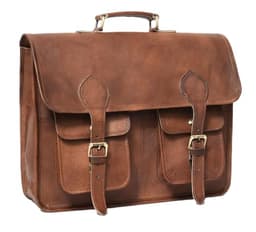
This is the most important thing to understand before buying, and the listing is honest about it: this is a soft satchel with a top handle and an adjustable shoulder strap, not a rigid structured briefcase.
Practically, that means it does not stand up on its own when empty, it molds around whatever is inside, and it hangs comfortably on a strap across a long walk. It also means that when you set it down hard, the bag flexes rather than a shell absorbing the impact. The listing does state a padded laptop slot, which is a genuine step above a plain compartment, but it is not the same as a rigid case.
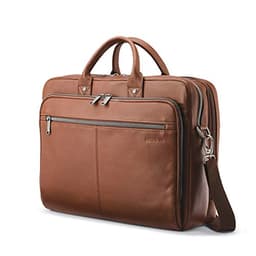
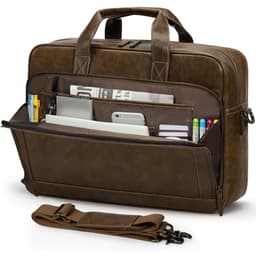
If the machine is the priority, a structured case is the correct purchase and the Samsonite in the alternatives below is the obvious one. If the bag is the priority and you own a sleeve, the satchel is better value and will age far better. Our briefcase versus messenger comparison covers the same fork from a different angle.
Capacity and fit
The listing states a 16-inch laptop fit plus document space, which is a genuinely useful size — it covers most work machines with room for a notebook, a folder and a charger. It does not publish exterior dimensions or a weight, so we do not quote either; where a listing is silent, this site says so rather than filling the gap.
What we can say from the material is that it will not be light. Thick buffalo hide over a bag this size is a heavy empty object, and adding a 16-inch laptop makes it a serious one-shoulder load. If your commute involves a long walk, our briefcase versus backpack piece is worth reading before you commit to any leather case.
Where it will fail first
Not the leather. Full-grain buffalo outlasts almost everything attached to it, which means the honest failure points are the shoulder-strap hardware, the buckles and the stitching where the handle meets the body. Those are the parts to inspect in the listing photos and to check when the bag arrives — our hardware guide explains what a good one looks like.
Handmade construction also means more unit-to-unit variation than a factory bag. Color, grain and the exact placement of stitching differ between examples of the same listing. That is inherent to the category rather than a fault, but if you want the item to look exactly like the photograph, it is the wrong bag.
Who should buy it
Someone who wants the most real leather their money will buy and is comfortable with a bag that looks handmade rather than corporate. It suits creative offices, academia, consultancy and anywhere the dress code is “smart but not a suit.” It is also an unusually good graduation or first-job bag, because it is the sort of thing that will still be in service ten years later.
Who should not
Anyone in a formal, client-facing environment where a distressed brown satchel reads wrong — buy a structured case in a dark color. Anyone whose main concern is protecting an expensive laptop, unless you are adding a sleeve. Anyone carrying the bag a long way daily, because the hide’s weight is not trivial. And anyone who wants a warranty and a customer-service department behind the purchase.
Breaking it in and keeping it
Thick full-grain arrives stiff. It softens over roughly a month of use as the fibers flex and your own handling redistributes the oils; the process is described in our breaking-in guide, along with the shortcuts that damage leather rather than speeding it up.
After that, very little. Wipe dust off before it grinds into the grain, keep it off standing water, and condition the handle, strap and base corners lightly twice a year. Buffalo hide takes conditioner readily and darkens noticeably when it does, so apply thinly and let it rest before deciding whether it needs more — our conditioner roundup flags which products darken most.
On buffalo hide specifically
Most of what makes this bag what it is comes down to the hide rather than the maker. If you want the material question on its own terms, our buffalo leather versus cowhide guide compares the two hides on grain, thickness, weight, color range and price, and explains why distressed finishes read so much more convincingly on buffalo than on smooth cowhide.