What you are paying for
Not, primarily, the hide. Three things carry the premium, and each is worth something specific.
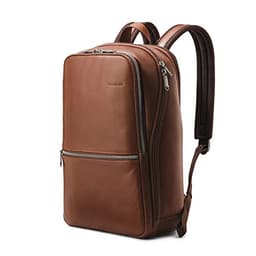
Laptop protection done properly.This is the strongest argument for the bag. A dedicated, padded compartment integrated into the structure — rather than a slot sewn into a soft body — means the machine is not taking the impact when you set the bag down or knock it against a doorframe. On a backpack that carries an expensive laptop daily, that is not a luxury.
Consistency and recourse. Two units are the same bag, and if something fails there is a company to contact. Compare that with a marketplace maker where color, hardware and occasionally dimensions vary between orders and support ends when the returns window does.
The shape.Samsonite has been building carry for a very long time, and it shows in the details that do not photograph — where the weight sits when loaded, how the panel meets your back, how the bag behaves standing up on a floor. Those are the things a first-time maker gets subtly wrong.
Where the leather sits
The listing does not name a leather grade beyond leather, and our spec table says so rather than upgrading it. From a luggage brand at this price, that almost always indicates a corrected, finished hide: real leather with the surface evened out and sealed for durability and uniformity.
That is a deliberate engineering choice rather than a corner cut. A sealed finish resists staining and scuffing better than open full-grain, and it keeps every bag looking identical — which is precisely what a business accessory is supposed to do. The consequence is that it will not patina. It will look much as it does now for years and then start to show wear at the corners rather than deepening into character.
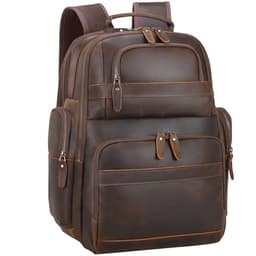
If a bag that becomes yours is the point, this is the wrong bag, and the TIDING full-grain backpack costs meaningfully less and does exactly that. Our full-grain explainer sets out what the grade actually buys you.
The weight question
A structured leather backpack is heavy empty, and this one is no exception. The listing does not publish a weight, so our spec table says so — but structure is material and material is weight, and this category generally runs three to four pounds before you put anything in.
The saving grace is the shape. Two straps put that load over your spine instead of hanging it from one shoulder, which is exactly why we push people carrying heavy laptops toward backpacks rather than briefcases. Compared with the Samsonite toploader briefcase — a bag of comparable weight and price — this is the more comfortable option for anyone whose commute involves walking.
The honest weaknesses
The price relative to the material. You can buy full-grain for less. What you cannot buy for less is the laptop compartment, the consistency and the warranty.
The grade is unstated. Our spec table reflects that. For a buyer whose priority is the hide, unstated is a reason to look elsewhere.
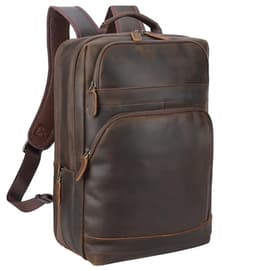
It reads corporate. That is the point, and it is a limitation if you wanted a bag with character. A vintage full-grain rucksack from our vintage roundup does an entirely different job.
Capacity is professional, not generous. This is a laptop, a charger, a notebook and a lunch. It is not a bag for textbooks or a weekend, and the slim sibling is smaller still.
Who should buy it
Buy it if you carry an expensive laptop daily and want it genuinely protected. Buy it if you want a leather backpack that reads as professional in a formal office. Buy it if a warranty process and predictable quality matter more to you than the grade of the hide. Buy it if you would rather make one decision than five.
Who should not
Skip it if the leather itself is the point — go full-grain and spend less. Skip it if you need textbook capacity, which is a different search. Skip it if you carry a 17-inch machine. And skip it if you want a bag with visible character rather than a consistent finish.
Living with it
A corrected, sealed hide needs less conditioning than full-grain, because there is a finish between the product and the leather. Once or twice a year, applied thinly, concentrating on the base corners and the strap attachment points — the two places a backpack wears first. Do not use mink oil or other heavy pastes on a finished business bag; they sit on the surface, collect grit and can leave a sheen you cannot undo. Our conditioner comparison covers which product belongs on which leather.