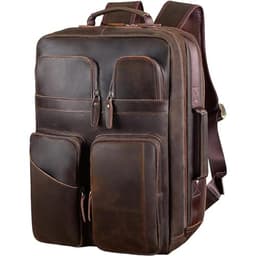
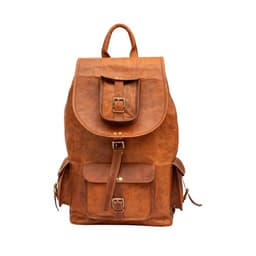
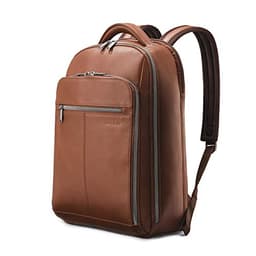
What full-grain buys you in a backpack specifically
The grade argument is different here than it is for a handbag. On a crossbody, full-grain is mostly about patina. On a backpack it is about the four small points where the straps meet the body, which carry the entire load in tension every day for years.
Full-grain is the outer layer of the hide with its fiber structure intact and nothing sanded off, which is both the densest part of the skin and the part that recovers from repeated flexing. That is precisely the property a strap anchor needs. It is also why we treat the grade as a durability specification in this shape rather than a finish preference — our grade comparison sets out the full picture.
The visible benefit arrives later. Over the first couple of years the top handle and the strap contact points darken while the panels stay lighter, which is patina doing what it does. Our patina guide covers the timeline honestly, including how much of it depends on how you handle the bag.
The layout
The listing states a 15.6-inch laptop compartment plus multiple pockets, and multiple pockets is the specification that separates a work pack from a handsome sack. One cavernous compartment means everything ends up at the bottom under the laptop; discrete sections mean a charger, a notebook and a water bottle have places to be.
What the listing does not publish is the capacity in liters, the exterior dimensions or the weight. We record all three as not published rather than guessing. If a published capacity figure matters to you, the LANNSYNE rucksack in the alternatives states 24 liters, which is unusual candor in this category.
The weight, which is the real trade-off
The listing does not give a figure, so we will not invent one. What can be said with confidence is directional: full-grain has not been split down, so it is thicker and heavier than the same bag in a corrected grade, and this is a full-size pack rather than a slim one. Empty, it is a substantial object. Loaded with a 15.6-inch laptop, a charger and a day’s paperwork, it is a serious carry.
A backpack is the right shape to absorb that — two padded straps over your center of gravity handle weight that would be punishing on one shoulder. But if you were choosing this bag partly because you wanted something light, you have the wrong bag, and the Masa Kawa in the alternatives is the honest lighter option in a lesser grade.
The first month
Expect it to be stiff. Full-grain arrives with its fibers unbroken and it takes a few weeks of use to soften into the shape of what you carry. That is the grade behaving normally, not a defect, and the temptation to speed it up with heat or heavy oil is the single most common way people damage a new leather bag — our breaking-in guide covers what works and what does not.
Expect a strong leather smell too, fading over a few weeks. And expect uneven early darkening at the handle. All three settle.
Who should buy it
Someone buying one work bag for the next decade rather than a bag for this year. It suits a professional with a 15-inch machine, a commute that involves walking, and a workplace where a structured dark leather backpack is acceptable — which today is most of them, with the exceptions covered in our briefcase versus backpack comparison.
Who should not
Anyone carrying a 17-inch laptop — TIDING makes a 17.3-inch version and that is the correct purchase, not this one squeezed. Anyone whose priority is a light bag. Anyone in a formal client-facing role where a backpack is still read as junior. And anyone on a tight budget, because the TWARA offers full-grain and a stated 17-inch fit for substantially less, with honest caveats about hardware and consistency.
Keeping it
The one habit that matters: condition the shoulder straps and the back panel before the front panels. Straps flex constantly, and the back panel is the only part of any bag exposed to sweat, which draws oils out of the hide and leaves it stiff. Twice a year, thinly. Everything else — keep it off wet floors, do not store it packed and damp, do not hang it loaded by one strap — is common sense. The routine and the amounts are in our conditioning guide.