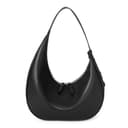
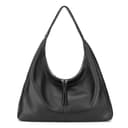
Hobo, bucket, shoulder bag: the distinction drawn properly
These three words are used interchangeably by sellers and they describe three different bags with three different failure modes.
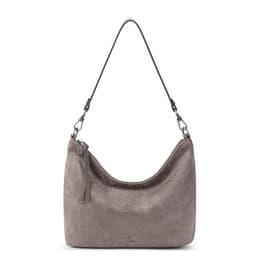
A hobo is a crescent with no flat base. It slumps lengthwise and the contents settle into the curve, which is comfortable against the body and hopeless for anything rigid. A buckethas a round or oval base and keeps its volume at the bottom, so it stands up when full and nothing flat goes in it — the shape and its three built-in compromises are covered on our leather bucket bag roundup. A shoulder bagin the working sense is usually structured, flat-bottomed and built to stand on an office floor, which is a different specification entirely — those are on our leather shoulder bags for work page, and none of the picks there overlap with the picks here.
The short version: if you want comfort on one shoulder with a soft load, a hobo. If you want a bag that stands up and takes a laptop, you are in the wrong shape, and our leather laptop tote roundup is the right page. If you are deciding between carry styles rather than shapes, the tote versus shoulder bag comparison settles it on weight path.
How we chose these five
Criteria in the order applied. The first two were pass/fail; the rest set the ranking.
- Real leather, stated.The listing must claim hide, not “vegan leather,” PU or “leather look.” The slouchy crescent is heavily represented in coated synthetics because a soft synthetic drapes cheaply, so a great deal of what ranks for this query is not leather at all. Our guide to spotting fake leather on a listing is the short version of how to check.
- Currently purchasable.Every one of the five returned “In Stock” with a live price on the day this page was written. Several otherwise attractive hobos were dropped for coming back “only a few left” instead.
- A stated closure beats an implied one.This is the top of the ranking, and it is the criterion this category fails most often. A zip pull visible in a photograph did not count — on a hobo it is just as often an outside pocket. The listing had to say it.
- A carry you can verify. A published strap drop first, then a stated number of straps, then a stated carry position. On a bag worn on one shoulder, drop is the figure that decides whether it sits under your arm or bangs on your hip.
- One grade claim, not two.A listing that says “full-grain” and means it ranks above one that says “genuine leather” in the title and “full grain” in the body copy. We record the lower claim when they disagree, and we say so on the card.
We did not weight star ratings or colorways. We own none of these bags and have run no wear tests — our methodology sets out exactly what we do and do not claim, and a score from us would dress spec-reading up as testing.
The closure problem, and why it matters more on this shape
On a structured tote an open top is an inconvenience. On a hobo it is a design consequence. The crescent cut means the opening is the longest edge of the bag, and it gapes when the bag slumps — which is precisely when you are wearing it. The contents then settle into the curve, so a bag that looks closed from above is open along its whole length from the side.
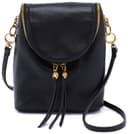
Two of our five address it. The Sak states a zipper, and the HOBO Fern Duo states a zippered top. The other three say nothing about the top at all, and we have not described any of them as secure. If you want the slouch and you also want security, that is the trade to understand before you buy rather than after: on public transport or in a crowd, an open crescent is as easy to reach into as the drawstring buckets we wrote about, and the positioning advice in our guide to wearing a crossbody bag is the only real mitigation.
There is a second, quieter cost. An open bag is a wet bag in weather, and a wet lining takes far longer to dry than a wet exterior panel. Our page on what to do when a leather bag gets wet is worth reading before the first downpour, not after it.
Will a laptop fit in a hobo bag? No — and here is the reason
It is one of the most common searches attached to this shape, so it deserves a direct answer. None of the five bags here states a laptop size, and the shape itself is the reason rather than the price point.
A laptop needs a long flat plane to sit against and a bag that will not flex across it. A crescent has neither: there is no flat panel anywhere in the construction, and the body is designed to bend lengthwise as you walk. A machine carried in a hobo is a machine being slowly flexed, with a leather wall and nothing else between it and the corner of a doorway.
If you want the soft look and the laptop, there are two honest routes. A soft tote with a stated laptop sleeve — see our laptop tote picks — or a soft bag plus a padded insert that provides the flat plane the bag lacks, which is what our roundup of bag organizer inserts is about: one of those inserts states a 13-inch sleeve in water-resistant fabric, and it is the only way we would put a machine in an unstructured bag.
The organization problem, and the cheap fix
Here is the complaint people actually have after owning a hobo for a month. Not that it is insecure, and not that it is heavy — that they cannot find anything in it. A crescent with no internal walls concentrates everything into the lowest point of the curve, under everything else.
Only two of our five state interior pockets at all, and neither publishes a count. The practical answer is the same one that rescues a bucket bag: a fabric insert that divides the well and lifts small items up to where you can see them. A felt one will also hold the bag’s shape, which on a slouch is either welcome or exactly what you were trying to avoid, depending on why you bought it.
The weight that lands on one shoulder
A hobo is a single-strap bag by design, and a single strap means the entire load sits on one shoulder and one side of your neck. Leather is heavy before you put anything in it — our page on how heavy a leather bag really is has the published figures from the bags we track — and none of the five listings here publishes a weight, including the one that calls itself lightweight.
Two things follow. If you already get shoulder or neck ache from a bag, read our page on bag shoulder pain and prefer a pick that states a second strap, so you can move the load across your body on a long day. Two of our five do. And if you are buying the large slouchy end of the category, be honest about how full it will actually be: a big soft bag invites you to fill it, and nothing about the crescent shape distributes that load.
Grade claims on a bag that has to drape
Three of our five state two grades at once — “genuine leather” in the title, “full grain” in the body copy. Our rule is fixed and the spec table shows it: record the lower claim, never the flattering one. “Genuine leather” is not a compliment but an industry term for real hide of unspecified grade, and it is routinely used for split hide with a finish sprayed on top. The difference is explained in our guides to what “genuine leather” actually means and full-grain versus top-grain.
On this shape the grade matters in a specific way beyond durability, and it is the same reason it matters on a bucket bag: the hobo depends on drape. A stiff, heavily corrected and coated hide will not slump gracefully, and a sprayed finish on a panel that folds in the same place every day is where coatings crack first. A soft full-grain or a genuinely supple top-grain is the right material here; a plasticky corrected split will look like a crescent and behave like a box. What that softness costs you in the long run is shape — a soft bag relaxes permanently, which our patina guide covers alongside the color change people actually want.
Caring for a slouch bag
Two points specific to this shape rather than general leather advice.
First, the fold lines. A crescent creases in the same two or three places every day, because the bag collapses the same way each time it is set down. Those creases are where a finish will eventually craze, and conditioning them on schedule is what keeps the fibre flexible enough to take the fold. Our guide to conditioning a leather bag covers the routine, and our review of the Lexol conditioner covers the light-coat philosophy that suits a soft, finished hide better than an oil-rich soak.
Second, storage. A soft crescent with nothing in it folds flat and sets a crease across the body with no internal frame to push it back out. Store it stuffed and upright, never in a sealed plastic bag — our storage guide covers what to stuff it with and the mistake that causes most off-season damage.
Who should buy a hobo bag, honestly
Buy oneif your daily carry is soft and modest — phone, wallet, keys, a pouch, a book — if you want the most comfortable single-shoulder bag there is, and if you either do not need the bag to close or you buy one of the two here that states a zip.
Do not buy one if you carry a laptop or anything rigid, if you need to get into the bag repeatedly while standing, or if you want the bag to stand up and look tidy on a desk. In those cases a structured tote is simply the right tool: our zip-top tote picks and best leather work bags are both built for exactly the day a hobo is bad at.