Where the money reaches at this ceiling, and where it stops
This is the part that decides whether the page is useful to you, so it comes before the advice.
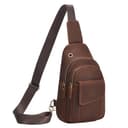
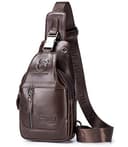
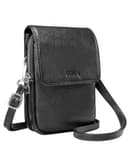
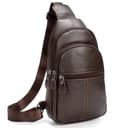
Strong under $50: slings, chest bags and compact crossbodies. The shape uses the least hide of anything we cover, which is why the only full-grain bag on this page is one, and why the cheapest real-leather bag in our whole registry is one too. Our crossbody picks under $50 go deeper on this shape alone, including what the last few dollars buys.
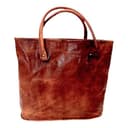
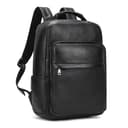
Possible under $50:a soft tote, a thin leather laptop bag and — just — a laptop backpack. All three exist here in real hide, and all three come with a specific compromise: the tote is unstructured, the laptop bag is a slot rather than a protected sleeve, and the backpack lands within a dollar of the ceiling.
Not realistic under $50:briefcases, structured work totes, full-grain in anything large, and any bag with a frame. If that is what you need, the honest answer is to double the budget rather than hunt harder — our under-$100 picks are the next rung and they change the list almost completely.
What actually gets cut at this price
Budget bags are not worse versions of expensive bags. They are bags where specific things have been economized, and knowing which lets you decide whether you mind.
Published information, first and worst
The thing this bracket withholds most is not quality, it is disclosure. Of the seven bags on this page, four publish neither a body dimension nor a weight. The other three publish both — the Firu tote, the Yevabo backpack and the BULLCAPTAIN sling, which goes furthest by also stating its strap range and the tablet size it takes. When a listing will not tell you how big a bag is, that is a cost, and we record it as “Not published” rather than guess.
The leather grade
Under $50 you are almost always buying genuine leather— real hide, mid-tier, often a corrected or split layer with a finish on top. It looks and smells like leather and it holds up to daily use. What it generally will not do is develop the deep patina of full-grain. Our leather types guide sets out where each grade sits, and what “genuine leather” is allowed to mean is the single most useful thing to read before buying in this band.
Hardware, lining and structure
Zips are plated and lighter gauge, and they are where budget bags most often fail first — well before the leather does. Linings are polyester rather than cotton. And nothing here has a frame, so a tote slouches, a sling flattens and a laptop sits in a slot rather than a padded sleeve. None of that is hidden on these listings; it is simply what fifty dollars buys.
The seller relationship
Almost everything at this price comes from a marketplace maker rather than an established brand. That is not a quality judgment — several make genuinely good bags — but it does mean your recourse is the marketplace return policy rather than a company with a repair department. For what a brand with published terms looks like at the other end of the range, see our Portland Leather Goods comparison.
What does not get cut
Fit, capacity and design. A well-shaped genuine-leather sling carries exactly as usefully as an expensive one, and a soft tote holds the same load as a soft tote at triple the money. You are trading longevity, finish and disclosure — not function. And leather care products cost the same whatever bag you own, which is why one is on this list.
The traps specific to this band
Three listing patterns account for almost every disappointed review under $50.
“Vegan leather” and “leather look.” Both mean a coated synthetic, and both are legitimate descriptions as long as the listing is clear. US rules require material that imitates hide to be disclosed as such, so the information is normally there — usually one line below the word “leather” in the title. Our leather versus vegan leather comparison covers what you actually give up either way.
A title and a bullet list that disagree. Several bags in this bracket claim one grade in the title and another in the bullets. Our rule is to record the lessflattering claim, every time — so a bag whose title says full-grain and whose bullets say genuine leather is recorded as genuine leather, and you will see that on the cards above.
A size that does not match the price. Hide is the dominant cost in a leather bag, so a big bag that costs the same as a small one is telling you something about the material. Our guide to spotting fake leather covers the physical checks for when it arrives.
Making a cheap leather bag last
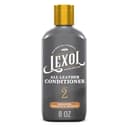
A budget bag that is looked after will outlast an expensive one that is not, and the care routine costs less than the cheapest bag on this page. Keep it off wet ground, never store it loaded or sealed in plastic, and condition it once or twice a year — the conditioner on this list is a thin liquid you apply a little at a time, which is the right approach on a corrected or finished hide. Our conditioning guide covers the ten-minute version, and the starter kit is what to own if you want to stop thinking about it.
One more thing that punches above its price: if the bag you buy here is a plain single-compartment tote, a divided interior is the feature you will miss first — and an organizer insert adds one for less than the difference between any two bags on this page.