The Patina Bench

Best Bag Organizer Inserts for Leather Bags

An insert is the cheapest fix for the thing people actually dislike about a leather bag: one soft cavity, and everything at the bottom of it. The problem is that this category is sized for Louis Vuitton, not for your tote.

By Stephen V.Last updated How we pick

Best overall: most pockets, not cut for one bag

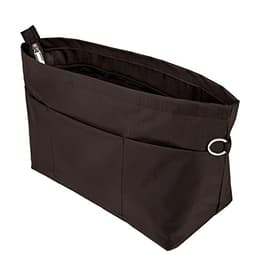
Time Wing Handbag Tote Organizer Insert (Medium, 11 pockets)

Time Wing Handbag Tote Organizer Insert (Medium, 11 pockets)

$17.99 · View on Amazon

$18.995% off

Price as of November 13, 2026. #ad How we’re funded

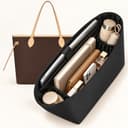
Eleven pockets, stated in the listing, plus a zip so the insert closes and comes out as one pouch when you change bags. That combination is rarer than it sounds: the inserts with the highest pocket counts are usually the ones cut to the exact footprint of a named designer bag, and the generic ones usually stop at four or five compartments.

What this listing will not tell you is how big it is. “Medium” is a seller’s size label, not a dimension, and the listing names no fabric either — so you are buying a published pocket count and a published closure, and nothing else. Measure the base of your bag before you order, because that is the number this whole category refuses to print.

Read the full write-up

A bag organizer insert is a fabric liner with pockets that drops inside a handbag and divides the single open well into compartments. People buy them for three different reasons, and it is worth knowing which one is yours before you spend anything: to stop small things vanishing at the bottom, to hold the shape of a bag that has started to slump, or to move an entire daily carry between bags in one movement.

On a leather bag there is a fourth reason that nobody advertises. The lining is the part of a leather bag that fails first — a pen leaks, a water bottle sweats, keys abrade the same corner for two years — and a lining is far harder to repair than an exterior panel. An insert takes all of that wear instead.

Here is the honest problem with shopping this category, and it shapes every pick below. The insert market is built around designer bags. Search it and you will be offered inserts for the Louis Vuitton Neverfull MM, the Coach City 33, the Longchamp Le Pliage and the Speedy 30, because those bags sell in the millions with identical dimensions. Your leather tote does not. So the only two things that reliably predict fit are a published measurement and a published size range — and of the five inserts below, exactly onepublishes its dimensions. Prices are read live, with the “as of” date above the table.

How this is funded:we earn a commission if you buy through our links, at no extra cost to you. It never changes which product we recommend, and we’ll tell you when we’d skip one. Full disclosure.

Quick picks

Ranked on leather grade, construction, capacity and value. Select a row to jump to the full write-up. We have not wear-tested these bags — here is exactly what we do instead.

Specs are what each listing itself publishes, read on October 31, 2026; anything a listing does not state reads “Not published” rather than a guess. Prices are live as of November 13, 2026.

#ProductPockets statedSize publishedBest forPrice
1
Time Wing Handbag Tote Organizer Insert (Medium, 11 pockets)

Time Wing Handbag Tote Organizer Insert (Medium, 11 pockets)

The most pockets of any insert here that is not cut to fit one named designer bag: eleven, stated in the listing, plus a zip so the whole unit closes and lifts out as a pouch when you switch bags. What the listing does not give you is a measurement — “Medium” is a seller's size label, not a dimension, so this is still a bag you have to measure before you buy.

11 pockets statedNot publishedBest overall
$17.99 · View on Amazon

$18.995% off

Price as of November 13, 2026. #ad How we’re funded

2
looptop Tote Organizer Insert with 13-Inch Laptop Sleeve

looptop Tote Organizer Insert with 13-Inch Laptop Sleeve

The only insert of our five that states a laptop sleeve and a size for it, which is the one feature that changes what a soft leather tote can be used for. It also states water-resistant fabric and structured support — a layer between a damp machine and a leather lining, and a frame for a bag that will not stand up. The catch is that it is cut for the Louis Vuitton Neverfull MM, so fit anywhere else is a measuring job.

Multiple pockets stated; no count publishedNot publishedBest for a work tote
$37.99 · View on Amazon

$39.995% off

Price as of November 13, 2026. #ad How we’re funded

3
Portland Leather Goods Canvas Tote Organizer (Small)

Portland Leather Goods Canvas Tote Organizer (Small)

The insert from a bag maker rather than an insert factory, and the only one here that publishes both of its pocket counts: three on the outside, five on the inside. Canvas is stated, which matters against a leather lining — a soft woven fabric will not scuff or abrade a finished interior the way a stiff synthetic edge can. It states no zip and no measurements, so it organizes a bag rather than closing like a pouch.

5 interior + 3 exterior pockets statedNot publishedBest from a bag maker
$22.40 · View on Amazon

$28.0020% off

Price as of November 13, 2026. #ad How we’re funded

4
ZTUJO Felt Purse Organizer Insert with Metal Zipper (Medium)

ZTUJO Felt Purse Organizer Insert with Metal Zipper (Medium)

The cheapest way to find out whether you actually want an insert, and the one with the best chance of fitting a bag its maker has never heard of: the listing offers seven sizes. Felt is the material that does the second job people buy an insert for — it has enough body to hold the shape of a bag that has started to slump, which a soft woven insert cannot do.

Not publishedNot publishedBest size range
$9.97 · View on Amazon

Price as of November 13, 2026. #ad How we’re funded

5
uxcell Felt Purse Organizer Insert (8 x 4 x 5.5 in)

uxcell Felt Purse Organizer Insert (8 x 4 x 5.5 in)

The only insert on this page that publishes its measurements — 8 by 4 by 5.5 inches — which is the single most useful thing an insert listing can do and the reason it is here. Those figures also tell you what it is not: eight inches long is a crossbody or satchel insert, not a tote insert. It is the one pick you can check against your own bag before you spend anything.

Multiple compartments stated; no count published8 x 4 x 5.5 inBest for a small bag
$9.99 · View on Amazon

Price as of November 13, 2026. #ad How we’re funded

The picks in full

#1Best overall

Time Wing Handbag Tote Organizer Insert (Medium, 11 pockets)

The most pockets of any insert here that is not cut to fit one named designer bag: eleven, stated in the listing, plus a zip so the whole unit closes and lifts out as a pouch when you switch bags. What the listing does not give you is a measurement — “Medium” is a seller's size label, not a dimension, so this is still a bag you have to measure before you buy.

Strengths

  • Eleven pockets stated — the highest published count of our five
  • Zip closure stated, so the insert shuts and can be carried out as a unit
  • Listed by size rather than by a designer bag model, so it is not cut for one specific tote

Trade-offs

  • No dimensions published: “Medium” tells you nothing about whether it fits your bag
  • The listing names no fabric at all, so whether it is felt, canvas or nylon is unverified
  • A divider that holds its own shape takes usable volume out of a soft bag
  • No stated support claim, so it is not a fix for a tote that has gone saggy
TypeNot published
FormBag insert — zip closure, 11 pockets stated
SizeNot published
Best forEveryday tote organization, Switching bags quickly, Deep bags where things sink

Construction note. The listing publishes a pocket count and a zip but names no fabric and no measurements. “Medium” is the seller's own size label, so the dimensions row stays Not published rather than being read off a photograph.

Specs read from the product listing, on October 31, 2026. “Not published” means the brand does not state that figure.

#2Best for a work tote

looptop Tote Organizer Insert with 13-Inch Laptop Sleeve

The only insert of our five that states a laptop sleeve and a size for it, which is the one feature that changes what a soft leather tote can be used for. It also states water-resistant fabric and structured support — a layer between a damp machine and a leather lining, and a frame for a bag that will not stand up. The catch is that it is cut for the Louis Vuitton Neverfull MM, so fit anywhere else is a measuring job.

Strengths

  • States a 13-inch laptop sleeve — a published fit rather than “fits most”
  • Water-resistant fabric stated, which is the layer between a wet machine and a leather lining
  • States structured support, so it also holds the shape of a slumping tote
  • Multi-pocket build stated alongside the sleeve

Trade-offs

  • Cut for the LV Neverfull MM, so fit in any other tote has to be checked by measuring
  • 13 inches is the stated ceiling — a 15-inch machine is out
  • Pocket count is not published, only “multi-pocket”
  • An insert plus a laptop inside a leather tote is a heavy daily carry
TypeWater-resistant fabric; type not named
FormBag insert — 13-inch laptop sleeve, structured support
SizeNot published
Best forWork totes, Carrying a 13-inch laptop in a soft bag, Wet-weather commutes

Construction note. The listing states a 13-inch laptop sleeve, structured support, water-resistant fabric and a fit for the LV Neverfull MM. It names no fabric type, publishes no pocket count and publishes no measurements of its own.

Specs read from the product listing, on October 31, 2026. “Not published” means the brand does not state that figure.

#3Best from a bag maker

Portland Leather Goods Canvas Tote Organizer (Small)

The insert from a bag maker rather than an insert factory, and the only one here that publishes both of its pocket counts: three on the outside, five on the inside. Canvas is stated, which matters against a leather lining — a soft woven fabric will not scuff or abrade a finished interior the way a stiff synthetic edge can. It states no zip and no measurements, so it organizes a bag rather than closing like a pouch.

Strengths

  • Publishes both pocket counts: three exterior and five interior
  • Canvas stated — a soft fabric against a leather lining
  • Made by a leather bag brand we have reviewed, so there is a company behind it
  • Exterior pockets mean the things you reach for most do not go inside the insert at all

Trade-offs

  • No zip stated, so it does not close or lift out as a sealed unit
  • No dimensions published, and “Small” is a brand size label rather than a measurement
  • Canvas carries no stiffening claim, so it will not re-shape a tote that has gone slack
  • Eight pockets in total, which is fewer than our top pick states
TypeCanvas
FormBag insert — canvas, 8 pockets stated across inside and outside
SizeNot published
Best forLeather totes, Protecting a finished lining, Everyday organization

Construction note. The listing names canvas and publishes both pocket counts — three exterior, five interior — and states it is for totes and handbags. It publishes no measurements and states no closure, and “Small” is the brand's own size label.

Specs read from the product listing, on October 31, 2026. “Not published” means the brand does not state that figure.

#4Best size range

ZTUJO Felt Purse Organizer Insert with Metal Zipper (Medium)

The cheapest way to find out whether you actually want an insert, and the one with the best chance of fitting a bag its maker has never heard of: the listing offers seven sizes. Felt is the material that does the second job people buy an insert for — it has enough body to hold the shape of a bag that has started to slump, which a soft woven insert cannot do.

Strengths

  • Seven sizes offered — the only real answer for a bag no insert maker has measured
  • Felt has enough body to hold the shape of a slumping bag, not just divide it
  • Metal zipper stated rather than an unnamed closure
  • The lowest-cost pick of our five by a wide margin

Trade-offs

  • Sized in the listing against Louis Vuitton Speedy and Neverfull bags, not against a generic tote
  • Felt is bulky: in a bag that was already tight it costs you more room than it organizes
  • No dimensions in the listing title for this size — the right size has to be read off the seller's chart
  • Pocket count is not published
TypeFelt
FormBag insert — felt, metal zip, offered in 7 sizes
SizeNot published
Best forHolding a bag's shape, Switching bags, Trying an insert cheaply

Construction note. The listing names felt, a metal zipper and seven sizes, and describes the product as a handbag and tote shaper. It publishes no pocket count, and the size references in the title are designer bag models rather than measurements.

Specs read from the product listing, on October 31, 2026. “Not published” means the brand does not state that figure.

#5Best for a small bag

uxcell Felt Purse Organizer Insert (8 x 4 x 5.5 in)

The only insert on this page that publishes its measurements — 8 by 4 by 5.5 inches — which is the single most useful thing an insert listing can do and the reason it is here. Those figures also tell you what it is not: eight inches long is a crossbody or satchel insert, not a tote insert. It is the one pick you can check against your own bag before you spend anything.

Strengths

  • Publishes its dimensions: 8 x 4 x 5.5 in — the only one of our five that does
  • Named for domed satchels, the awkward shape most inserts ignore
  • Felt body holds the shape of a soft or collapsing bag
  • Metal zipper stated

Trade-offs

  • Eight inches long is small — this is not an insert for a work tote
  • Pocket count not published; the listing says only “multiple compartments”
  • Felt inside a small bag leaves very little room for anything else
  • Colorways vary by listing; the row above records the one we read
TypeFelt
FormBag insert — felt, metal zip, dimensions published
SizeNot published
Best forCrossbody bags, Domed satchels, Small handbags

Construction note. The listing publishes 8 x 4 x 5.5 in, names felt and a metal zipper, and names domed satchels, totes and handbags as the intended bags. It states multiple compartments without giving a count.

Specs read from the product listing, on October 31, 2026. “Not published” means the brand does not state that figure.

Measure your bag first. It takes one minute and it decides everything

An insert that is too long will not sit flat — it bows upward in the middle and you lose the bottom corners of the bag entirely. An insert that is too short slides around and tips over. Neither is a product fault; it is a sizing failure, and it is the single most common reason these get returned.

Measure the base of your bag, not the opening. Most leather totes taper, so the mouth is wider than the floor, and the floor is what the insert has to sit on. You want three numbers: the length and width of the base, and the internal height. Then subtract about half an inch from the length and width so the insert can actually be lowered in without fighting the sides.

Height is the figure people get wrong. An insert noticeably shorter than the bag leaves a dead zone above it where loose items still collect; an insert as tall as the bag makes the opening narrow and stiff. Roughly two-thirds of the internal height is the sweet spot. If you do not know your bag’s internal measurements, our leather bag size guide explains how published external dimensions relate to usable internal space, and the crossbody size guide does the same arithmetic for smaller bags.

Why this whole category is sized for three bags you probably do not own

Read enough of these listings and the same bag names keep appearing in the titles: the Louis Vuitton Neverfull MM, the Coach City 33, the Longchamp Le Pliage, the Speedy 30. It is not snobbery — it is manufacturing arithmetic. Those bags are sold in enormous numbers to identical dimensions, so a maker can cut one pattern and sell it for years. A pattern cut for “leather totes” has no dimensions to cut to.

Two consequences follow, and both are visible in the picks below. The first is that the inserts with the best feature sets — the laptop sleeves, the bottle holders, the eight-plus compartment layouts — tend to be the model-specific ones, because a known footprint is what lets a designer put a padded sleeve in a fixed place. The second is that the generic inserts compete on size range instead: one pattern scaled seven ways, with a size chart doing the work a measurement would.

That gives you a practical rule. If your bag is a common designer tote, buy the insert cut for it and enjoy the better layout. If your bag is a marketplace leather tote, a full-grain satchel or anything handmade, ignore the model names entirely and shop on two numbers only: the insert’s published dimensions, or its position in a published size range. Anything else is a guess dressed up as a fit, and the cheapest way to learn that is a return label.

It is also worth saying what a model-specific insert is not: a reason to buy the designer bag. The leather grade questions that decide whether a bag lasts are the same at every price, and our full-grain versus top-grain guide and explainer on what you pay for in a leather bag are the honest background to that decision.

How we chose these five

Criteria first, in the order they were applied. The first two were pass/fail and the rest set the ranking.

  1. Currently purchasable.Every insert here returned “In Stock” with a live price on the day this page was written. Two otherwise good candidates were dropped at this step for coming back “only a few left” — a roundup built on thin stock goes stale within weeks.
  2. Published facts, not adjectives.A pocket count, a measurement, a size range, a named fabric or a stated laptop size. Every pick publishes at least two of those. “Fits most bags” counts for nothing.
  3. Not locked to one designer bag. Preference to inserts sold by size rather than by the model name of a bag you do not own. Where a pick iscut for a specific bag, we say so on its card and in its cons — it is still useful, but only after measuring.
  4. Kind to a leather lining.Soft woven fabrics — canvas, felt — over stiff synthetics with hard edges. This is the criterion specific to our readers, and it is why one pick ranks above inserts with more pockets.
  5. A closure, where it is offered. An insert with a zip lifts out as a sealed pouch, which is the whole bag-switching use case. Three of our five state one.

What we did not weight: star ratings, and photographs of inserts standing up unsupported in a studio. We own none of these units and have not tested them — see our methodology for what we do and do not claim. Every spec on this page came from the listing itself, read on the date shown above the comparison table.

Felt, canvas or nylon — the choice that matters most

The three materials in this category behave completely differently inside a leather bag, and the right one depends on which of the three problems you are solving.

Felt: structure

Felt is thick and holds its own shape, which makes it the only material here that will genuinely re-shape a bag. If your tote has gone soft and folds in on itself when you set it down, a felt insert pushes the walls back out. The cost is volume: felt walls are several millimeters thick on every side, and in an already-tight bag that is real capacity gone. Two of our five are felt, and both are at the budget end of the category.

Canvas: gentleness and weight

Canvas is soft, light and will not abrade a finished lining. It divides a bag without re-shaping it, which is exactly right for a structured tote that already stands up on its own. Our bag-maker pick is canvas, and it is the one we would put inside an expensive bag without thinking twice.

Nylon: the work-bag material

Nylon is the only material that shows up with padded laptop sleeves and water-resistant claims, because it is thin, slippery and takes a laminated coating. That matters more than it sounds: the one genuinely new capability an insert can add to a soft leather tote is somewhere safe to put a laptop. Our work-tote pick states a 13-inch sleeve and water-resistant fabric, and it is the only pick here that states either.

What an insert does not fix

Three honest limits, because this product gets oversold.

It does not add security.An insert with a zip closes the insert, not the bag. If your bag has an open top, it still has an open top — which is the structural compromise we spelled out on our leather bucket bag roundup. If you want a bag that closes, buy a bag that closes; our zip-top tote picks are the honest answer.

It does not make a bag lighter.It makes it heavier. A leather tote is already one of the heaviest ways to carry a given volume — see how heavy a leather bag really is — and a felt insert plus a laptop on one shoulder is how a comfortable bag becomes a painful one. If your shoulder already complains, read our page on bag shoulder pain before adding anything to the bag.

It does not repair a bag that has already failed. An insert hides a torn lining; it does not mend one. If the damage is to the lining seam, the zip or the strap, those are repairs, and our zipper repair page and strap and handle repair page cover what is fixable at home and what needs a cobbler.

Does an insert actually protect leather?

Indirectly, and worth being precise about. It protects the lining, which is a textile, by absorbing the abrasion and the spills that would otherwise reach it. That is a real benefit, because a worn-through lining is a workshop job on a bag whose exterior still looks new.

What an insert does notprotect is the hide. Leather damage comes from the outside — water, sun, heat, salt and neglect — and none of it is affected by what you put inside the bag. For the actual hide, the three things that matter are a cleaner, a conditioner and a repellent, in that order. Our care starter kit is the short version, and how to store a leather bag is where the insert reappears for a different reason: a stuffed bag keeps its shape in storage, and an insert is a tidier way to stuff it than newspaper.

One more cross-over worth knowing. If you are chasing the organization problem because of the shapeof your bag rather than its size, the shape may be the thing to change. A slouchy crescent and a drawstring bucket both concentrate everything at the bottom by design — our leather hobo bag roundup explains which of those listings even admit to it, and two of the inserts here are the practical fix if you own one already.

Who should buy one, honestly

Buy an insertif you own a soft, single-cavity leather bag you otherwise like, if you switch between two or three bags regularly, or if your bag’s lining is still perfect and you would like to keep it that way. It is one of the few genuinely cheap upgrades in this whole category.

Skip it if your bag is already compartmentalized, if it is tight on volume (an insert will cost you more room than it organizes), or if what you actually want is a bag that closes or a bag that carries a laptop properly. In those cases the insert is a workaround for a bag that is wrong for the job, and our leather laptop tote roundup or best leather work bags will serve you better than a fabric liner.

And if the real problem is that you have too many bags and nowhere to put them, that is a storage question rather than an organization one. The storage guide covers the sealed-plastic mistake that causes most off-season damage.

The other way to solve this is to buy a bag that is already divided, which is harder than it sounds: of the 28 leather totes we list, only six will itemize their interior rather than claiming “multiple compartments.” Our totes with compartments page is those six, in order of how useful the published layout is — and it is honest about the fact that an insert still divides a plain tote more thoroughly than most of them.
Frequently asked questions

How do I know what size organizer insert to buy?

Measure the base of your bag, not the opening — most leather totes taper, and the base is what the insert sits on. Take the base length, the base width and the internal height, then subtract about half an inch from the length and width so the insert can be lowered in. Aim for an insert about two-thirds of the bag's internal height.

Will a purse organizer insert fit a bag it was not made for?

Only if the numbers line up. Most inserts in this category are cut to the footprint of a specific designer bag — the LV Neverfull MM, the Coach City 33, the Longchamp Le Pliage — because those bags have identical dimensions across millions of units. An insert sold by size, or one that publishes its own measurements, is the safer buy for a generic leather tote.

Felt or canvas for a leather bag?

Felt if you want the insert to hold the shape of a bag that has gone soft; canvas if the bag already stands up and you only want it divided. Canvas is lighter and gentler against a finished lining. Felt costs you noticeable internal volume because its walls are thick on every side.

Does an organizer insert protect a leather bag?

It protects the lining, which is the part that usually fails first — it absorbs the abrasion from keys and the damage from a leaking pen or a sweating bottle. It does nothing for the leather itself, because hide damage comes from the outside: water, heat, sun and salt.

Can an insert add a laptop compartment to a leather tote?

Some state one, and that is the single most useful thing an insert can add to a soft bag. One pick here states a 13-inch sleeve in water-resistant fabric. Check the stated size rather than assuming — 13 inches is a common ceiling, and nothing here claims a 15-inch fit.

Will an insert make my bag look bulky?

It will make it fuller and slightly stiffer, which is the point if the bag was slumping and a drawback if you liked the slouch. A felt insert in a soft, unstructured bag changes how the bag hangs; a canvas one barely does.

Is it worth buying an insert for a cheap bag?

Usually not. The lining-protection argument is strongest on a bag worth keeping for years, and the organization argument is strongest on a bag with one big empty cavity. On an inexpensive bag with pockets already, the money is better spent on the care products that keep the leather itself alive.

Sources

Keep reading