What you actually pay the brand for
Three things, ranked by how much they are worth in practice rather than by how loudly they are marketed.
1. The guarantee. This is the real one, and it is the thing no marketplace bag on this page can answer. A written lifetime guarantee against manufacturing defects in leather, hardware and stitching is the difference between a failed strap anchor in year three being a conversation and being a loss. Note what it covers and what it does not: manufacturing defects, not wear, and the hardware cover is tiered by how old the bag is. Our guide to leather bag warranties explains why the word “lifetime” has to be read carefully even when it is published honestly.
2. Knowing which grade you are getting.Worth a lot, and matchable — by buying a listing that names it. Four of the six picks here state full-grain or top-grain outright, and we record the lower claim wherever a listing contradicts itself.
3. Consistency between units. Worth less than you would think, because Portland itself discloses that batch variation is normal. Full-grain is an unsealed surface and it varies. Any brand selling it honestly has to say this, and a marketplace seller who promises uniformity in full-grain is making a claim they cannot keep.
What you do not pay the brand for
A better grade of leather.Full-grain is full-grain. The top layer of the hide with its grain intact is a definition, not a tier of quality within itself, and a $90 full-grain tote and a $200 one are made from the same category of material. What differs is thickness, tannage, finishing and how carefully the panels are cut — real differences, but not the grade. Our full-grain explainer sets out what the grade does and does not promise.
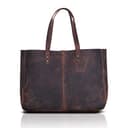
Patina.Any unsealed full-grain or waxed hide will darken and record handling. The befen waxed tote on this list does it as visibly as anything at three times the price, because waxed pull-up leather lightens wherever pressure moves the wax — that is a mechanism, not a brand feature.
How we chose these six
Each pick had to name its gradeand be real hide, and had to undercut the comparable Portland tote on price. We ranked on grade first, then on published disclosure — three of the six publish body dimensions and three do not, which we record rather than estimate — then on what the bag does.
Two notes on honesty in the table. The KomalC distressed tote’s own listing gives a weight of 0.65 lb for an 18.5-inch buffalo-leather bag, which cannot be right, so we record its weight as not published rather than repeat it. And the Creative Leather Art tote does not state one consistent grade, so it is recorded as genuine leather even though it is a handmade bag that would flatter itself with a better word.
Where a Portland bag is still the right buy
We list two of them, so this is not a page arguing you should never buy one. Buy Portland if the guarantee is the reason — if you want one bag for a decade and want a route to repair rather than replacement. Buy Portland if you want a named colourway you can re-order, because a marketplace listing can disappear and frequently does. And buy Portland if you want the bag to come from a brand whose returns terms are published before you order rather than discovered after.
Their large zipper tote appears on our zip-top tote roundup and our totes under $200 page on exactly those grounds, and our full brand review works through the whole range.
Which to buy
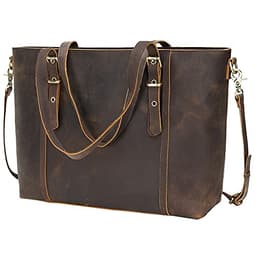
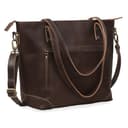
The TIDING women’s tote is the default: the same grade, structured, at roughly half the money. Take the TIDING work tote if the bag is for a full working day, and the befen waxed tote if the visible ageing is the part of the Portland look you actually wanted.
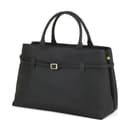
Take the Creative Leather Art tote if you want a handmade bag that closes and can be worn crossbody, the KomalC if you haul a lot in one compartment, and the DONNAIN if you are carrying less than you think and would rather keep the difference. If a guarantee is the deciding factor, none of these six is your bag — buy the brand.