The one listing that tells you anything
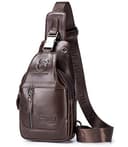
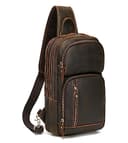
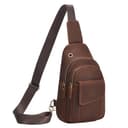
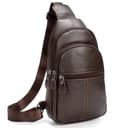
The BULLCAPTAIN is the only bag on this page whose listing publishes real numbers, and they are worth reading closely because they also tell you what a sling is: 11.8 x 6.2 x 1.9 inches, 0.91 lb empty, a strap adjustable from 27.5 to 51 inches, and a stated ceiling of a 7.9-inch iPad mini.
Read the depth figure again. Under two inches. That is the number that decides whether this shape works for you, and no photograph conveys it. A sling is a flat bag. A phone, a wallet, keys, a charger and a small notebook fill it; a water bottle does not fit and a full-size tablet does not either. Every other listing on this page declines to publish a depth, and there is no reason to think any of them is dramatically deeper.
The strap range matters just as much. A chest carry needs a short drop and a cross-body shoulder carry needs a long one, and a strap sold at one fixed length cannot do both. Every pick here states an adjustable strap; only one states the range.
How we ranked them
Grade as the listing states it, never read upward. Four of the six state full-grain and we take that claim at face value because the FTC holds sellers to material claims — but we have not handled the bags, so it remains the seller’s claim and we say so on every card.
Then disclosure, which is why a genuine-leather bag ranks third ahead of two full-grain ones. A listing that publishes a size, a weight and a strap range is a listing you can buy from without guessing, and in this shape that is worth more than one step of grade.
Then what it carries, from phone-first up to a 12.9-inch tablet. We did not rank on review volume: on a marketplace that mostly measures how long a listing has been live and how hard it has been promoted.
Full-grain in a sling: worth it, for one specific reason
Not durability. A small bag carries almost no structural load, so the stretching that kills a cheap tote at the strap anchors is not the failure mode here. The argument for full-grain in a sling is contact: this is the bag shape that spends its whole life pressed against a body, taking hand oil at the zip and friction at the strap. Full-grain keeps the hide’s intact outer surface, so that contact darkens it. A corrected or coated hide takes the same contact and eventually crazes along the flex lines instead.
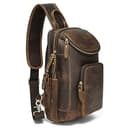
That is why LANNSYNE’s vintage sling is the pick for patina and why the SUIKIHUM is worth knowing about: it is the cheapest honest route into full-grain we found in any shape. Our patina guide covers what actually causes it, and our full-grain explainer sets out what the grade does and does not promise.
Sling, crossbody or chest bag?
People use the three words interchangeably and sellers encourage it, but there is a real distinction and it changes what you should buy.
A sling is worn tight and high on one strap and swings to the front. A crossbody hangs lower on a thinner strap and stays at the hip; it is usually roomier and it reads dressier. A chest bagis a sling worn deliberately on the front of the torso for travel, which is what the Le’aokuu chest sling in our large crossbody roundup is for. Our sling versus crossbody comparison decides between the first two properly.
Which to buy
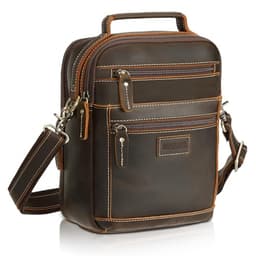
The Polare is the default: full-grain, Italian, and the only shape here that does not look casual. Take the LANNSYNE vintage sling if you want the finish to age visibly, and the larger LANNSYNE if a 12.9-inch tablet is part of your daily carry — almost no leather sling states that fit, and it is the reason that bag exists.
Take the BULLCAPTAIN if you would rather know exactly what you are getting than have one grade step up, the SUIKIHUM to try full-grain cheaply, and the molshine if the budget is the whole decision. If any of these turns out too small — which is the usual outcome — the next size up is on our crossbody under $100 page.