What the second hundred dollars actually buys
Three things, in the order you will notice them.
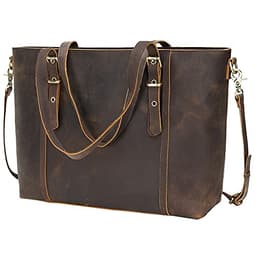
Panel stiffness. A soft tote and a structured tote can be cut from the same hide at different thicknesses, and thickness is most of what decides whether a bag stands. Below $100 the economical choice is thinner leather, because leather is priced by the square foot and a tote is one of the most hide-hungry shapes there is. Above it, the TIDING and the Portland both hold their walls.
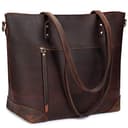
A closure. Three of the six picks here state a zip or a top-zip panel. In the bracket below, that number is usually one. If you have ever put a laptop in an open tote and then got on a bus, you already know why this matters more than another inch of width. Our zip-top tote roundup is the page that ranks on that axis alone.
Somebody to complain to. This is the only bracket on this site where a brand with a published guarantee is genuinely affordable. The Portland Leather Goods tote at the top of this range comes from a brand that publishes a lifetime guarantee against manufacturing defects in leather, hardware and stitching, with its hardware cover tiered by age. No marketplace seller here publishes anything comparable, which is a real part of what the extra money is for.
How we ranked them
Grade as the listing states it, never upgraded — where a listing claims two grades in different places we record the lower one. Then structure, because that is what changes in this bracket. Then closure. Then published measurements, which are rarer than you would expect: of the six picks here, three publish body dimensions and three do not, and a bag that will not tell you its size is a bag you are buying on a photograph.
We deliberately did not rank by review volume. On a marketplace, review count mostly measures how long a listing has been live and how hard it has been promoted. It tells you nothing about the leather.
Why the budget pick is on a $200 page
Because the honest answer to what you should spend is sometimes less. The DONNAIN satchel tote is full-grain, it is the cheapest bag on this list by a wide margin, and for a lighter daily carry it does the job the expensive bags do. It is smaller than the rest — that is the trade, and it is the reason the price works. If your carry is a notebook, a wallet and a water bottle rather than a laptop and a day of paperwork, buy it and keep the difference.
What it will not do is hold a full work load or stand beside a desk. That is what the TIDING and the S-ZONE are for.
The soft option, deliberately included
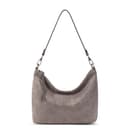
The Sak Jasmine hobo is the one pick here that does not try to stand up, and it is on the list because structure is a preference rather than an upgrade. A slouchy bag is more comfortable against the body, easier to get into one-handed and far more forgiving when it is nearly empty. What it cannot do is protect anything flat. If that is the trade you want, our hobo bag roundup works through the whole shape properly.
Which to buy
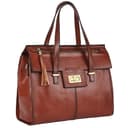
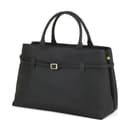
The TIDING is the default: full-grain, structured, and the cheapest route into both of those at once. Take the Portland instead if a written guarantee and a brand that names its own grades is worth the top of this bracket to you, and the S-ZONE if the bag is going to work every day and needs to zip shut over a laptop.
Take the Banuce if the bag has to look dressy rather than practical, the Sak if you want drape rather than structure, and the DONNAIN if you are carrying less than you think you are. If every number here is above what you want to spend, the bracket below is covered in full on our totes under $100 page.