What the count actually tells you
Three numbers from our own registry, because they change how you should read every listing in this category.
24 of 85 state full-grain.That is a higher share than most people expect, and it is not evidence that the category is honest — it is evidence that the phrase sells. A claim costs nothing to print. What separates the 24 is whether anything else on the listing is specific too.
Six of the 24 publish a body dimension. Six. The grade is the one thing these listings will commit to, and the measurement you need in order to know whether the bag is the size you think it is usually is not there. Our size guide exists because of exactly this gap.
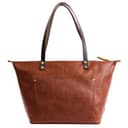
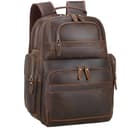
Two of the 24 publish a weight.Both are over 3.3 lb empty — the Portland large zipper tote at 3.35 lb and a hair-on cowhide backpack at 3.31 lb. That is the single most useful thing on this page if you are about to buy your first full-grain bag, because full-grain is thick by definition and thick hide is heavy. Twenty-two listings decline to tell you that, and our guide to bag weight puts real numbers against what that feels like on a shoulder.
Why the brand names will not name the grade
It reads at first like the brands are hiding something. The likelier explanation is simpler, and it matters for how you shop.
A marketplace seller has one lever for standing out in a grid of near-identical bags: the specification line. “Full-grain” is the strongest word available, so it gets used. A department-store brand is not competing on the spec line at all — it is competing on the name, the store, the returns desk and the finish consistency, and “Leather” is enough for all four. Neither behavior tells you the hide is better. It tells you what each seller thinks you are buying.
Which means the honest version of this page cannot be “buy marketplace full-grain, avoid the brands.” The grade claim buys you a better surface over ten years. The brand buys you consistency between units and somewhere to go when a zip fails. Our page on bag warranties is blunt about how little a “lifetime guarantee” usually covers, and our brand comparison weighs the two sides properly.
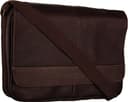
The one listing in our registry that does both is the Kenneth Cole Reaction Risky Business messenger, which states full-grain Colombian leather under a name most people know. It is on this page for that reason as much as for the bag.
The four listings we left out, and why
Four bags we track claim full-grain somewhere on the listing and contradict themselveselsewhere on the same page — the title says full-grain and the material field says genuine leather, or the bullets and the specification block disagree. Our rule is to record the lower claim every time, and that rule is why none of those four appears here.
It is worth knowing which kind of bag this happens to, because the pattern is consistent: two soft hobo totes, an extra-large rucksack and a slim laptop daypack, all of them in the $65–$100 range. That is the band where the word is most valuable and least checked. If you are shopping it, read the structured material field further down the listing rather than the title, and our genuine-leather explainer covers what each phrase is legally allowed to mean.
Where full-grain is worth the money, shape by shape
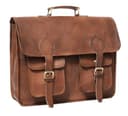
Work bags: yes, clearly. A bag that takes a laptop in and out five days a week wears at the opening, the handle roots and the base corners, and full-grain is the grade that burnishes at those points instead of cracking. Both the briefcase and the backpack here are built for that, and our full-grain briefcase roundup and full-grain backpack roundup go deeper on each shape than one pick can.
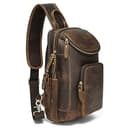
Slings and small crossbodies: yes, and cheaply.Leather is priced by area, so the smallest shapes reach full-grain for the least money — and the cheapest full-grain listings we track are all small bags: a compact satchel, a sling, a bucket bag. A sling is the one shape where the top grade almost never carries a premium. Our full-grain crossbody picks cover that shape in full.
Large totes: it depends on the weight you will accept. This is where full-grain stops being a free upgrade. A big bag in thick hide is heavy before you put anything in it, and the two bags that publish their weight both demonstrate the point. If you carry a loaded tote all day, read our lightweight tote page before this one and our page on bag shoulder pain before either.
Rain bags and gym bags: no.Full-grain is uncoated by definition, which is exactly why it takes a patina — and exactly why it drinks water and shows every drop. A coated or treated bag is the better tool for a wet commute. Our waterproofing page is honest that the best you can do is a repellent, not a seal, and what to do when a bag gets wet is the page to bookmark if you buy one anyway.
What full-grain does not promise
It does not promise good construction. Grade describes the hide, not the stitching, the edge finishing, the hardware or the lining. A full-grain bag with a nylon zip and a glued edge will fail before a top-grain bag built properly. Our hardware guide lists what to check first.
It does not promise thickness. Full-grain can be split thin and still be full-grain. Only six of the 24 listings we track publish a dimension, and not one publishes a hide thickness, so this is a claim nobody in this category is making either way.
It does not promise an even surface. It promises the opposite. Scars, fat wrinkles and variation across a panel are what full-grain looks like, and if a bag arrives perfectly uniform that is worth a second look. Patina is that irregularity developing over years, and distressed leather is a finish that imitates the end of that process on day one.
It does not promise it will last without care.Uncoated hide dries out. The whole routine is a clean and a conditioning once or twice a year, which takes ten minutes — our conditioning guide covers it, and the starter kit is what to own if you would rather stop thinking about it. On a full-grain bag this matters more than on a coated one, because there is no finish doing the job for you.
Which of these to actually buy
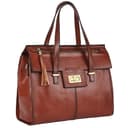
The Portland large zipper tote if you want the bag that tells you the most about itself: it is the only full-grain bag in our registry that names the grade and publishes both a body size and a weight, and it is the one pick here from a brand with a published returns and guarantee process. It is also the heaviest thing on this page, and we would rather you knew that first.
The TIDING backpack for a full-grain bag you will carry on both shoulders with a 15.6-inch laptop in it, and the Leather Room vintage briefcase if you want a full-grain work bag for under a hundred dollars and will accept a soft, frameless case to get there.
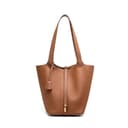
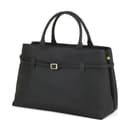
The Kenneth Cole messenger if you want a recognizable name that still names the grade. The LANNSYNE sling for an everyday bag that is small enough to forget you are wearing. The Banuce if the premium Italian finish is the point. The TOGO bucket bagif you want a small full-grain bag that will at least tell you its measurements — which, on this page, is rarer than the grade itself.
And the DONNAIN satchel tote if this is your first full-grain bag. It is the cheapest full-grain listing we track, it publishes neither a dimension nor a weight, and we say both of those things on its card. For a first bag in the grade, spending the least is a defensible way to find out whether you like how uncoated leather behaves before committing more.
If the grade is less important to you than the price, our under-$100 picks cover one real-leather bag per shape at that ceiling, and the everyday bag pillar starts from how often you will carry it rather than from the hide.
One narrower slice of this grade is now its own page. Five of the bags listed across our registry pair the full-grain claim with an origin claim, and our best Italian leather bags roundup takes all five apart — including the awkward finding that no listing in our registry names a tannery, so the grade is the checkable half of the claim and the country is not.