How we ranked a bracket where the grade is not the differentiator
On most of this site, the first sort is grade: a named layer of hide beats “genuine leather,” and real hide beats a coating. That sort barely separates anything here, because sixteen sub-$100 listings claim the top grade. So the order below runs on four things that actually vary.
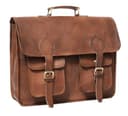
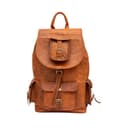
1. What the listing publishes.A number you can check beats a paragraph you cannot. Three of these eight publish an exterior dimension — the Leather Room briefcase (16 x 12 in), the TWARA backpack (20 x 12 x 8 in) and the cuero messenger (18 x 14 x 5 in) — and exactly one publishes a weight (the Yevabo, at 2.6 lb). That single disclosed weight is why the Yevabo ranks where it does despite naming no grade: it is the only bag here you can compare against the pack you already own. Our guide to how heavy a leather bag is explains why that number matters more in leather than in nylon.
2. What it protects. A laptop slot and a padded sleeve are not the same thing. Only the Yevabo states shock-absorbing padding; the RAINSMORE states a laptop compartment; the briefcase, the messengers and the tote are soft-sided, which means the machine takes more of any knock. If you carry a laptop daily, read that line on the card before the grade line.
3. Then the grade, as the listing states it.Six of these eight say full-grain or are full-grain by their own title. Two say only “genuine leather” — the Yevabo and the RAINSMORE — and we print that rather than rounding up. If the distinction is new to you, our full-grain versus top-grain guide and our explainer on what “genuine leather” is allowed to mean are the two to read.
4. Then fit to a named job. Eight bags across five shapes is deliberate: a briefcase, two backpacks, two messengers, a sling and a tote. We did not rank by review count, because on a marketplace review volume mostly measures how long a listing has been live.
The full-grain count, and why it is not too good to be true
Sixteen full-grain bags under $100 sounds like a category-wide misrepresentation. It mostly is not, and it is worth understanding why, because the reason tells you where the corners are cut.
Full-grain only describes which layer of the hideyou are getting — the outer surface, with its grain intact and not sanded off. It says nothing about the quality of that hide: the animal, the tannery, the thickness, the evenness of the dye, or how much of the panel is prime back versus stretchy belly. A tannery working with lower-grade skins and selling thin, loosely-finished panels is still selling full-grain. That is how the price gets to $37.
It also says nothing about the parts that break first. At this price the failure point is almost never the leather — it is the zip, the strap rivet and the D-ring. Not one of these eight listings names its zip brand or its hardware finish, and none describes how the strap is anchored. Our guide to leather bag hardware covers what to look at in the photographs, and our strap and handle repair guide covers what to do when one of them goes, which is a cheaper fix than most people assume.
So treat full-grain at this price as a floor, not a promise. It means the bag will wear and soften rather than flake, which is the thing a coated split cannot do. It does not mean the bag is thick, even, or well assembled. Our page on how a leather patina actually forms sets out what the grade does and does not get you over five years.
The same caution applies to the other word sellers reach for at this price. An origin claim is not a grade claim and not a tannery name — our Italian leather bags page counts the five bags in our registry that make that claim and finds the cheapest of them publishing more than the dearest, which tells you what the word is worth.
Pick by the job, not by the ranking
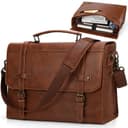
A relaxed office, documents and a 15-inch laptop:the Leather Room briefcase. Full-grain, a published size, a vintage finish that absorbs the first year of scuffs instead of displaying them. It is a soft satchel, not a rigid case — which is exactly why it costs what it does. Our men’s briefcase roundup puts it next to the structured cases above this ceiling.
A 17-inch machine and a bike or a train: the TWARA full-grain backpack. It states the 17-inch fit and publishes its dimensions, and at $60 it undercuts every branded leather pack by a wide margin. The honest caveat is on its card: at this price the hardware is the part we would expect to fail first.
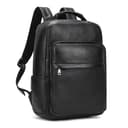
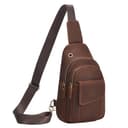
A warm commute with a laptop every single day:the Yevabo. Breathable mesh back padding, a shock-absorbing sleeve for a 15.6-inch machine, a published 2.6 lb and a published body size. It says only “genuine leather,” it is black-only and it has no character to develop — and for a daily tool bag that may be the right trade. Our leather backpacks under $100 page compares it against the rest of the bracket in that one shape.
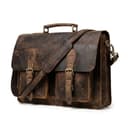
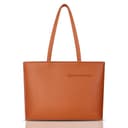
A lot of volume, loosely packed: the cuero 18-inch messenger for full-grain and a flap you can get into one-handed, or the IRAMY tote if the load is gym kit and a laptop rather than files. Both are soft; neither protects a machine properly. The men’s leather tote roundup covers the tote shape without the price ceiling.
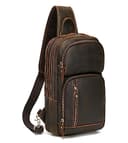
Phone, wallet, keys and a tablet:the LANNSYNE full-grain sling if the tablet is a 12.9-inch iPad Pro — almost no leather sling states a fit that large. The SUIKIHUM if it is phone-and-wallet only and you want the cheapest honest route into full-grain. Both are compared against the rest of the shape on our men’s crossbody roundup and our sling bag roundup. If you arrived here after pricing a technical-brand sling, our Bellroy alternatives page is the direct comparison — including the one claim that brand makes which nothing in this bracket does.
The cheapest route to a 17-inch laptop: the RAINSMORE messenger. It names no grade and publishes neither a size nor a weight, which is why it ranks below the TWARA despite being cheaper. It is a reasonable buy if the budget is the constraint and you know what you are getting.
What this ceiling does not get you, stated plainly
A repair channel.This is the biggest gap and the one buyers notice last. Three listings out of the 90 we track state any warranty term, and the longest is two years. Not one of the eight bags on this page is a brand you can send a bag back to in year four. A premium maker with a published multi-year warranty is selling you a relationship as much as a bag, and that is genuinely worth money — our page on what a leather bag warranty actually covers explains the gap between a return window and a repair service, and the FTC’s own warranty guidance below sets out why “lifetime” almost never means what it sounds like.
Structure.Every bag on this page is soft-sided or semi-structured. A rigid, panelled attaché case costs more because it uses several times the hide and has to be built around a frame. If you need a case that stands beside a desk and protects a laptop against a real impact, this is the wrong page — start at our briefcases under $300.
A published weight.One of eight. Leather is heavy per square foot and a big soft bag in thick hide can weigh more empty than a nylon pack weighs loaded. If you have a bad shoulder, the absence of this number is a real problem — our guide to bag shoulder pain is blunt about it.
Consistency between units.Several of these are handmade or small-batch, which is part of the appeal and part of the risk: finish, shade and stitching vary more than a factory bag’s. Buy from a seller with a real returns window and check the bag the day it arrives. Our guide to spotting fake leather lists the physical checks to run in the first five minutes.
Where this page sits
This is the intersection of two pages that already exist here, and it is deliberately narrower than either. Our best leather bags for men pillar picks the best bag per shape at any price, which means several of its answers are three-figure bags. Our best leather bags under $100 pillar holds the ceiling but picks across the whole market, women’s bags included. This page holds both constraints at once, and the overlap with each of them is small: one slug shared with the men’s pillar and none with the under-$100 pillar.
If the ceiling is the part you want to move, the next rung up is our best leather bags under $200 page, where recognizable brands and structured cases start to appear — and where, as that page says in its own copy, three of the eight picks state no grade at all. The ladder is not a quality ladder. It is a disclosure-and-support ladder, and that is the single most useful thing to understand before you spend.