What you are buying when you buy the brand
Three things, and the first is the one people underrate.
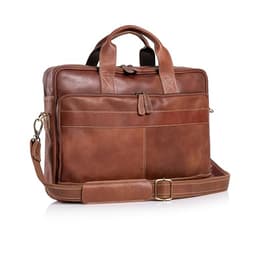
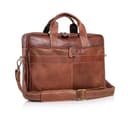
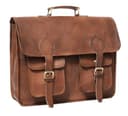
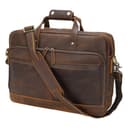
An engineered case rather than a sewn bag.A toploader that stands up empty, holds a laptop off the floor and keeps its mouth open while you load it is a designed object with internal panels and a frame. Most handmade leather satchels — including the two full-grain picks at the top of this page — are soft bags with a flap. They carry the same machine and protect it less. That is the real difference and it has nothing to do with grade.
Consistency between units. Volume manufacture to a specification produces bags that match. Handmade full-grain varies by hide and by batch, which the makers who sell it honestly disclose.
A brand that exists to complain to. We will not quote warranty terms here, because the listings we read publish none and we do not state terms we have not sourced. What is true without a citation is the structural point: a global brand has a support channel and an anonymous marketplace seller does not. Our guide to what a leather bag warranty actually covers explains why the terms have to be read before you buy rather than after.
What you are not buying
A documented grade.“Leather” means real hide with the layer unspecified. It can be full-grain and it can equally be a corrected split with an embossed surface, and the listing does not resolve it. Our full-grain versus top-grain guide sets out why that distinction decides how a bag ages.
Patina. A case built to look the same in year five generally uses a sealed or corrected finish, which is the correct engineering choice for a bag that lives on airport floors and the wrong one if you wanted it to develop character. The two full-grain picks here will darken and record handling; the structured ones mostly will not.
How we chose these six
Every pick had to be real hide with its grade stated as the listing states it, and had to answer one of the two reasons people leave a brand like Samsonite: better-documented leather for less, or the same structured job in a different bag.
Three of the six state full-grain. Two publish body dimensions — The Leather Room gives 16 x 12 inches, which is unusually forthcoming for a handmade satchel — and the rest we record as not published rather than estimating. Four state a specific laptop size in inches, which is the spec that actually decides a work-bag purchase and the one most listings hedge.
We did not rank on review volume. On a marketplace, review count mostly measures how long a listing has been live and how hard it has been promoted.
If it is the structure you want, not the hide
Then the honest answer is that you may not want an alternative at all. A structured leather case is one of the few bag types where volume manufacture genuinely produces a better object than handwork does, because the value is in the internal architecture rather than in the surface.
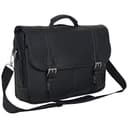
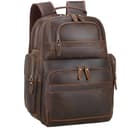
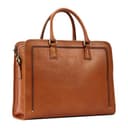
The closest equivalent we list is the Kenneth Cole Reaction Colombian leather portfolio: a brand-backed structured case, and it is not cheaper. For a 17-inch machine the Masa Kawa is the only sensible route, because almost no structured case is cut for that size at all — our 17-inch laptop bag page covers why. And if the real answer to your commute is a backpack rather than a case, the TIDING full-grain pack is the full-grain equivalent of the Samsonite backpacks, which we review on their own at our Samsonite backpack review.
Which to buy
The KomalC if a named grade at a lower price is the reason you are here. The Leather Room if you want the same answer for less and will accept a handmade bag whose finish varies. The Kenneth Cole if the structured case was the point.
The Masa Kawa if your laptop is 17 inches, the TIDING pack if your shoulders have made the decision for you, and the Banuce if you want a women’s full-grain case rather than a unisex satchel. If none of these works and the budget is the real constraint, our messengers under $100 page is the cheapest honest route into a leather work bag, and our Samsonite toploader review assesses the original on its own terms.